


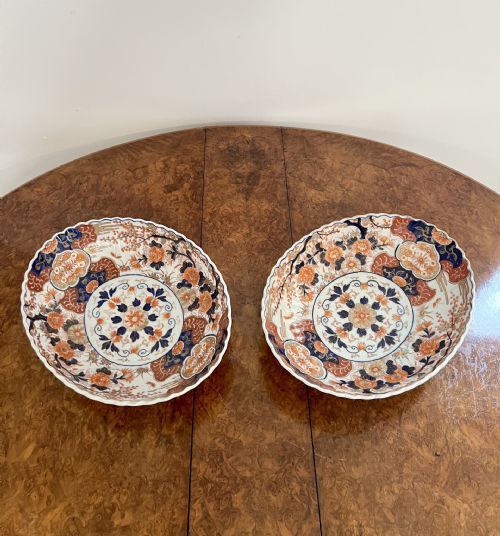
Imari Ceramic Serving Dish
An imari ceramic serving dish brings rich cobalt and iron-red palettes to the table, uniting Japanese export traditions with Georgian and Victorian adaptations.
Imari Ceramic Serving Dish
An imari ceramic serving dish encompasses pieces created for practical table use and display, spanning centuries of global trade and domestic production. When searching this phrase, a buyer encounters Japanese export wares alongside English interpretations inspired by Eastern designs.
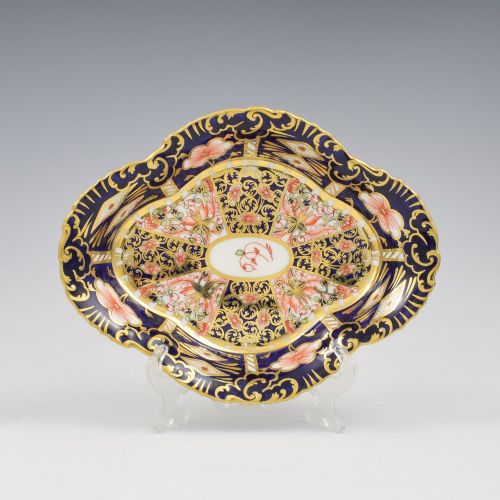
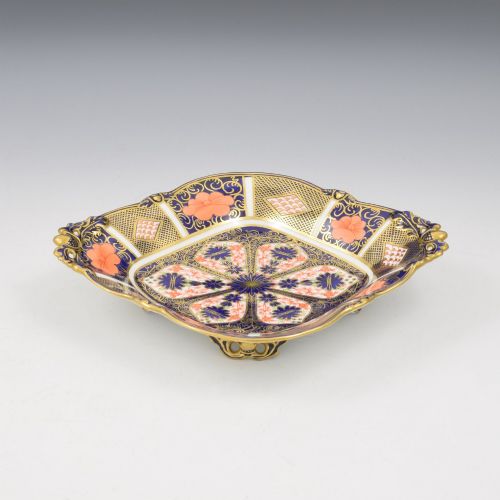
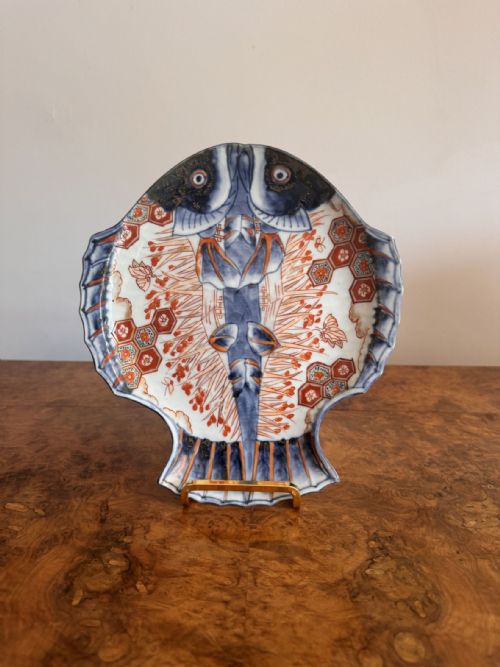
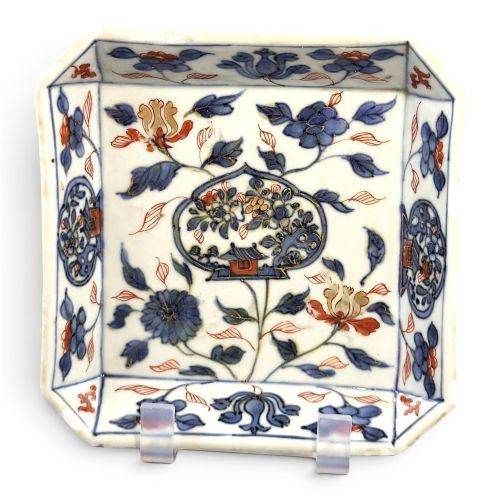
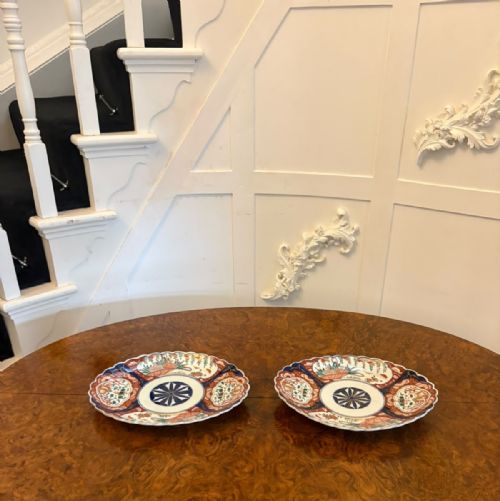
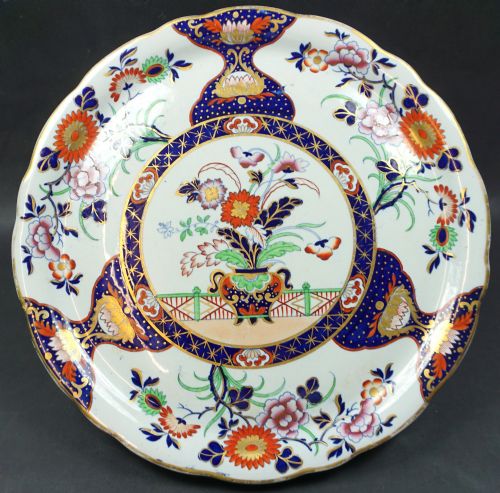
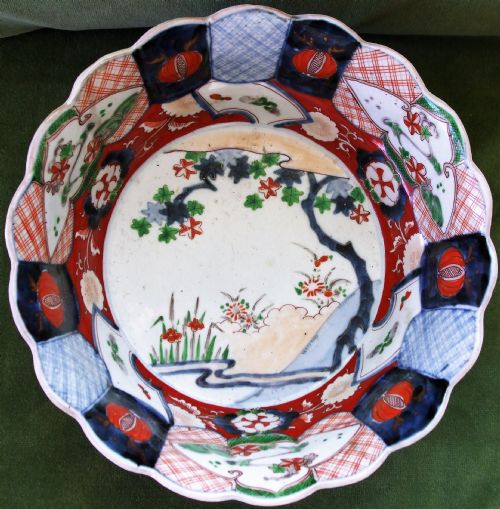
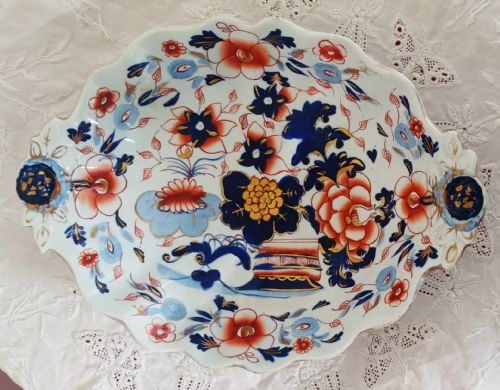
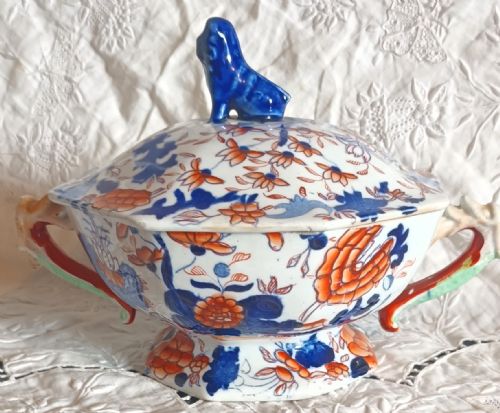
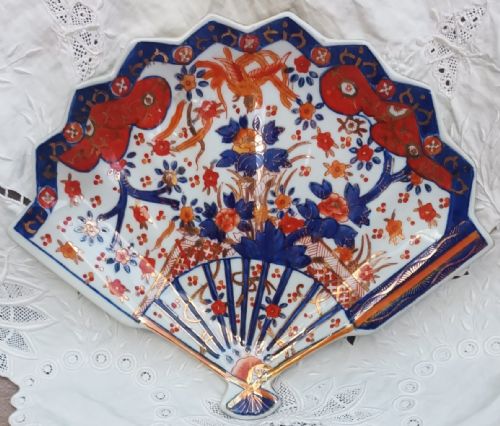
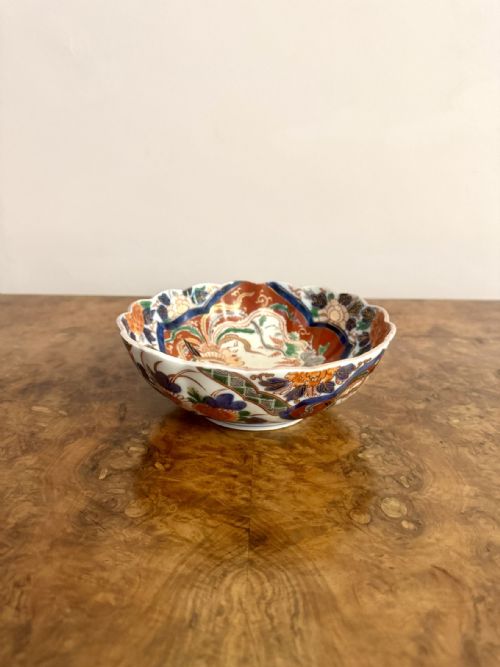
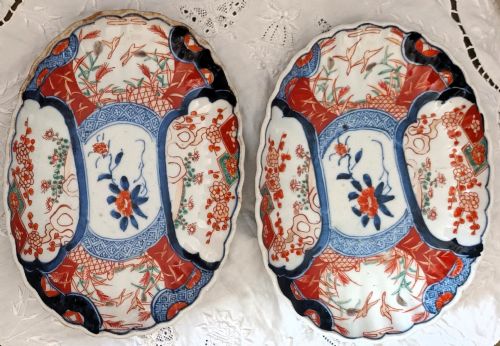
The domestic selection on this page relies heavily on English ironstone and porcelain, often taking the form of platters, tureens, and low comports. Alongside these sit Japanese Meiji period porcelain dishes, square plates, chargers, and boat-shaped vessels.
Pieces date from the Georgian and Victorian eras down to the early twentieth century, showing how deeply the palette influenced European dining rooms. Forms range from simple scallop edges to robust ironstone tureens designed for hearty country house meals.
Materials and Construction
Makers utilised porcelain and ironstone as the primary foundations for these serving pieces, ensuring durability alongside refined forms. Ironstone provided a heavy, resilient body suited to large platters and tureens, while porcelain offered a translucent surface for intricate painted scenes.
Decoration relied on hand-painted glazes, often enhanced with enamel colours and gold leaf highlights. Cobalt blue underglaze work combined with iron-red overglaze and gilding to create the characteristic palette seen across both Japanese and English examples.
Listings feature porcelain, ironstone, and earthenware alongside gold leaf and enamel decoration.
Evaluating Quality and Execution
Quality rests in the precision of the hand-painted decoration and the crispness of the porcelain or ironstone moulding. Finer pieces display confident brushwork in the enamel and gold leaf, with well-defined motifs that remain sharp across the surface.
The ambition of the form also dictates distinction, moving from standard round plates to complex square, boat-shaped, or pierced designs. Greater artistic control in shaping edges, such as scallop patterns or fish forms, separates standard utility wares from superior decorative examples.
Royal Crown Derby·Hicks And Meigh·Mason·Minton·Chamberlain Worcester
The Imari Ceramic Serving Dish Glossary
- Imari
- A style of ceramic decoration originating in Japan, characterised by a palette of underglaze blue, iron-red, and gold. European factories frequently copied these distinct patterns on their own porcelain and ironstone.
- Ironstone
- A type of heavy earthenware patented in the nineteenth century for its durability and resistance to chipping. It served as a practical material for large platters, tureens, and heavy serving dishes.
- Comport
- A raised dish or bowl used for serving fruit or sweet dishes at the table. These pieces stand on a pedestal foot above the main surface.
- Charger
- A large decorative plate or platter used primarily for presentation or heavy service. They often display complex central motifs and rich border patterns.
- Ashi
- A British term used in the trade for a large meat platter or serving dish. These long vessels often feature wells and drainers for juices.
Imari Ceramic Serving Dish: Frequently Asked Questions
What is an imari ceramic serving dish?
An imari ceramic serving dish is a table vessel decorated in the distinct Japanese export style of cobalt blue, iron-red, and gold. The selection includes both traditional Japanese porcelain wares and English ironstone adaptations.
These pieces served functional dining roles while offering striking visual contrast for the table. Their longevity stems from durable porcelain and dense ironstone bodies.
How do I tell Japanese imari from English imari?
Japanese imari typically uses a fine porcelain body with hand-painted designs from the Meiji period or earlier. English imari often appears on heavier ironstone bodies made by factories utilising the japan pattern.
Examining the foot ring, glaze texture, and weight helps distinguish the translucent East Asian porcelain from sturdy nineteenth-century English earthenware.
Were these dishes used for daily dining?
Many ironstone platters and tureens saw heavy use in country houses for serving large joints of meat and vegetables. Their robust material was specifically formulated to withstand the rigours of busy Victorian and Georgian kitchens.
More delicate porcelain chargers and bowls were frequently reserved for display or special courses. Their survival in varied states of wear reflects this mix of utility and preservation.
How do I display an imari serving dish?
Larger chargers and square plates suit wall mounting with appropriate fixings or secure plate stands on sideboards. Their vibrant palettes provide a strong focal point in traditional or eclectic dining spaces.
Boat-shaped dishes and low comports sit well on tables or open shelving where their forms remain visible. Keeping them away from direct heat protects the enamel and gilding.