



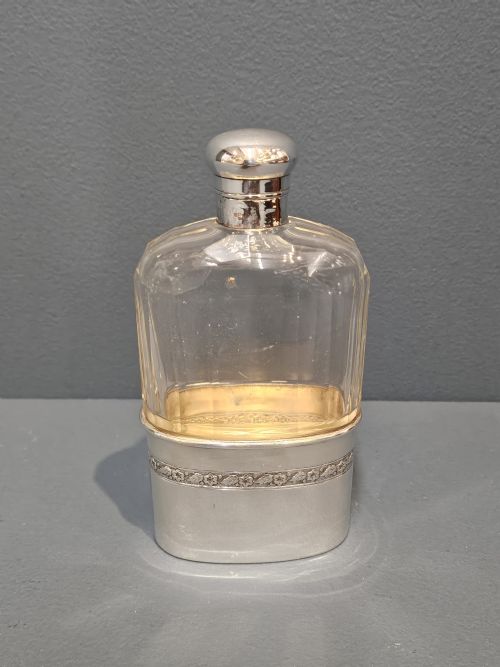


Hunting Hip Flask
A hunting hip flask is a sturdy companion for field sports, built from metal, glass and leather to carry spirits on horseback.
Hunting Hip Flask
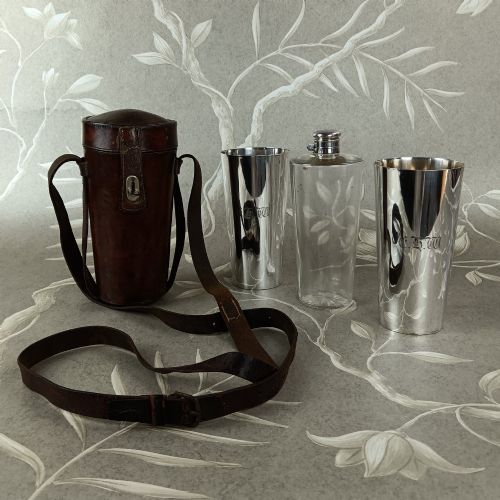
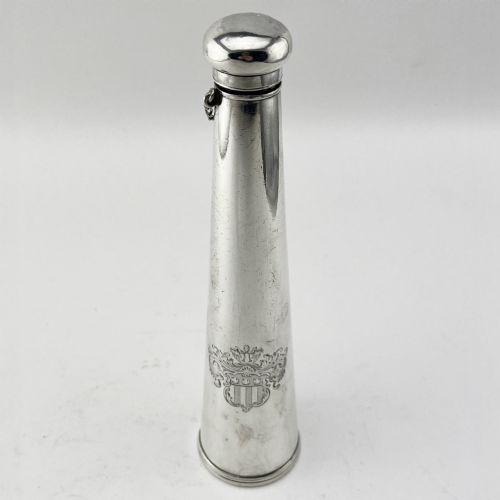
The hunting hip flask is designed for field sports, arriving in forms such as spirit flasks, campaign sets with beakers, and combination cases. These objects span from the eighteenth century through the Victorian and Edwardian eras into the Art Deco period of the 1930s.
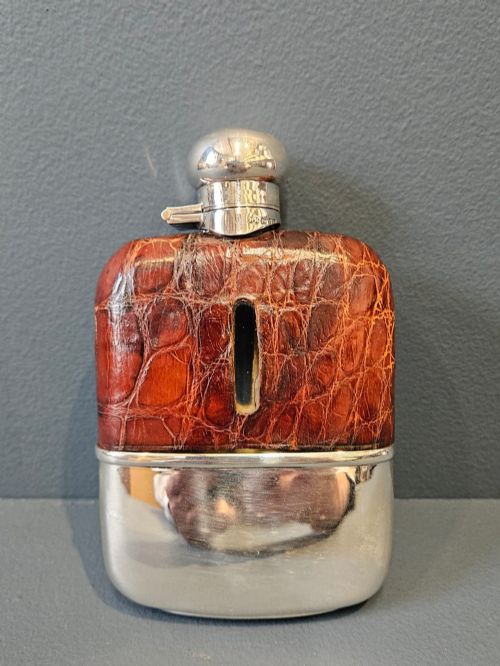
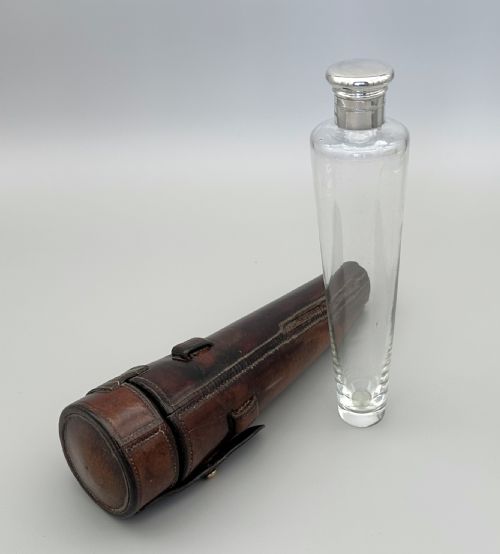
You will most frequently encounter silver-plated or sterling silver versions paired with glass bodies, leather sleeves, or crocodile leather wraps. Many examples include removable cups at the base or original fitted leather cases for travel.
Originating as practical equipment for riders and shooters, these flasks combine rigid metal tops with curved bodies designed to fit comfortably against the body.
How They Were Made
Silversmiths formed the bodies of these flasks from sterling silver or nickel silver, often applying silver plate over base metal or working the surface into a hammered finish.
Makers combined glass and cut crystal with precious metals, wrapping sections in genuine leather or crocodile leather to provide a secure grip in damp field conditions.
Screwed caps incorporated cork or rubber washers to prevent leaks, while hinged or bayonet mechanisms secured the tops firmly to the necks.
The selection includes pieces spanning from the 18th century through Victorian, Edwardian, and George V periods up to Art Deco designs.
What Varies in Quality
The distinction between standard utility flasks and finer pieces lies in the gauge of the metal, the weight of the glass, and the precision of the closure mechanism. Substantial sterling silver mounts and heavy-cut crystal distinguish the upper tier from thinner silver plate.
The integration of secondary elements, such as captive bayonet caps that remain attached when opened or fitted collapsible cups, demonstrates higher craftsmanship.
Condition of organic materials like leather and crocodile skin, alongside crisp maker marks and legible assay office stamps, elevates the standing of an individual piece.
James Dixon & Sons·Hukin & Heath·Asprey London·W A Ellwick Ltd·J C Vickery
The Hunting Hip Flask Glossary
- Bayonet cap
- A closure that pushes down and twists a quarter turn to lock securely against an internal pin. This mechanism prevents accidental opening during vigorous movement on horseback.
- Campaign set
- A portable collection containing a spirit flask accompanied by matching beakers or cups. These sets were historically packed into fitted leather cases for travel during outdoor pursuits.
- Captive top
- A cap attached to the flask neck by a small hinged arm or strap. This design ensures the lid cannot be dropped or lost in the field.
- Cut crystal
- Heavy lead glass faceted with deep geometric patterns. It provides durability and refraction while allowing the contents to remain visible.
- Vesta
- A small pocket case designed for holding matches. Some examples double as combination pieces alongside spirit containers.
Hunting Hip Flask: Frequently Asked Questions
What were hunting hip flasks used for?
These flasks served to carry spirits such as whisky or brandy during long days outdoors on horseback or shooting expeditions.
The curved contours allowed the vessels to sit snugly in a coat pocket or attach securely to a saddle.
How do I date a silver hip flask?
Dating relies primarily on hallmarks stamped into the metal mounts, which indicate the assay office, standard of silver, and date letter for the year of manufacture.
Stylistic cues such as Art Deco geometry or Victorian engraving also help place the piece in its correct decade.
Why do some flasks have removable cups?
The base of many field flasks doubles as a cup that slides off the lower half of the glass or metal body.
This allowed the owner to pour a measure without needing to drink directly from the opening while out in the field.
Are leather-bound flasks durable?
Leather and crocodile skin wraps provided an enhanced grip and protected the glass body beneath from accidental knocks during riding.
Good survival depends on the historical care given to the organic material, keeping the hide nourished and free from excessive moisture.