


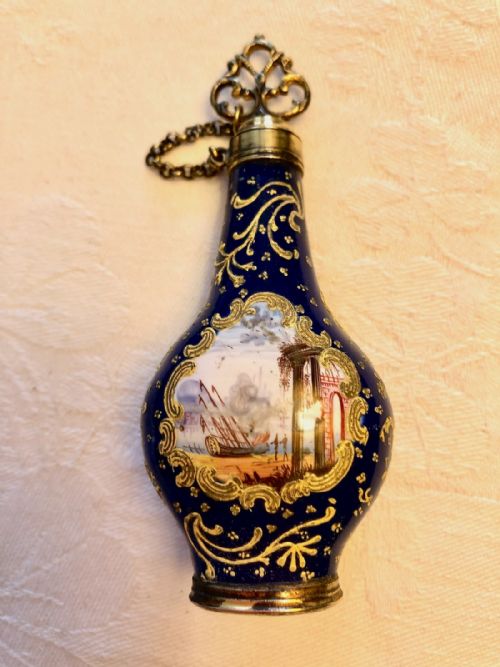


Antique Metal Flask
An antique metal flask is a portable vessel for liquids, powders, or scents, combining practical utility with period craftsmanship.
Antique Metal Flask
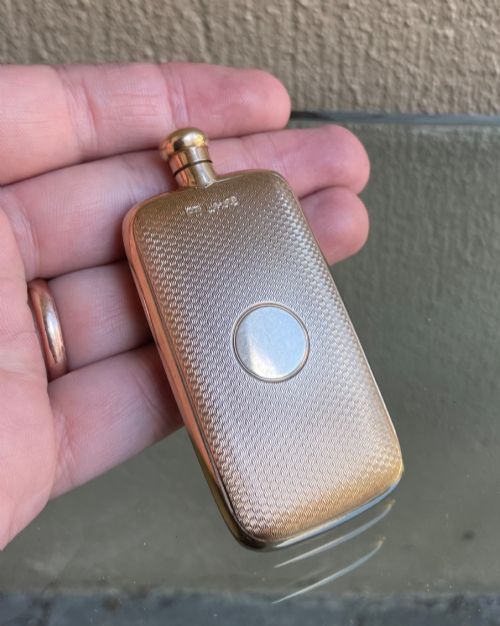
When you search for an antique metal flask, you encounter diverse objects ranging from personal scent bottles and hip flasks to larger powder flasks and warming pans. The pieces on this page span the eighteenth century, the Victorian era, and the early twentieth century, reflecting varied uses across different social spheres.
The most common forms include brass and copper powder flasks, glass scent bottles mounted in metal, and utilitarian vessels of bronze or pewter. These items bridge domestic, sporting, and personal accessories from past centuries.
How they were made
Metalworking techniques for these flasks involve copper, brass, bronze, and precious metals such as nine-carat gold and silver, often shaped through casting, hammering, and engraving. Many examples incorporate secondary materials like oak handles, carved bone, or ruby glass.
Decorative finishes include ormolu mounts, hand-painted enamel scenes, and wrought iron frameworks, showing the intersection of metal fabrication and decorative arts.
Listings feature items spanning the eighteenth century, Victorian era, and nineteen-twenty, utilising copper, brass, bronze, oak, and ruby glass.
What varies in quality
Quality in these flasks rests on the crispness of metal chasing, the integrity of hinges and caps, and the quality of any integrated glass or organic materials like bone and wood. Finer examples display deliberate artistic design, such as Art Nouveau wrought iron work or detailed eighteenth-century folk art carvings.
The distinction between standard utility items and high-end pieces lies in the refinement of the materials, such as solid nine-carat gold versus basic brass, and the retention of original components like detachable wooden handles.
The Antique Metal Flask Glossary
- Ormolu
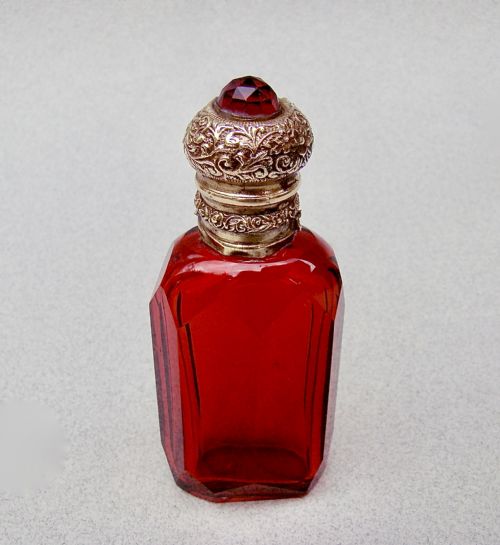
- Gilded bronze or other metals applied as a decorative mount. This finish was frequently used on nineteenth-century glass scent bottles.
- Powder flask
- A container used for holding gunpowder for firearms. These are often formed from brass, copper, or carved bone.
- Scent bottle
- A small container designed to hold perfume or smelling salts. They frequently feature precious metals or decorative glass casings.
- Warming flask
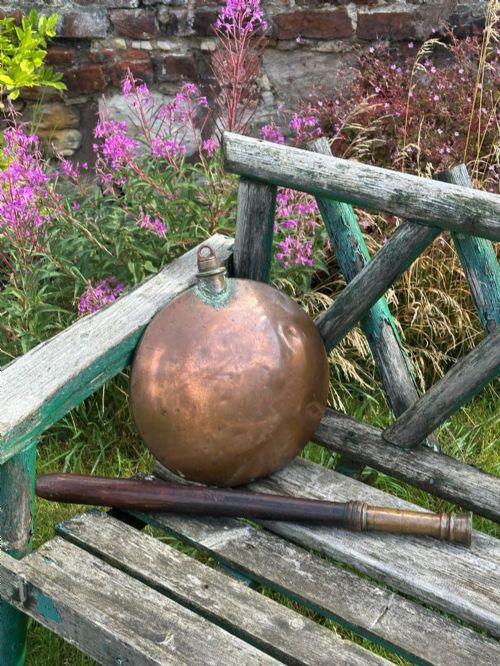
- A vessel used to apply heat, often moon-shaped and fashioned from copper with insulated handles. Georgian examples often include detachable wooden elements.
- Biberon
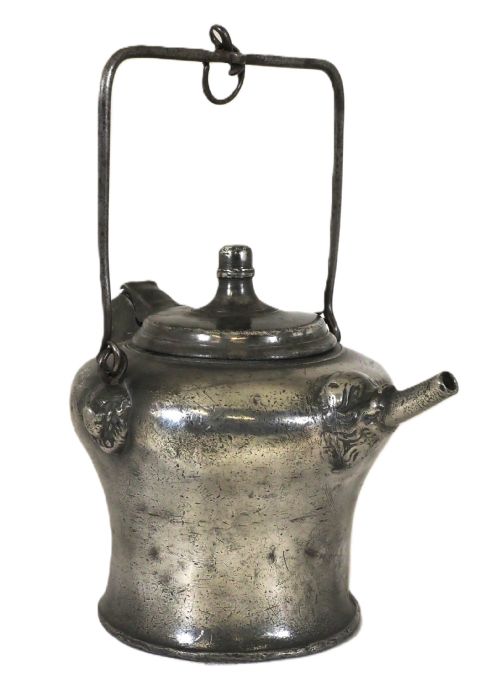
- A traditional drinking vessel or feeding flask. An eighteenth-century Swiss pewter example demonstrates this form.
Antique Metal Flask: Frequently Asked Questions
What is an antique metal flask?
An antique metal flask is a portable container made from materials like copper, brass, bronze, or gold, designed to hold liquids, powders, or scents.
These items range from personal scent bottles and hip flasks to larger gunpowder containers and warming vessels dating from the eighteenth century to the early twentieth century.
How were copper warming flasks used?
Copper warming flasks were utilised to provide heat to beds or specific areas during colder months.
They often featured moon-shaped bodies and detachable wooden handles, such as oak, to allow safe handling while hot.
What materials were used for powder flasks?
Powder flasks were primarily constructed from durable metals like brass and copper to safely store gunpowder for firearms.
Some examples also incorporate organic materials such as carved bone or horn.
How do I identify a Victorian flask?
Victorian flasks often display characteristic nineteenth-century design styles, including Gothic Revival elements or ornate metal mounts.
Materials from this period frequently include ruby glass with ormolu fittings, heavy copper, and engraved brass.
Are scent bottle flasks rare?
Scent bottle flasks vary in composition, with some utilising precious metals like nine-carat gold or sterling silver.
Finer examples incorporate decorative elements such as hand-painted enamel scenes or glass casings from the eighteenth and nineteenth centuries.