
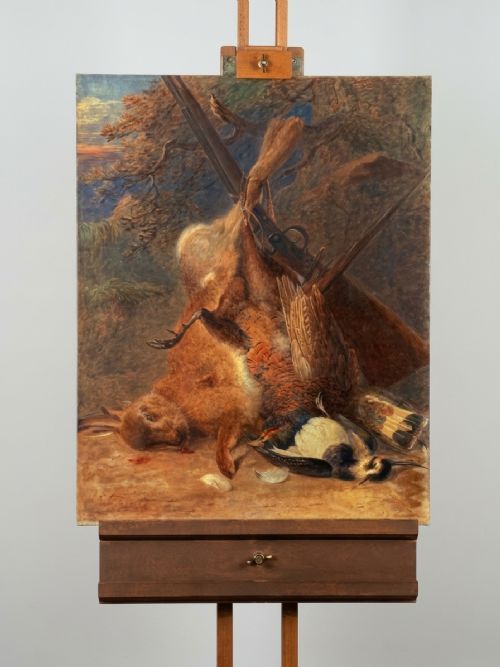
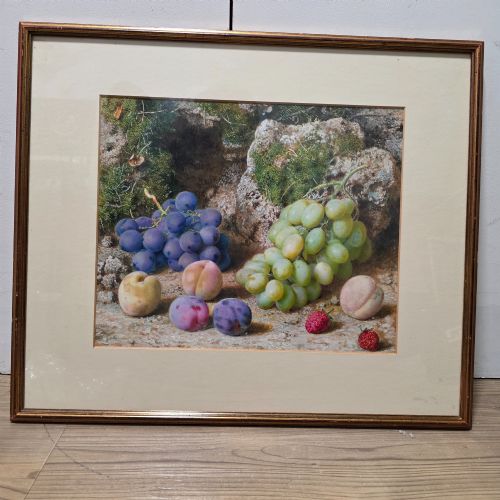


Hunt Watercolour Painting
When you search for a hunt watercolour painting, you are looking at original works on paper depicting hounds, horses, and the British countryside.
Hunt Watercolour Painting
A hunt watercolour painting captures rural pursuits, pack scenes, and canine studies across the Georgian, Victorian, and Edwardian periods.
You will frequently meet works by named sporting artists alongside monochrome wash paintings and detailed landscape settings.
The selection ranges from intimate hound portraits to full cry hunting sequences framed behind glass in timber mouldings.
How they were made
Artists painted these scenes on paper using watercolour pigment, often incorporating bodycolour, ink, and pencil lines for definition.
Finished works were traditionally set behind glass within wooden frames, sometimes accented with gilt slips to enhance the depth of the image.
Listings feature works executed on paper utilising watercolour pigment, ink, and bodycolour, housed in wood and gilt frames.
What varies in quality
Quality rests upon the artist's command of movement, particularly in the rendering of horses in motion and the anatomy of hounds.
The strength of the composition and the preservation of the delicate pigment against fading determine the standing of an individual work.
John Sherrin·Arthur Wardle·Basil Nightingale·John Sanderson Wells·Charles Clifford Turner·Thomas Ivester Lloyd·Charles Johnson Payne Snaffles·William J Hodgson·George Goodwin Kilburne·Frank Dadd·Edward Aubrey Hunt·Henry Alken·Samuel Alken·E B Herberte
The Hunt Watercolour Painting Glossary
- Watercolour
- A painting method where fine pigment is suspended in a water-soluble binder applied to paper. It creates transparent washes of colour that allow the light of the paper to illuminate the scene.
- Bodycolour
- Watercolour mixed with a white pigment to make it opaque. This technique adds highlights and solid areas of tone to the paper.
- Sporting Art
- Depictions of rural pastimes, horses, hounds, and field sports. This genre flourished in British art throughout the nineteenth and early twentieth centuries.
- Monochrome
- A work executed in a single colour or shades of a single hue, such as grey or brown wash. These pieces rely on tonal contrast rather than a full palette.
Hunt Watercolour Painting: Frequently Asked Questions
What periods do these hunt watercolours cover?
The works span from the Georgian era through the Victorian and Edwardian periods up to the mid-twentieth century.
Most pieces date from the nineteenth century, reflecting the peak of British sporting art production.
How should I frame and hang a watercolour?
Watercolours require framing behind glass to protect the paper from dust and atmospheric moisture. They should be hung away from direct sunlight to prevent the pigments from fading over time.
Acid-free mounts help preserve the paper health around the painted surface.
Are all these paintings signed by the artist?
Many of the works carry signatures, monograms, or studio attributions linking them to known sporting painters. Unsigned pieces are attributed through style, subject matter, and period characteristics.
Signatures often appear in the lower corners in ink or pencil.
What subjects feature besides hounds and horses?
The paintings frequently include countryside landscapes, gamebirds, country gentlemen, and rural architecture. Some works focus on specific canine portraits or military and coaching scenes.
Genre elements often accompany the central hunting narrative.