




Traditional Foxhound Art
Traditional foxhound art captures the energy of the hunt through oil paintings, watercolours, and engravings spanning the Georgian to mid-century periods.
Traditional Foxhound Art
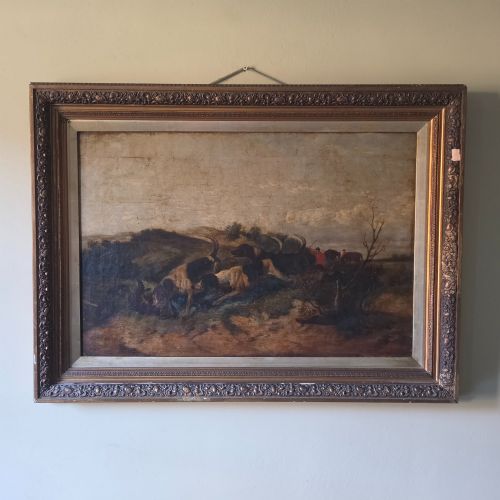
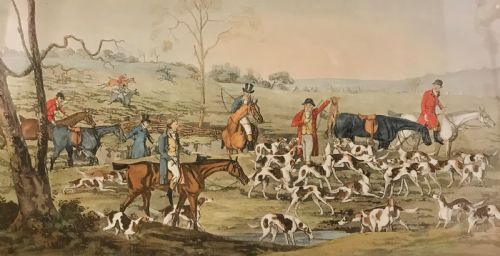
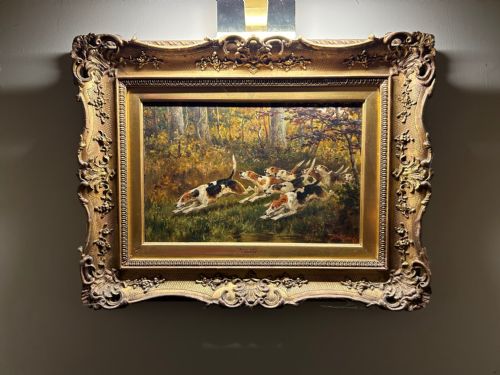
Traditional foxhound art encompasses framed watercolours, oil paintings on canvas or wood, hand-coloured engravings, and original photographs depicting hunting dogs and hounds. These works document historic packs and scenes of the chase across the nineteenth century and into the mid-twentieth century.
Buyers will encounter various formats ranging from detailed pencil and chalk drawings to large oil paintings set in winter snow or full cry. The selection draws on British sporting art traditions, capturing the specific anatomy and movement of the hounds.
The material record includes works associated with named sporting artists and publishers, offering a clear window into rural history. Each piece reflects the enduring appeal of equine and canine portraiture within British visual culture.
Materials and technique
Makers utilised traditional mediums such as oil on canvas, oil on wood, and delicate watercolours combined with ink and pencil on paper. Hand-coloured engravings and lithographs provided accessible ways to distribute sporting scenes widely.
Framing often involves giltwood or wooden surrounds that complement the period of the artwork. Artists rendered the dynamic motion of hounds and huntsmen through careful layering of pigment and fine illustrative linework.
Some hounds stare out from the canvas with an expression that suggests they would rather be sleeping by the hearth.
Factors of quality
Quality rests upon the artist's ability to render the anatomy and expression of the hounds with anatomical precision and vitality. Works by established sporting artists display superior handling of light, atmosphere, and narrative tension during the chase.
The preservation of the paper, canvas, or wood panel directly influences the visual impact of the piece. Crisp lines in engravings and well-preserved pigments in watercolours and oils distinguish finer examples from standard decorative works.
Michael Lyne·Fannie Moody·Charles Clifford Turner·Tom Carr·Heywood Hardy·Thomas Blinks·J F Herring
The Traditional Foxhound Art Glossary
- Full cry
- A stage in the hunt where the hounds are actively barking upon picking up the scent. This dynamic moment is frequently depicted in sporting paintings.
- Giltwood
- Wood carved and covered with a thin layer of gold leaf or gold paint. It is commonly found on the frames surrounding nineteenth-century oil paintings.
- Lithograph
- A print made from a design drawn on limestone or a metal plate. This technique allowed for the reproduction of detailed hunting scenes.
- Hand coloured
- An engraving or print that has had watercolour applied by hand after printing. This added vibrancy and detail to monochrome impressions.
Traditional Foxhound Art: Frequently Asked Questions
What periods do these artworks come from?
The pieces span from the Georgian era through the nineteenth century and into the mid-twentieth century. This includes Victorian sporting art and later mid-century interpretations.
Each period brings distinct framing choices, paper qualities, and painting techniques characteristic of its time.
How were these hunting scenes originally displayed?
Sporting art traditionally hung in country houses, libraries, and estate reception rooms. They celebrated local hunts, favoured packs, and historic horses and hounds.
Today, they suit studies, hallways, and living spaces that embrace classic equestrian and canine subjects.
How can I identify the medium of a piece?
Close inspection under good light reveals the brush texture of oil paintings or the flat, fluid washes of watercolours. Prints and engravings show fine dot patterns or plate lines from the printing press.
Paper works usually require protective glazing, whereas oil on canvas or wood remains unglazed.
Are the signatures on these works authentic?
Many works feature signatures or inscriptions identifying the artist, publisher, or the specific hunt portrayed. Archival records and period publishing dates help verify the context of prints and engravings.
Original drawings and paintings often carry the artist's hand directly on the medium.