


20th Century Equestrian Painting
A 20th century equestrian painting captures the vitality of horses through the shifts in artistic vision across the decades.
20th Century Equestrian Painting
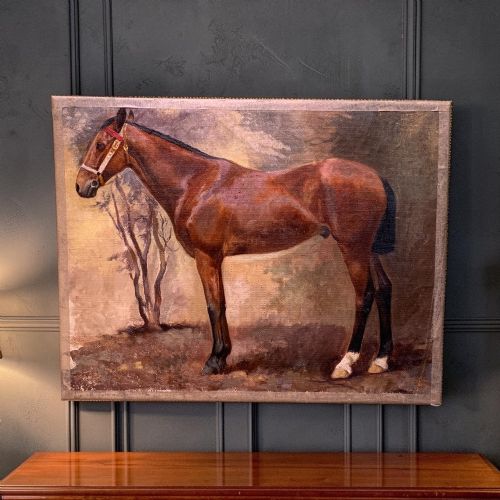
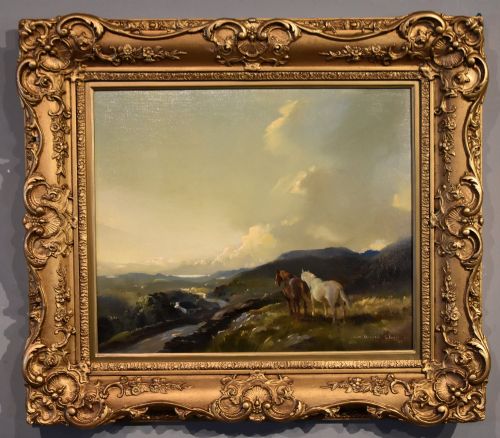
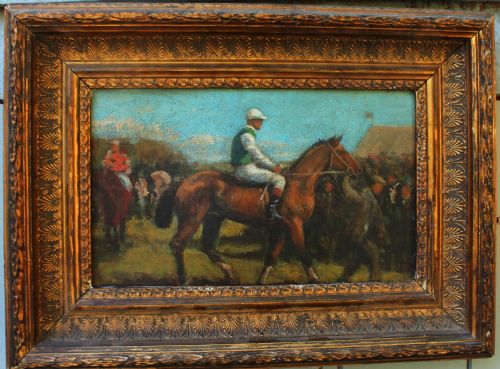
When you search for a 20th century equestrian painting, you encounter works that range from Edwardian sporting watercolours to mid-century British realism and impressionist studies. These pieces capture horses in varied settings, including race paddocks, rural hunting fields, stableyards, and working environments.
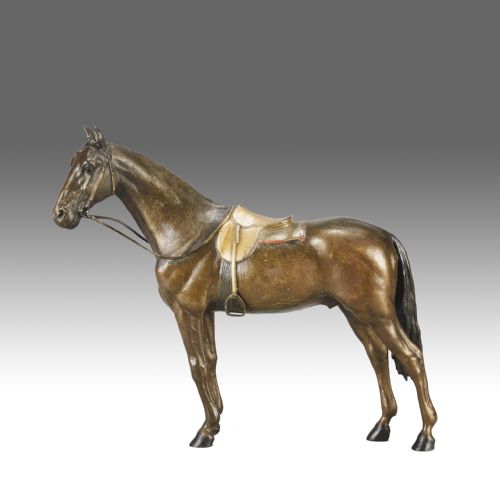
The most common examples on this page are oil paintings on canvas and paper-based watercolours produced across the decades from 1900 to the 1960s. Alongside framed flat art, the selection includes related sculptures and bronzes that share the same thematic focus on horses.
Makers and artists represented span named painters and bronze founders, documenting both British traditions and European scenes from France, Belgium, and Austria.
Materials and methods
Painters of this era worked primarily in oil paint and watercolour on canvas, paper, and board, applying pigment to capture movement and light. Bronze is also utilised for sculptural pieces, often finished with cold-painted detailing.
Support materials range from traditional stretched canvas to wood and heavy paper, housed within period frames that often reflect the decade of creation.
Several horses in these paintings appear to be judging the viewer with considerable scepticism.
Judging quality in equestrian art
Quality rests upon the artist's ability to render the anatomy, muscle tension, and motion of the horse with conviction. Works executed with confident brushwork and accurate proportion stand apart from rigid or formulaic compositions.
The prominence of the artist, documented provenance, and the survival of the original medium without excessive restoration determine the standing of an individual piece within the field.
Franz Bergman·Vernon DeBeauvoir Ward·Alfred Munnings·John Rattenbury Skeaping·Harry Freckleton·Raimond Louis Lecourt·Hazel M. Barnett·Edith Alice Simkins·Charles Clifford Turner·Michael Lyne·Snaffles·Thomas Ivester Lloyd·Geoffrey Mortimer·Maurice Wagermans·Allan Gwynne-Jones·Frank Giggs·George Soper
The 20th Century Equestrian Painting Glossary
- Cold-painted bronze
- A bronze sculpture decorated with polychrome paint rather than patination. This finish requires careful preservation to prevent flaking over time.
- Gouache
- An opaque water-based paint that allows for dense colour application and sharp highlights. It frequently appears alongside watercolour in mixed media equestrian works.
- Sporting art
- A genre dedicated to depicting bloodsports, racing, and animals in pastoral or competitive settings. These works focus on anatomical accuracy and field action.
- Provenance
- The documented history of ownership of an artwork. Clear records help verify authenticity and attribute unsigned pieces.
- Impressionism
- An artistic style prioritising the visual impression of the moment through visible brushstrokes and natural light. Mid-century examples apply this approach to rural working horses and racing scenes.
20th Century Equestrian Painting: Frequently Asked Questions
How do I date a 20th century equestrian painting?
Dating relies on stylistic clues, framing, artist signatures, and any recorded exhibition history. Mid-century works often show modernist influences, whereas Edwardian pieces lean towards traditional realism.
Examining the reverse of the canvas or paper support can reveal artist notes, gallery stamps, or dates inscribed during the mounting process.
What is the difference between oil and watercolour equestrian art?
Oil paintings utilise slow-drying pigment on canvas or board, allowing for rich textures and layered depth. Watercolours on paper offer a lighter, more immediate transparent finish.
Both mediums were widely used throughout the decades, with watercolours frequently favoured for field sketches and oils for finished compositions.
How should I display equestrian paintings at home?
Hang these works away from direct sunlight and fluctuating heat sources to protect canvas, paper, and watercolour pigments from fading. Ensure wall fixings securely support the weight of heavy framed oils or bronzes.
Pairing pieces with traditional or mid-century interiors allows the sporting subject matter to integrate naturally into domestic spaces.
Are bronze sculptures considered part of equestrian art?
Sculptures and wall plaques form an integral part of the genre, translating the motion of horses into three-dimensional form. Cold-painted Austrian bronzes capture specific breeds and saddled horses with fine detail.
These pieces complement framed canvas and paper works by adding tactile variety to a collection.