

British Sporting Artwork
British sporting artwork captures the energy of the field, the track, and the kennel through horses, hounds, and country pursuits.
British Sporting Artwork
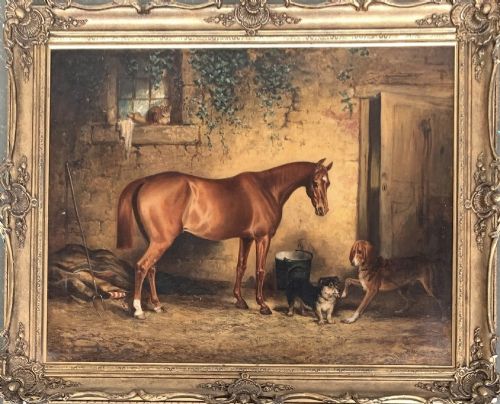
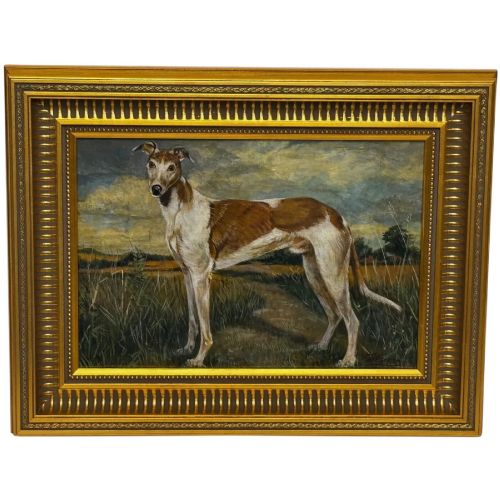
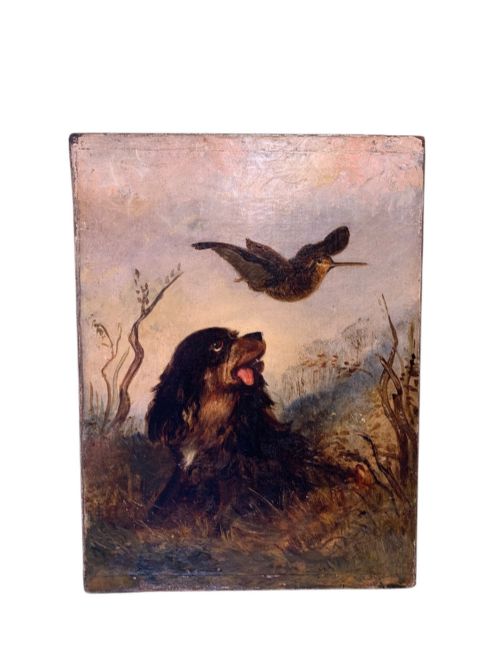
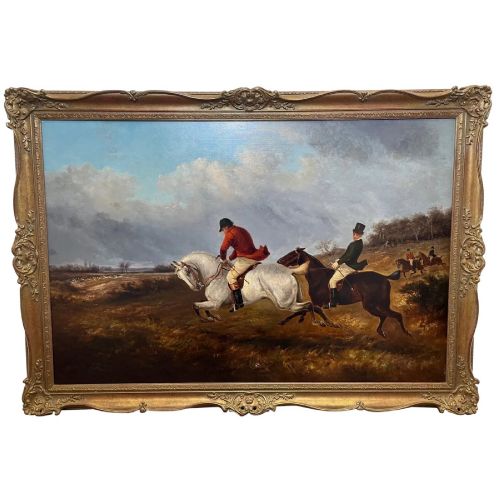
British sporting artwork encompasses oil paintings, watercolours, and prints dedicated to horses, dogs, hunting, and racing. These works record the pivotal moments of rural pursuits, capturing specific animals and competitive scenes from the nineteenth and twentieth centuries.
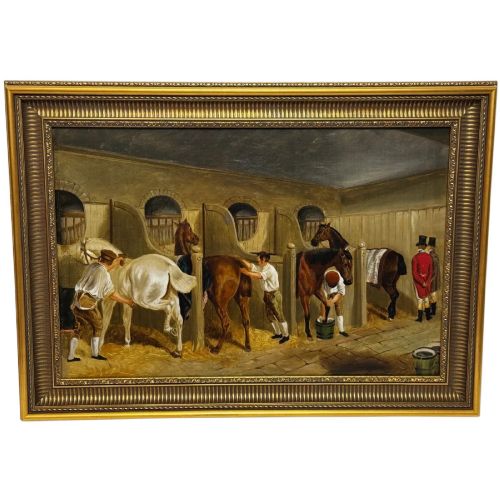
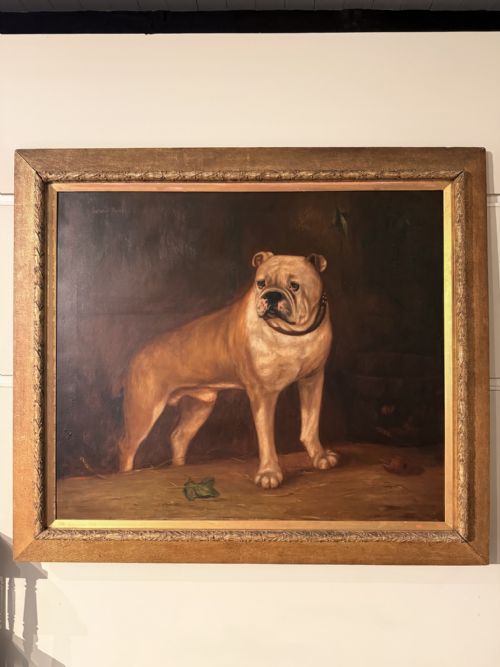
The pieces on this page lean heavily towards nineteenth-century oil paintings and early twentieth-century framed prints. Buyers will find individual animal portraits alongside dynamic depictions of hunts, coaching scenes, and racing tracks.
Originating from British artists working across Victorian, Edwardian, and mid-century periods, these works reflect changing rural pastimes and a deep national fixation with equestrian and canine subjects.
Materials and Technique
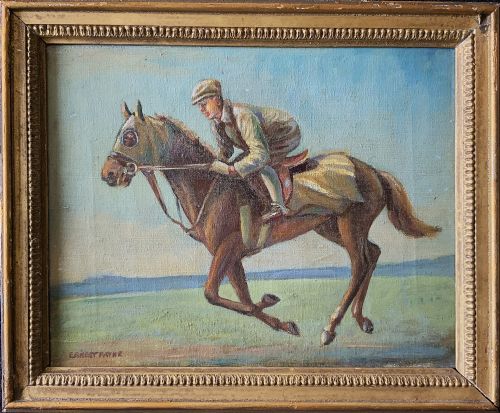
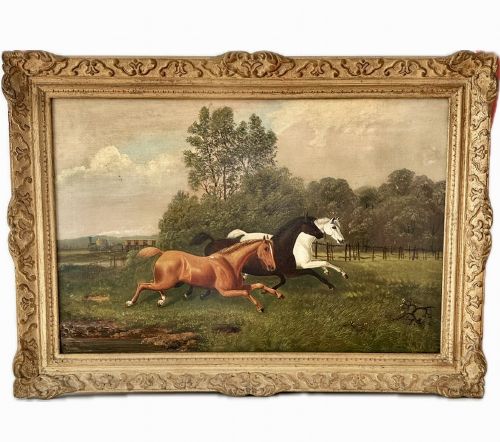
Painters worked primarily with oil paint on canvas or panel, building up rich textures to render the sheen of a hunter's coat or the rugged landscape of a hunt. Watercolour, pastel, and gouache appear frequently on paper for lighter studies and preparatory drawings.
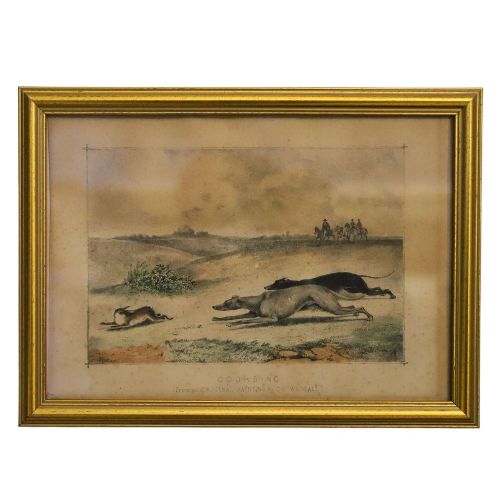
Printmakers utilised lithography and original print techniques to distribute popular sporting scenes widely. Framing often involved period wood and gold leaf or gilt wood frames that complement the traditional subjects.
Listings span the nineteenth century through the mid-twentieth century, recording works in oil on canvas, gouache, pastel, and lithograph.
Judging Quality
Quality rests upon the artist's anatomical accuracy in rendering horses and hounds, where correct bone structure and muscle tension separate a master from a routine jobbing painter. A strong piece captures the distinct character and spirit of the animal rather than presenting a stiff diagram.
Composition and atmosphere elevate a work above simple record-keeping. The placement of the subject within a convincing landscape, combined with confident brushwork or handling of light, determines the lasting impact of the painting.
Henry Barraud·Thomas Smythe·James Stroudley·Samuel Rabin·Sir Edwin Henry Landseer·George Wright·William Albert Clarke·Ernest Payne·Philip Rideout·John Emms·John Ferneley Senior·John Rattenbury Skeaping·Cecil Charles Windsor Aldin·John Arthur Lomax·Arthur Wardle·Albert Clark·Gertrude Halsband·John Sanderson Wells·William Barraud·Philip Henry Rideout·George Armfield·John Trivett Nettleship·Samuel Spode·Alfred Grenfell Haigh·Abraham Cooper RA
The British Sporting Artwork Glossary
- Bay
- A horse with a reddish-brown body and black points on the mane, tail, and lower legs. This coat colour appears constantly in nineteenth-century equine portraits.
- Lithograph
- A print made by drawing on limestone or a metal plate with a greasy medium. Artists used this method to reproduce detailed sporting scenes for wider circulation.
- Gouache
- An opaque watercolour paint that dries to a matte finish. It allows artists to build dense, vibrant colour passages on paper.
- Equine
- Pertaining to horses. The term covers everything from solitary stable portraits to thundering racecourse action.
- Triptych
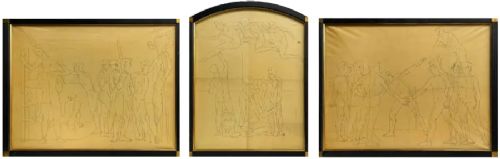
- A work divided into three painted panels hinged or displayed together. These pieces often narrate a sequence of events or present a unified sporting theme across the panels.
British Sporting Artwork: Frequently Asked Questions
What subjects are most common?
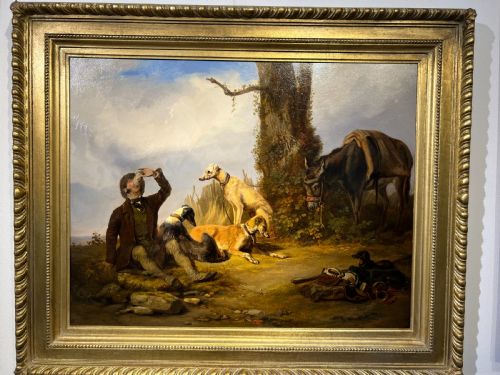
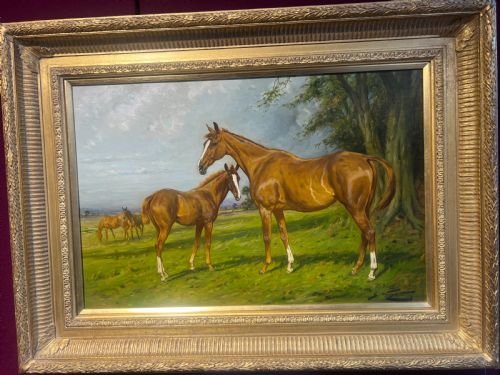
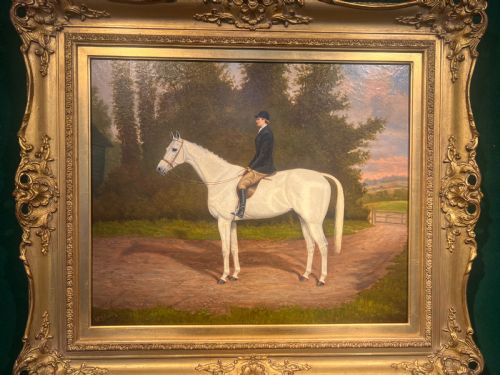
Horses and dogs dominate these works, appearing either in solo portraits or within active scenes like fox hunting, hare coursing, and horse racing.
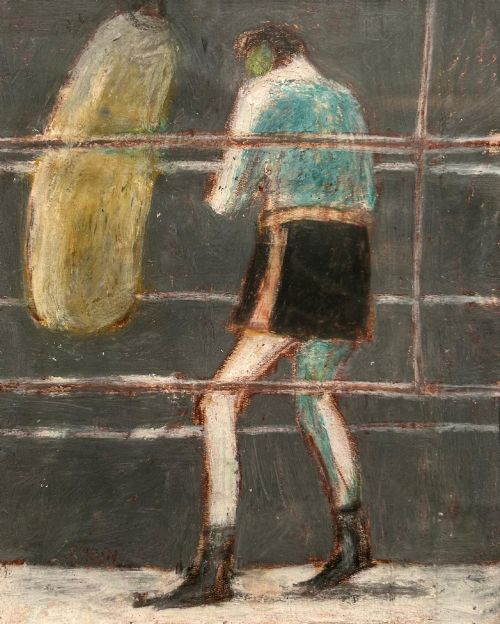
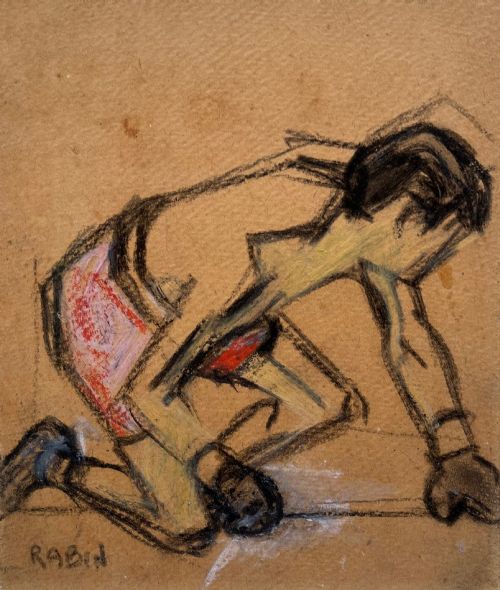
Artists also depicted coaching scenes, rural landscapes, and occasional sporting events such as the Olympic Games or boxing matches.
How do I date a painting?
Dating relies on stylistic clues, framing materials, artist signatures, and the clothing or tack depicted in the scene. Nineteenth-century works often feature heavy gilt frames and traditional oils, while mid-century pieces show looser media like gouache and pastel.
Signatures and biographical dates for known painters provide the most reliable anchors for establishing when a work was produced.
Where should I hang these pieces?
These works suit traditional spaces like studies, libraries, and hallways where wooden furniture and neutral walls complement rural subjects. Proper placement avoids direct sunlight, which can fade watercolours and discolour oil varnishes over time.
Ensuring stable room humidity protects both the canvas support and the original gilt wood frames.
Are prints as collectible as original paintings?
Period prints and lithographs hold their own distinct appeal for collectors, often offering a different entry point into sporting art compared to unique oil paintings. Signed prints by established artists carry significant weight in the field.
Condition of the paper and clarity of the impression remain key factors when evaluating print works.