





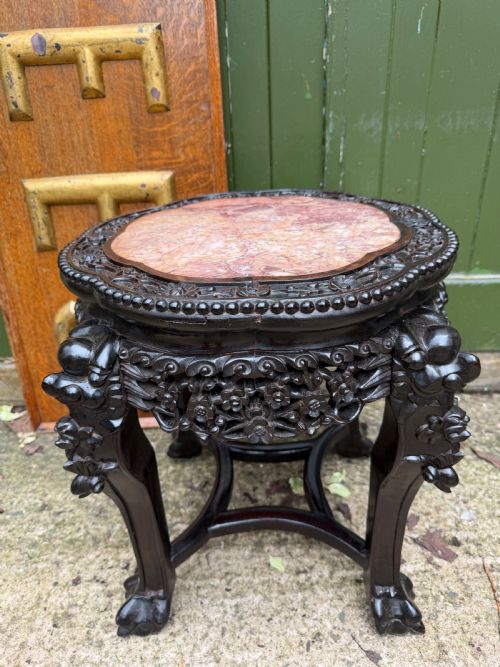


Hongmu Side Table
A hongmu side table brings dense timber and traditional carving into a room, serving as a sturdy surface for lamps or plants.
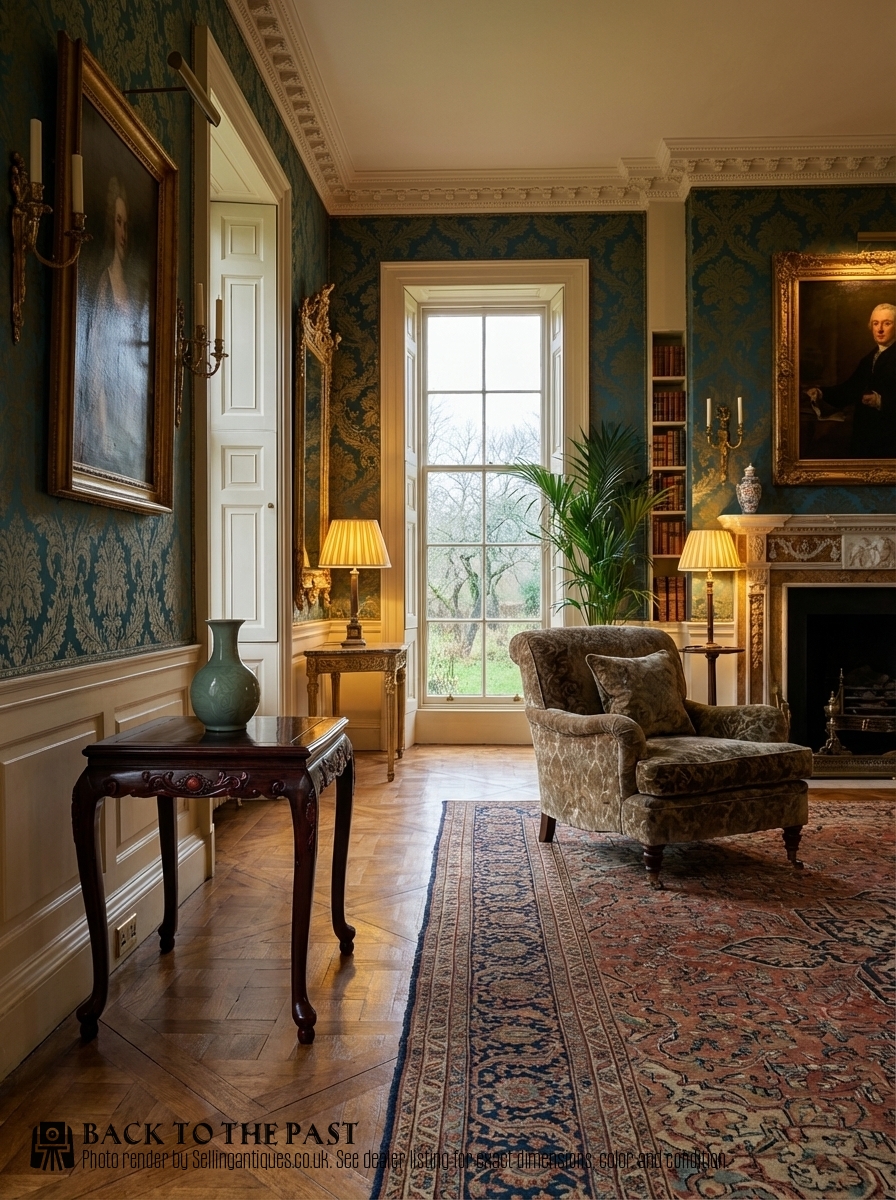
Hongmu Side Table
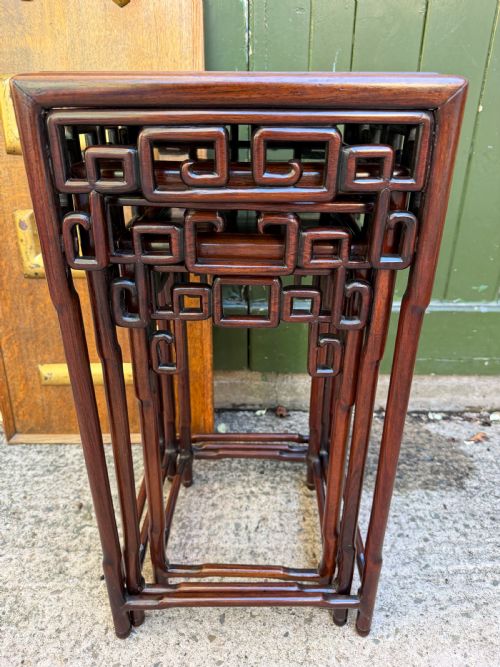
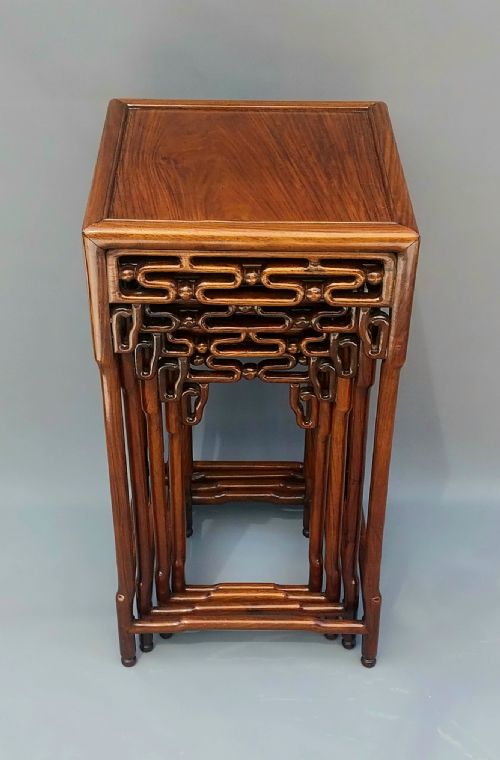
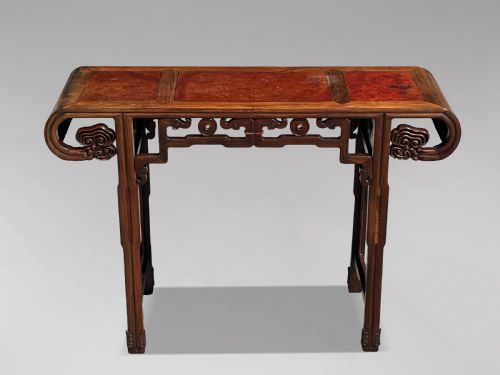
When you search for a hongmu side table, you encounter dense Asian hardwoods fashioned into low stands, multi-tiered pedestals, altar tables, and nesting sets. The pieces span the nineteenth century, the Victorian era, and the early twentieth century, reflecting Qing Dynasty and Chinese Export traditions.
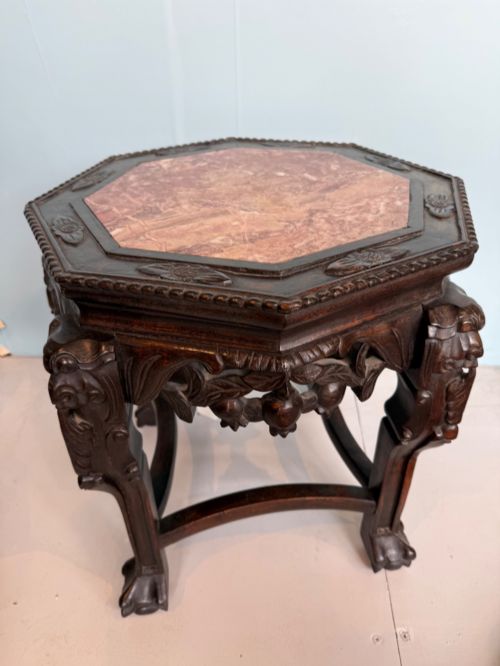
The version you are most likely to meet on this page is a carved hardwood table with an inset marble panel, often standing as a plant stand or occasional table from the late nineteenth century.
How they were made
Cabinetmakers utilised heavy tropical hardwoods such as hongmu and rosewood, known for their deep natural colour and dense grain. Many examples incorporate contrasting timbers like amboyna or burrwood, alongside mother-of-pearl inlay for decorative contrast.
Stands and tables frequently integrate inset marble panels into the timber top, using rouge or variegated stone. Carving is executed directly into the hardwood frame, shaping traditional motifs around the structural joints.
Hongmu Side Table Retail Price Guide 2026
Typical asking prices for hongmu side table among the pieces listed under this phrase on Sellingantiques today, from the lower quarter to the upper quarter. They describe what is for sale here now, not the wider market.
The object types range from simple low stools and altar tables to multi-tiered plant stands and nested sets of four.
What varies in quality
The depth and crispness of the carved detail separate standard production from superior examples, with finer pieces showing sharp undercut work on the hardwood frames. The selection and fit of the inset marble panel also determine the standing of a piece.
Matching sets, such as nests of four tables or pairs of urn stands, command attention for their uniformity. The choice of secondary woods, including burrwood or amboyna accents, alters the visual weight of the furniture.
The Hongmu Side Table Glossary
- Hongmu
- Red wood in Chinese, referring to a category of dense tropical hardwoods used for fine furniture.
- Altar table
- A traditional rectangular form with upturned ends or straight legs, adapted from ceremonial furniture into domestic use.
- Quartetto
- A matching set of four nesting tables that slide neatly beneath one another.
- Jardiniere stand
- A tall pedestal or small table designed specifically to support a plant pot or flower bowl.
- Qing Dynasty
- The last imperial dynasty of China, spanning from sixteen-forty-four to nineteen-twelve, which heavily influences the design of these tables.
Hongmu Side Table: Frequently Asked Questions
What is hongmu wood?
Hongmu translates as red wood and denotes a group of dense, heavy tropical hardwoods prized in Chinese cabinetmaking for its rich colour and durability.
This timber takes a high polish and supports intricate hand carving without splintering.
How do I style a side table?
These tables suit corners or beside seating as surfaces for lamps, ceramics, or small plants.
Their sturdy timber construction allows them to function as individual accent pieces or part of a matched pair.
Are marble top tables original?
Many nineteenth-century examples incorporate inset marble panels designed to cool objects and provide a contrasting texture to the dark wood.
Variegated and rouge marble panels were fitted during the initial construction of the stands and altar tables.
How do I date a Chinese hardwood table?
Dating relies on the combination of nineteenth-century construction methods, Qing design styles, and the specific patina of the rosewood or hongmu timber.
Most surviving examples date from the late nineteenth century through to the early twentieth century.