





Historic Woven Textile
Historic woven textile pieces bring centuries of texture and narrative into a room, spanning Flemish baroque verdure designs and delicate silk fragments.
Historic Woven Textile
A historic woven textile encompasses large wall tapestries, verdure panels, cushion covers, and silk lengths dating from the sixteenth century through to the nineteenth century. These items originate predominantly from Flemish, French, German, and North Indian workshops.
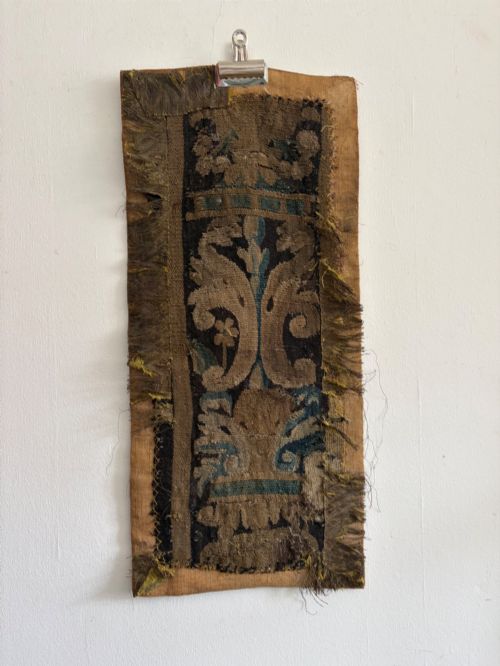
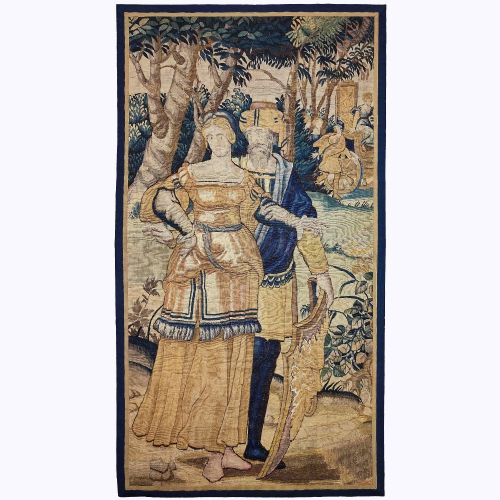
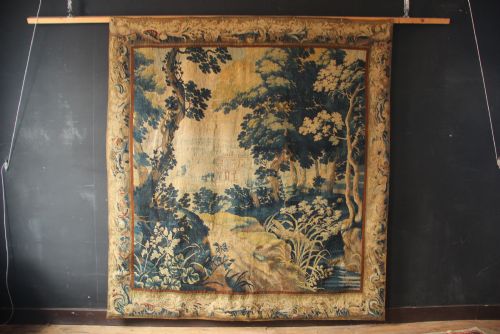
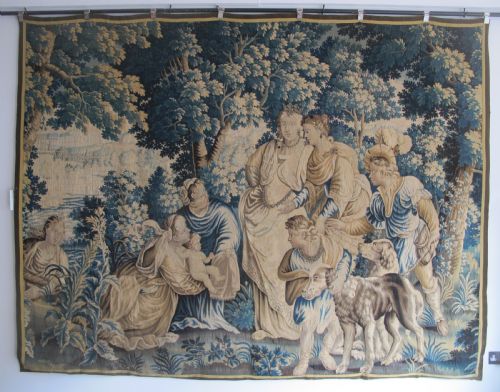
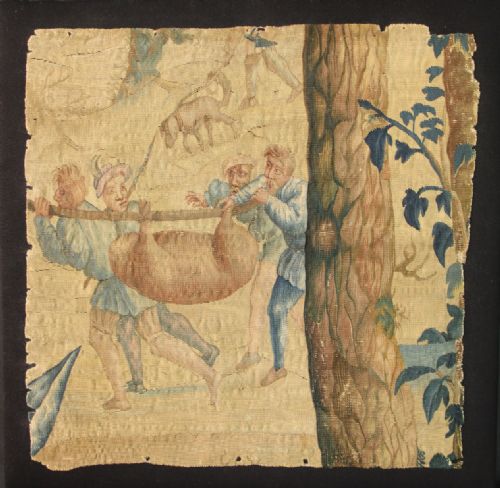
The most common examples on this page are seventeenth and eighteenth-century Flemish verdure tapestries, alongside fragmentary panels mounted to linen. Buyers also encounter Bizarre silk lampas, ciselé silk velvet pilaster hangings, and biblical Aubusson wall hangings.
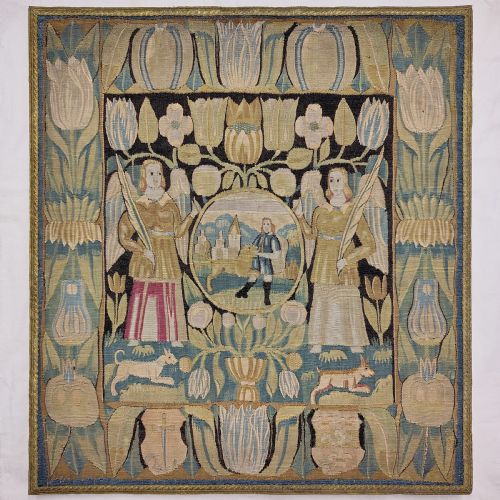
Forms range from grand architectural wall hangings measuring over three metres to smaller cushion covers and narrow border fragments. Each piece preserves textile techniques from historic European and Asian traditions.
Materials and construction
Weavers constructed these historic woven textile pieces using natural fibres including wool, silk, and linen, frequently enriched with metallic threads. Artisans combined these materials on looms to build complex pictorial and botanical scenes.
Certain panels incorporate specialised weaves such as lampas and ciselé silk velvet, while others feature wool and metal thread combinations mounted onto linen for structural support.
Several seventeenth-century Flemish verdure panels secretly hide small woven birds and beasts amongst the endless green foliage waiting to be spotted.
Evaluating quality and execution
Quality rests upon the density of the weave, the complexity of the imagery, and the survival of the original palette and metallic threads. Verdure tapestries with clear botanical detail and balanced proportions sit at the upper end of the range.
The degree of original material surviving in fragments and cushion covers dictates the piece's integrity. Intact panels by notable regional traditions demonstrate superior artistic execution compared to heavily altered sections.
The Historic Woven Textile Glossary
- Verdure tapestry
- A wall hanging or panel depicting a landscape dominated by trees, foliage, and plants, often featuring birds or animals. These scenes form a major category of seventeenth and eighteenth-century Flemish weaving.
- Lampas
- A figured textile in which a secondary warp and weft create the pattern over a ground weave. Bizarre silk lampas displays asymmetric, exotic patterns characteristic of early eighteenth-century design.
- Ciselé velvet
- A velvet where the pattern is created by cutting some pile loops while leaving others uncut, producing a textured contrast. This technique appears in eighteenth-century pilaster hangings.
- Tapestry fragment
- A surviving section of a larger wall hanging, frequently mounted to linen for preservation and display. Fragments allow collectors to own historic weaving on a manageable scale.
- Wall hanging
- A large textile designed to be mounted directly onto a wall for decoration and insulation. Biblical scenes and classical landscapes frequently appear on these grand pieces.
Historic Woven Textile: Frequently Asked Questions
How were historic tapestries used?
Historic tapestries served primarily as wall hangings in grand European residences, providing both rich decoration and insulation against cold stone walls.
Smaller pieces like cushion covers and fragments were adapted for domestic furnishings, bringing luxurious textiles into everyday seating and interior decoration.
How do I care for a textile fragment?
Textile fragments mounted to linen require careful placement away from direct sunlight to prevent the fading of wool, silk, and metallic threads.
Keeping the room at a stable humidity and avoiding harsh cleaning chemicals preserves the structural integrity of the delicate fibres.
How do I identify a Bizarre silk?
Bizarre silks feature asymmetric, exotic patterns that combine abstract motifs with stylized natural forms typical of early eighteenth-century French design.
They appear as lengths of lampas fabric designed for luxurious interior furnishings and high-fashion garments of the period.