




Historic Wall Textile
A historic wall textile brings centuries of woven narrative, needlework skill and faded colour directly into a room.
Historic Wall Textile
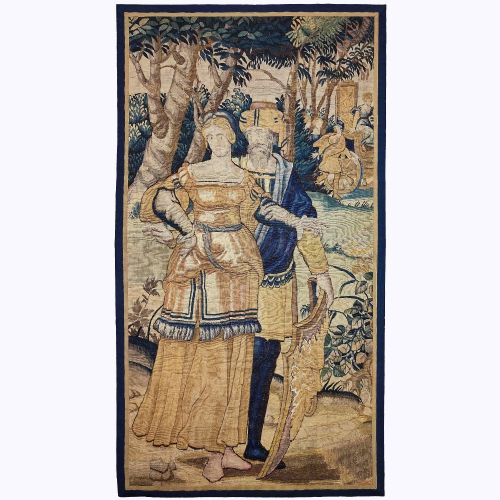
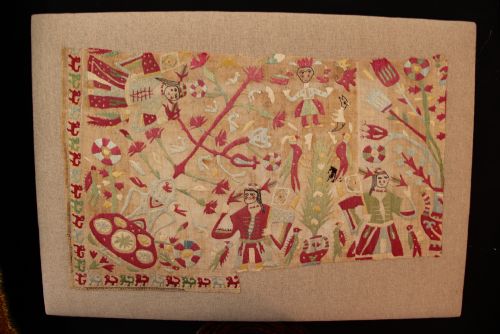
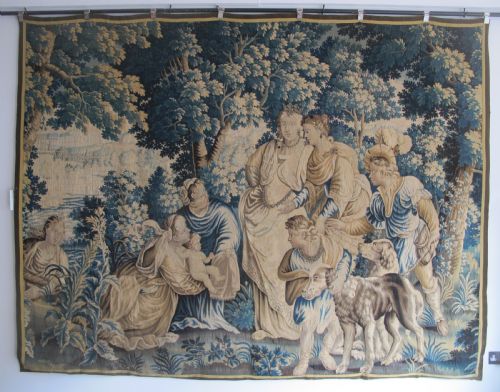
A historic wall textile encompasses large tapestries, framed needlework samplers, and embroidered silk panels originating from periods spanning the sixteenth century through the Victorian era. These pieces arrive in various formats, from monumental Flemish verdure scenes down to intimate band samplers and mounted fabric fragments.
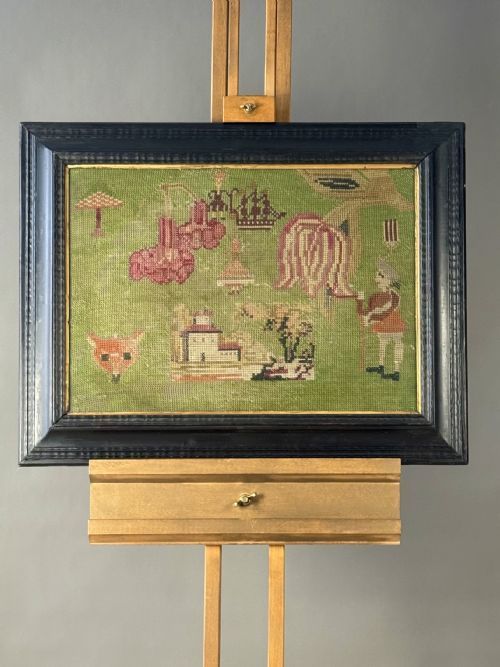
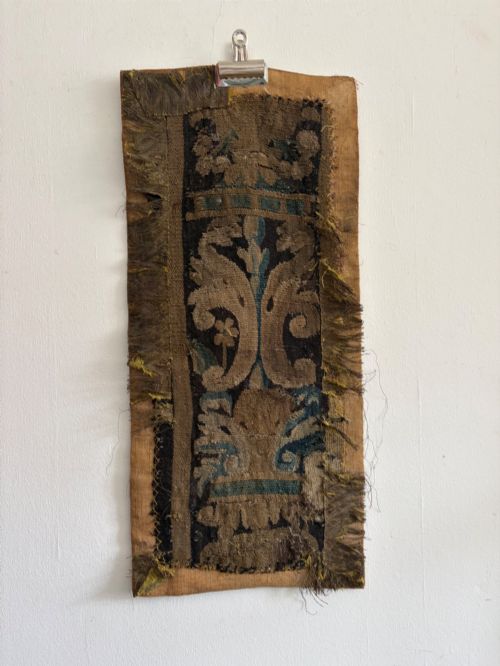
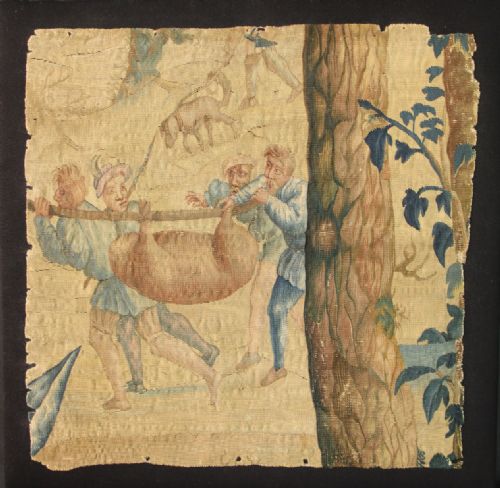
The version most commonly encountered on this page is the needlework sampler or framed needlepoint panel, often originating in the eighteenth or nineteenth century. Alongside these, Flemish and French tapestries or fragments mounted to linen appear frequently.
Origins stretch across England, Flanders, France, and Italy, reflecting diverse domestic and workshop traditions. Collectors find works executed in wool, silk, linen, and metal thread, sometimes housed in period giltwood frames.
Assessing Quality
Quality rests upon the fineness of the stitchery and the complexity of the design, where densely packed threads and sophisticated pictorial composition distinguish superior examples from simpler work. The handling of perspective, facial expression, and botanical detail in verdure tapestries or samplers marks the hand of a more accomplished workshop or maker.
Condition and integrity also dictate standing, as original borders, intact metal threads, and stable mounting to linen preserve the historical reading of a panel. Pieces retaining their original framing or uncompromised textile structure command greater interest among collectors.
Young makers stitched their exact ages and dates into samplers, inadvertently preserving centuries-old childhood milestones on linen.
The Historic Wall Textile Glossary
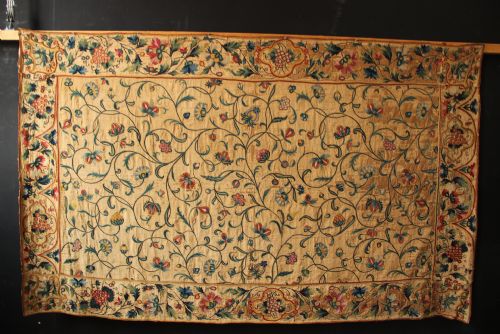
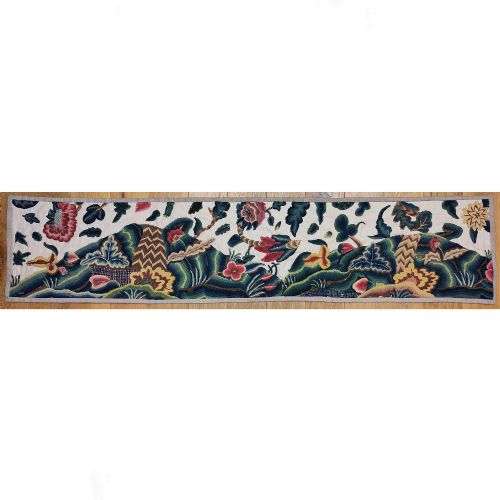
- Crewelwork
- Embroidery executed with wool yarn on a linen or cotton ground. This technique often produces textured floral and botanical motifs on English wall panels.
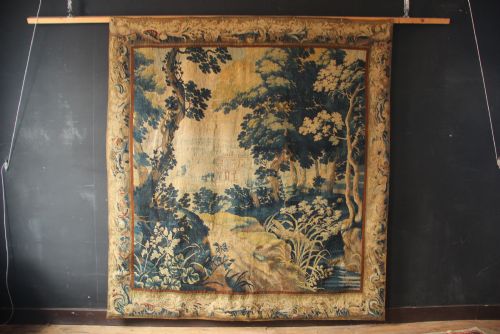
- Verdure Tapestry
- A tapestry featuring a predominant landscape or foliage design, frequently populated by trees, plants, and birds. These works often originate from Flemish or French looms.
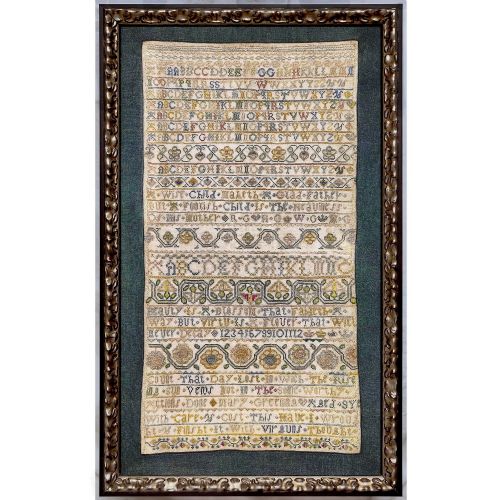
- Sampler
- A piece of needlework produced to demonstrate proficiency in various stitches and alphabets. They frequently include maker names, dates, and moral verses.
- Ciselé Silk Velvet
- A velvet fabric where areas of the pile are cut while other loops remain uncut to create a pattern. This material appears in decorative pilaster hangings.
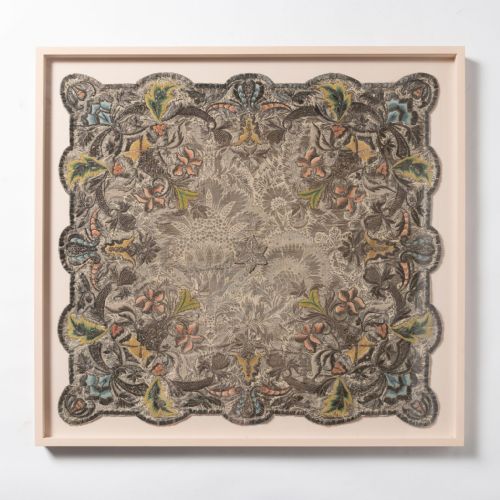
- Metal Thread
- A thread made of beaten metal or metal-wrapped fibre used in textile panels. It adds reflective highlights to wool and silk embroideries.
Historic Wall Textile: Frequently Asked Questions
How were historic wall textiles displayed?
Historic wall textiles were originally hung directly on stone or plaster walls to provide insulation and decoration in large rooms.
Today, many survive as framed wall art, mounted panels, or tapestries hung from iron rods.
What is a verdure tapestry?
A verdure tapestry depicts plant life, trees, and landscapes rather than human figures or historical narratives.
These pieces were woven in wool and silk to bring the feeling of gardens indoors.
How do I date a needlework sampler?
Samplers often include stitched dates, maker names, and ages, which provide a precise point of origin.
Stylistic cues in the lettering and border designs further help determine the period.
Can tapestry fragments be hung safely?
Many tapestry fragments are professionally mounted to linen or set behind glass in wooden frames to support their weight.
This preparation distributes tension evenly across the historic textile for secure wall display.