





Large Decorative Tapestry
A large decorative tapestry anchors a room with scale and texture, bringing centuries of textile craft directly to your walls.
Large Decorative Tapestry
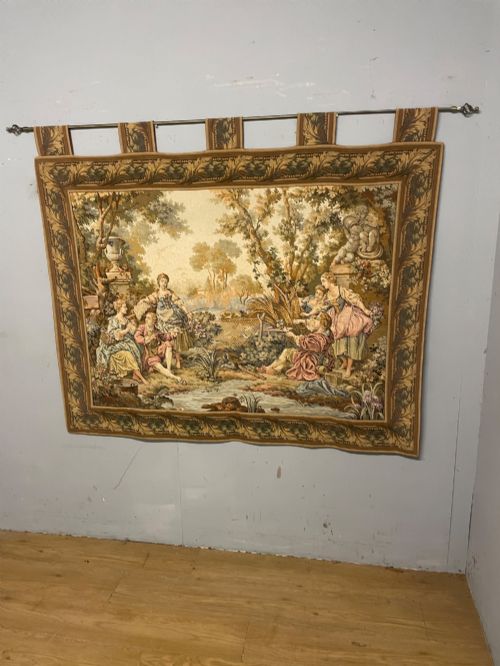
A large decorative tapestry encompasses woven wall coverings, embroidered textile panels, and temple paintings spanning from the sixteenth century to the twentieth century. These pieces function primarily as architectural wall hangings and large-scale art.
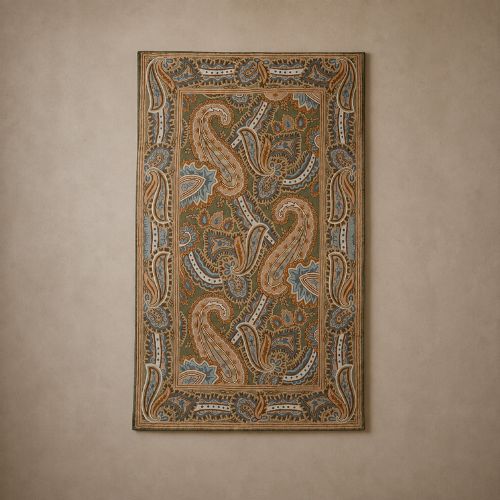
Origins range across European and Asian workshops, including French, Flemish, Moroccan, and Indian examples. Formats vary from towering Biblical Aubusson compositions to narrow vertical panels incorporating metal thread.
Materials and Construction
Construction relies heavily on traditional textile techniques using natural fibres such as wool, cotton, silk, linen, and crewelwork embroidery. Selected works incorporate metal thread and gold leaf to add reflective detail within the woven design.
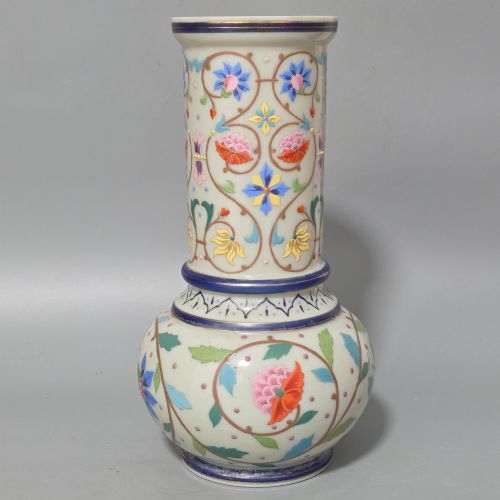
Alternative interpretations utilise opaque glass and enamel, as seen in specific decorative vases associated with the medium. Structural support ranges from woven textile foundations to panels mounted on board.
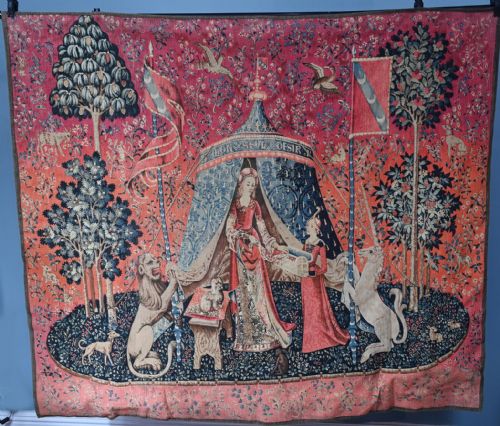
Unicorns and floral meadows occasionally share wall space with Moroccan glass vases, proving that historical decorators loved a lively mix.
Factors of Quality
Quality rests upon the density of the weave, the complexity of the narrative or botanical imagery, and the integrity of the natural fibres. Finer examples display sophisticated chromatic depth in wool and silk, whilst simpler pieces rely on straightforward needlepoint execution.
The precision of historical revivals, whether Jacobean, French Baroque, or Renaissance Revival, determines the visual authority of the piece. Preservation of edge bindings and the stability of the textile backing further distinguish masterworks from standard domestic panels.
The Large Decorative Tapestry Glossary
- Verdure
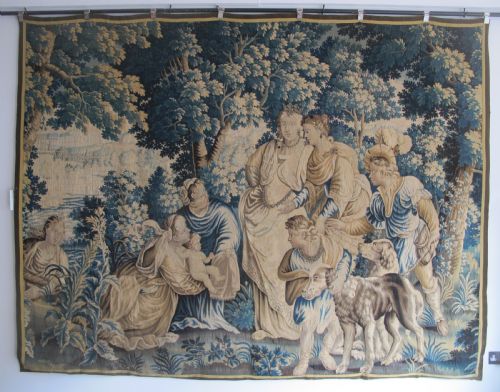
- A type of tapestry featuring a lush landscape background filled with foliage, trees, and often birds or animals. These scenes dominated Flemish production during the seventeenth century.
- Aubusson
- A traditional style of French tapestry woven in the town of Aubusson, known for pictorial scenes and floral motifs. They often depict classical, mythological, or biblical narratives.
- Suzani
- A type of embroidered tribal textile originating from Central Asia, typically featuring large floral medallions in silk on a cotton or linen ground. They were traditionally made as part of a bride's dowry.
- Kalamkari
- A traditional Indian textile technique involving hand-painting or block-printing on cotton fabric using natural dyes. Temple paintings executed in this manner depict complex mythological stories.
- Crewelwork
- A type of embroidery utilising wool yarn on a heavy linen or cotton twill fabric, creating raised surface textures. This technique defines many traditional English and revival panels.
Large Decorative Tapestry: Frequently Asked Questions
How do I hang a large tapestry?
Large textiles require even weight distribution across the upper edge to prevent distortion of the weave. Professional mounting typically involves stitching a supportive fabric sleeve to the reverse and sliding a flat wooden batten through it.
Alternatively, specific panels arrive mounted on rigid backing boards designed for direct wall attachment. Avoid hanging heavy textiles by isolated points or exposed pins that concentrate stress on fragile historical fibres.
What is a Flemish verdure tapestry?
A Flemish verdure tapestry depicts dense woodland foliage, landscapes, and natural flora, often populated by birds or distant chateaux. These landscape pieces were woven in Flanders during the seventeenth century to bring the illusion of nature indoors.
Over time, the original green dyed yarns frequently oxidise into subtle blue or brown tones, a natural characteristic of antique vegetable dyes.
How do I tell needlepoint from woven tapestry?
Woven tapestries are created on a loom by interlacing warp and weft threads simultaneously to form both the structure and the image. Needlepoint, conversely, is stitched by hand over a pre-existing canvas mesh foundation using a single yarn.
Needlepoint panels often exhibit a uniform grid texture, whereas woven examples display continuous interlocking thread paths visible on both front and reverse.