


Highland Loch Landscape Art
Highland loch landscape art captures the moody romance of Scottish waters and mountains through Victorian and early twentieth-century oil and watercolour paintings.
Highland Loch Landscape Art
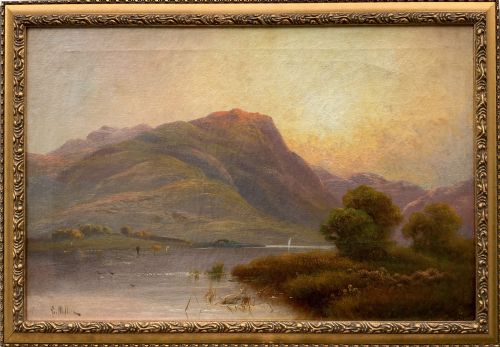
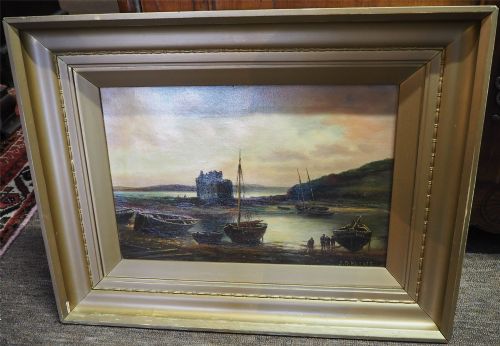
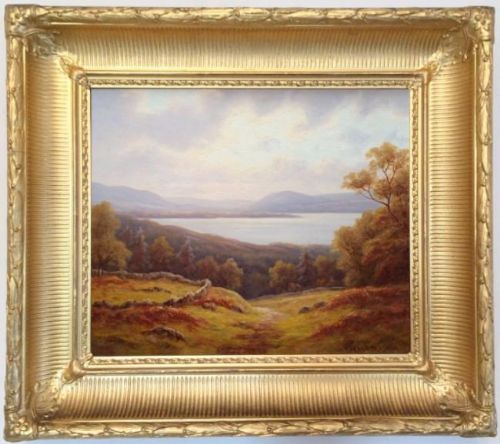
Highland loch landscape art brings the rugged atmosphere of Scottish inland waters and peaks directly into domestic interiors through historical paintings. Collectors seeking this genre encounter framed works depicting specific locations like Loch Lomond, Loch Tay, and Loch Awe alongside atmospheric mountain scenes.
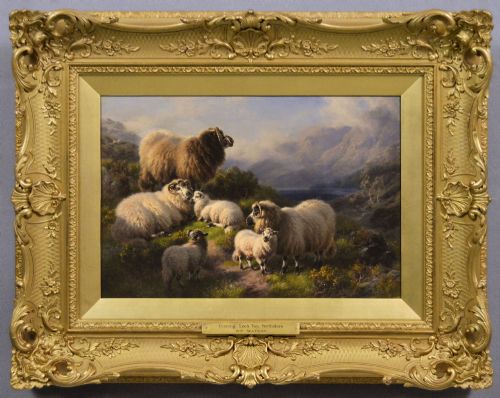
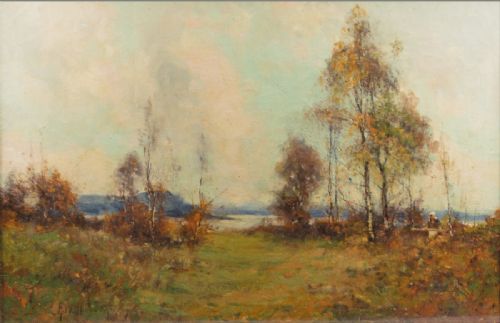
The pieces appearing on this page span the Victorian era into the mid-twentieth century, capturing shifting daylight over mist-shrouded terrain. Artists frequently populate these shores with Highland cattle or sheep to provide a sense of scale against the vast natural backdrops.
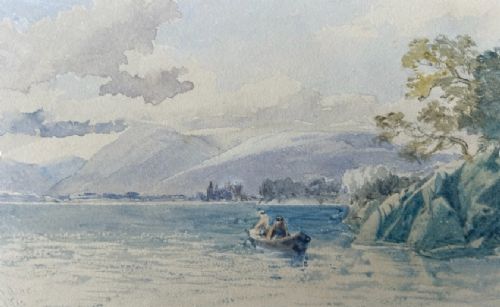
Works range from intimate watercolours on paper to large-scale oil paintings on canvas framed in ornate gilded wood. The Scottish Romanticism and Victorian Landscape Realism styles dominate, focusing on faithful depictions of topography combined with dramatic atmospheric effects.
Materials and techniques
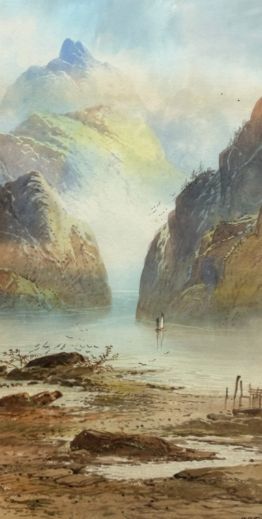
Painters of this genre worked primarily with oil paint on canvas or board, utilising rich pigments to build up heavy textures on the surface. Watercolours on paper also appear frequently, often finished with delicate brushwork to capture transparent mist and water reflections.
The support structures typically consist of stretched canvas mounted within wooden frames, frequently enhanced with moulded gesso and gilt finishes. These heavy frames protect the fragile paint layers and reflect the aesthetic tastes of the nineteenth-century domestic interior.
The listings span from the Victorian period through to the mid-twentieth century, utilising oil paint, canvas, watercolour, paper, and gilt gesso.
Factors of quality
Quality in these landscape paintings rests upon the handling of light, atmospheric depth, and the convincing depiction of water and mountainous terrain. Superior works manage scale and perspective effectively, drawing the viewer into the distance while maintaining painterly control over foreground details like livestock and heather.
The execution of the framing and the preservation of the original paint surface also influence the standing of a piece. Works retaining their untouched nineteenth-century gilt frames and stable canvas supports command greater appreciation among collectors.
Thomas Miles Richardson Jnr·William Henry Earp·William Watson Jnr·Alexander Wellwood Rattray·Everett Watson Mellor·Henry Robinson Hall·Henry Hillier Parker·James Bell Anderson·William Miller Frazer·Daniel Sherrin·Alfred de Breanski Snr·AJ Thornton·George Cole·GEORGE MELVIN RENNIE·E. M. Seaton·J Gibb
The Highland Loch Landscape Art Glossary
- Oil on Canvas
- A painting technique using pigments bound in a drying oil applied to a woven fabric stretched across a wooden frame. This method allows for thick impasto strokes and deep, blendable colour variations.
- Watercolour Painting
- An artwork created with water-soluble pigments on paper supports, valued for its translucent qualities. Artists often used this medium for smaller topographical studies and rapid field sketches.
- Gesso
- A plaster-like mixture applied to wooden frames as a base for moulding decorative relief work before gilding. It provides a smooth foundation for metallic leaf finishes.
- Scottish Romanticism
- An artistic movement focusing on emotion, awe, and the sublime power of untamed wilderness. It shaped how painters interpreted the dramatic weather and topography of the Highlands.
- Gouache
- An opaque water-based paint medium that includes a white pigment filler, producing heavier, solid colour blocks. It appears in several period works alongside traditional watercolours.
Highland Loch Landscape Art: Frequently Asked Questions
What subjects appear in these paintings?
These artworks depict Scottish inland lochs, mountainous terrain, and misty valleys, frequently featuring grazing Highland cattle or sheep along the shoreline. Many pieces reference specific geographical locations across Scotland.
The compositions emphasise the dramatic weather, changing light, and vast scale of the northern landscape during the nineteenth and early twentieth centuries.
How should I hang oil paintings?
Heavy framed oil paintings require secure wall fixings anchored directly into masonry or solid studs to support their substantial weight safely. Ensure the chosen wall space avoids direct, harsh sunlight and excessive humidity.
Keep the artworks away from direct heat sources like radiators to prevent the canvas and wooden stretchers from warping or cracking over time.
How do I date a Victorian landscape?
Dating relies on examining the stretcher construction, canvas type, framing style, and any artist signatures or inscriptions found on the reverse. Victorian works often display specific nineteenth-century framing techniques and distinct registration marks.
Examine the backboards and labels for remnants of old gallery exhibitions or handwritten notes left by previous owners or the artist.
Are watercolours more fragile?
Watercolour paintings on paper are more sensitive to light exposure than oil paintings and require placement away from direct illumination. Framing behind protective glass shields the delicate pigments and paper supports from atmospheric pollutants.
Keep these lighter works in stable indoor environments to prevent the paper from yellowing or sustaining moisture damage.