




Framed Mountain Loch Painting
A framed mountain loch painting brings the moody grandeur of the Scottish highlands straight onto the wall through nineteenth-century brushwork.
Framed Mountain Loch Painting
When you search for a framed mountain loch painting, you encounter nineteenth-century British realism and Scottish impressionism capturing misty mornings and still waters. The Victorian period dominates the selections, alongside Edwardian and early twentieth-century examples.
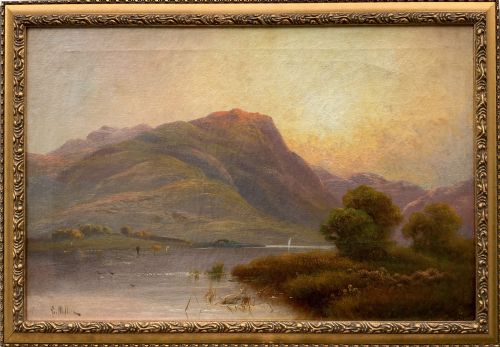
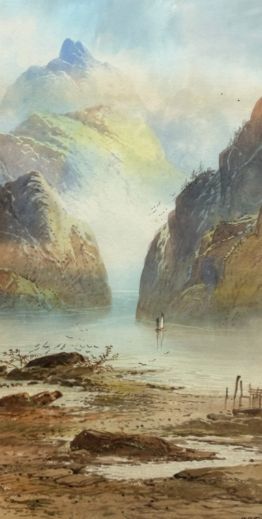
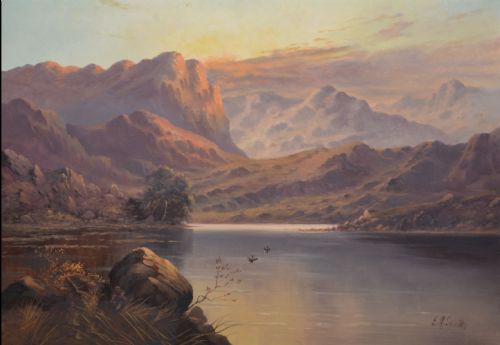
Most pieces depict Highland cattle, dramatic peaks, and tranquil water under varying daylight, housed within traditional wooden or gilt frames. Oil paintings on canvas and delicate watercolour paintings on paper both appear frequently across the inventory.
The visual focus rests squarely on atmospheric weather effects over Scottish bodies of water such as Loch Tay, Loch Lubnaig, and Loch Clare. These works serve as quintessential windows into traditional British landscape art.
How they were made
Artists built these scenes using oil paint on canvas or gouache and watercolour on paper, mounted behind glass where appropriate. Skilled hands applied pigment to capture the subtle play of mist and sunset light over water.
Makers housed the completed canvases and papers in heavy wooden frames, frequently finished in gilt wood to complement the painterly drama. Each piece relies on traditional nineteenth-century framing methods to protect the delicate media within.
Highland cattle occasionally wander into the mist to photobomb nineteenth-century mornings.
What varies in quality
Quality reveals itself in the handling of light and atmospheric depth, where accomplished brushwork distinguishes masterly depictions of morning mist from routine topographical records. The articulation of distant peaks and reflective water surfaces separates the ambitious canvases from simpler student works.
The preservation of the original canvas, paper, and gilt wooden frame dictates the overall integrity of the piece. Intact paint layers and well-maintained frames ensure the artwork retains its original visual impact.
William Henry Earp·William Miller Frazer·Alfred de Breanski Snr·Gustave De Breanski·GEORGE MELVIN RENNIE
The Framed Mountain Loch Painting Glossary
- Gilt wood
- Wood carved and coated with gold leaf or gold paint. This finish provides a bright, reflective border that enhances the tones of the oil painting within.
- Watercolour painting
- Artworks created using water-soluble pigments on paper. These pieces require glass protection to prevent moisture damage and fading over time.
- Oil on canvas
- Pigment mixed with drying oils applied to stretched fabric. This durable medium allows for rich textures and deep atmospheric blending.
- Gouache
- An opaque water-based paint variant. It dries to a matte finish that highlights sharp compositional details in early twentieth-century works.
- Victorian
- A nineteenth-century period spanning the reign of Queen Victoria. Works from this era often embrace romantic realism in natural landscapes.
Framed Mountain Loch Painting: Frequently Asked Questions
How do I clean the glass?
Wipe the glass gently with a soft microfibre cloth slightly dampened with water. Avoid spraying liquid directly onto the frame or painting.
Keep moisture away from the wooden edges and the paper backing to prevent water damage.
Where should I hang it?
Select an interior wall away from direct sunlight and damp conditions to protect the canvas and paper. Consistent indoor temperatures prevent warping in the wooden frame.
Position the artwork at eye level to fully appreciate the atmospheric depth of the water and mountains.
How do I identify the period?
Examine the framing style, canvas texture, and backboards for clues regarding the age of the piece. Victorian works frequently feature heavy gilt wooden mouldings and handwritten artist labels.
Compare the subject matter and signature style with known regional painters from the nineteenth and early twentieth centuries.
Are these works original?
The inventory consists of period originals executed by hand in oil, watercolour, or gouache. Each piece reflects the distinct touch of the artist who painted it.
Signatures and historical inscriptions on the reverse often confirm the authenticity of the artwork.