


Highland Cattle Porcelain
Highland cattle porcelain pieces bring hand-painted Scottish scenes onto fine ceramic forms.
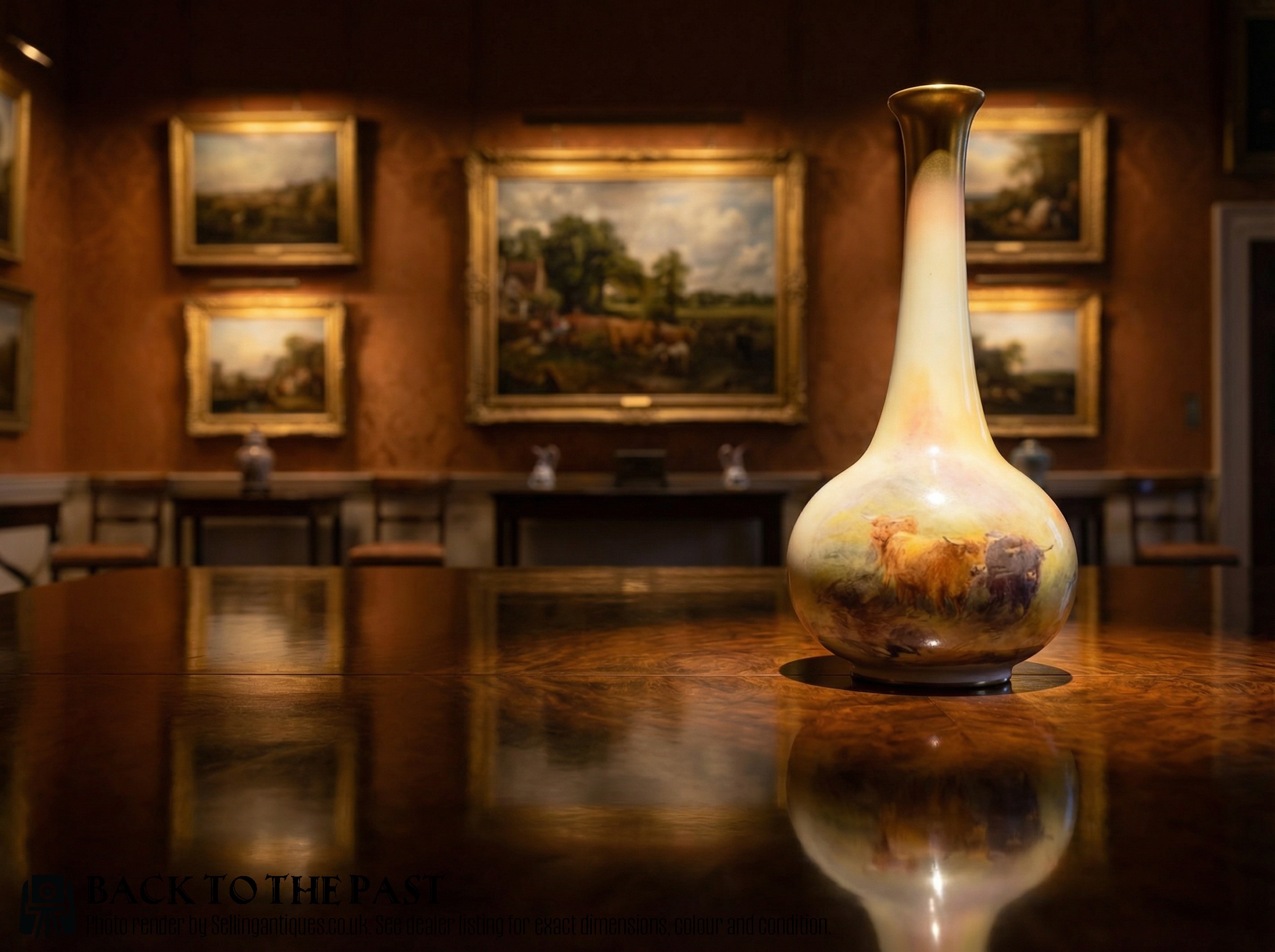
Highland Cattle Porcelain
Highland cattle porcelain centres on hand-painted representations of cattle within pastoral landscapes, appearing on cabinet plates, plaques, ewers, and vases.
The objects on this page originate from the Edwardian period and the early decades of the twentieth century, showcasing traditional artistic subjects of the era.
Buyers encounter forms such as spill vases, bow vases, and large covered urns, with plates and wall art also representing the genre.
How they were made
These items utilise porcelain and bone china as the primary ceramic bodies, shaped into decorative vases, ewers, and flat plaques.
Makers applied enamel paints by hand to depict the cattle and landscapes, frequently adding gold leaf, gilding, and gilt accents to the borders and handles.
Certain pieces incorporate glass or feature within giltwood framing, particularly in the category of wall art and decorative plaques.
Highland Cattle Porcelain Retail Price Guide 2026
Typical asking prices for highland cattle porcelain among the pieces listed under this phrase on Sellingantiques today, from the lower quarter to the upper quarter. They describe what is for sale here now, not the wider market.
Materials across these listings include porcelain, bone china, enamel, gold leaf, gilding, giltwood, and glass.
What varies in quality
Quality differentiates by the complexity of the painted landscape and the level of detail within the depiction of the cattle themselves.
The application of gilding and the inclusion of gold leaf create distinction between standard cabinet items and larger, highly ornamented display pieces.
The scale of the object influences the work, as large vases and covered urns demand greater artistic execution across curved ceramic surfaces.
Harry Stinton·John Stinton·Royal Worcester
The Highland Cattle Porcelain Glossary
- Spill vase
- A tall, narrow vessel originally designed to hold wooden spills for lighting fires or candles. These items now function purely as decorative ornaments.
- Cabinet plate
- A decorative ceramic plate intended for display in a cabinet or on a wall rather than for dining use. They often feature intricate painted artwork.
- Ewer
- A large jug with a wide spout and a curved handle, traditionally used for pouring water but produced here as an ornamental vase.
- Gilt
- A thin layer of gold applied to the surface of porcelain or wood to provide metallic highlights. It enhances the decorative appeal of Edwardian ceramics.
- Plaque
- A flat panel of porcelain designed to be hung on a wall as art rather than used as a functional vessel.
Highland Cattle Porcelain: Frequently Asked Questions
What is highland cattle porcelain?
Highland cattle porcelain consists of ceramic pieces, primarily vases and plates, painted with scenes of cattle in Scottish landscapes. These items date from the early twentieth century.
Artists used enamel paints on porcelain and bone china bodies, often finishing the edges with gilding.
Who painted these porcelain pieces?
Many pieces from this genre were painted by artists associated with Royal Worcester, particularly members of the Stinton family.
Signatures on the front or body of the ceramics often attribute the artwork directly to these specific painters.
How are these plates displayed?
Cabinet plates and porcelain plaques are typically shown mounted on walls or placed securely within display cabinets. Their painted surfaces are intended solely for visual appreciation.
Due to the delicate enamel work and gilt edges, these objects remain purely decorative rather than functional.
What periods do these pieces date from?
The pieces available originate primarily from the Edwardian era and the decades spanning from nineteen hundred to nineteen thirty. This period represents the height of traditional hand-painted ceramic production.
Stylistic elements follow Edwardian traditional design principles, incorporating naturalistic animal subjects.