

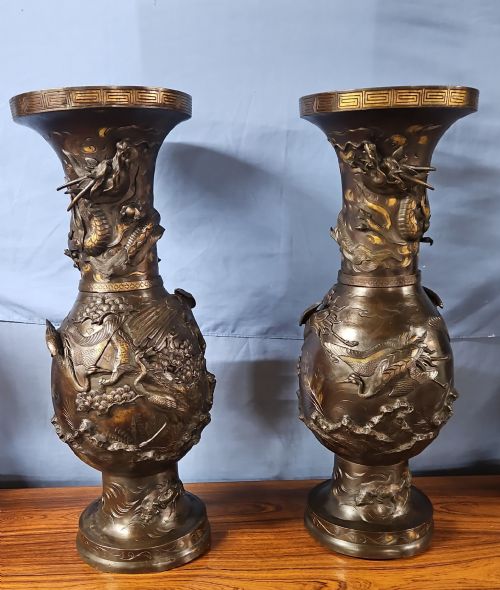


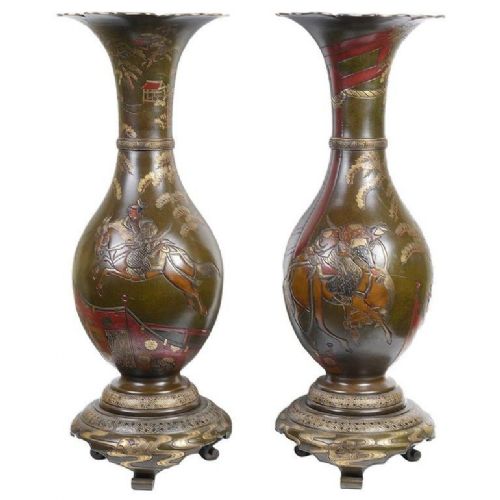


High Relief Bronze Vase
A high relief bronze vase brings sculptural depth into a room, featuring motifs raised boldly from the metal surface.
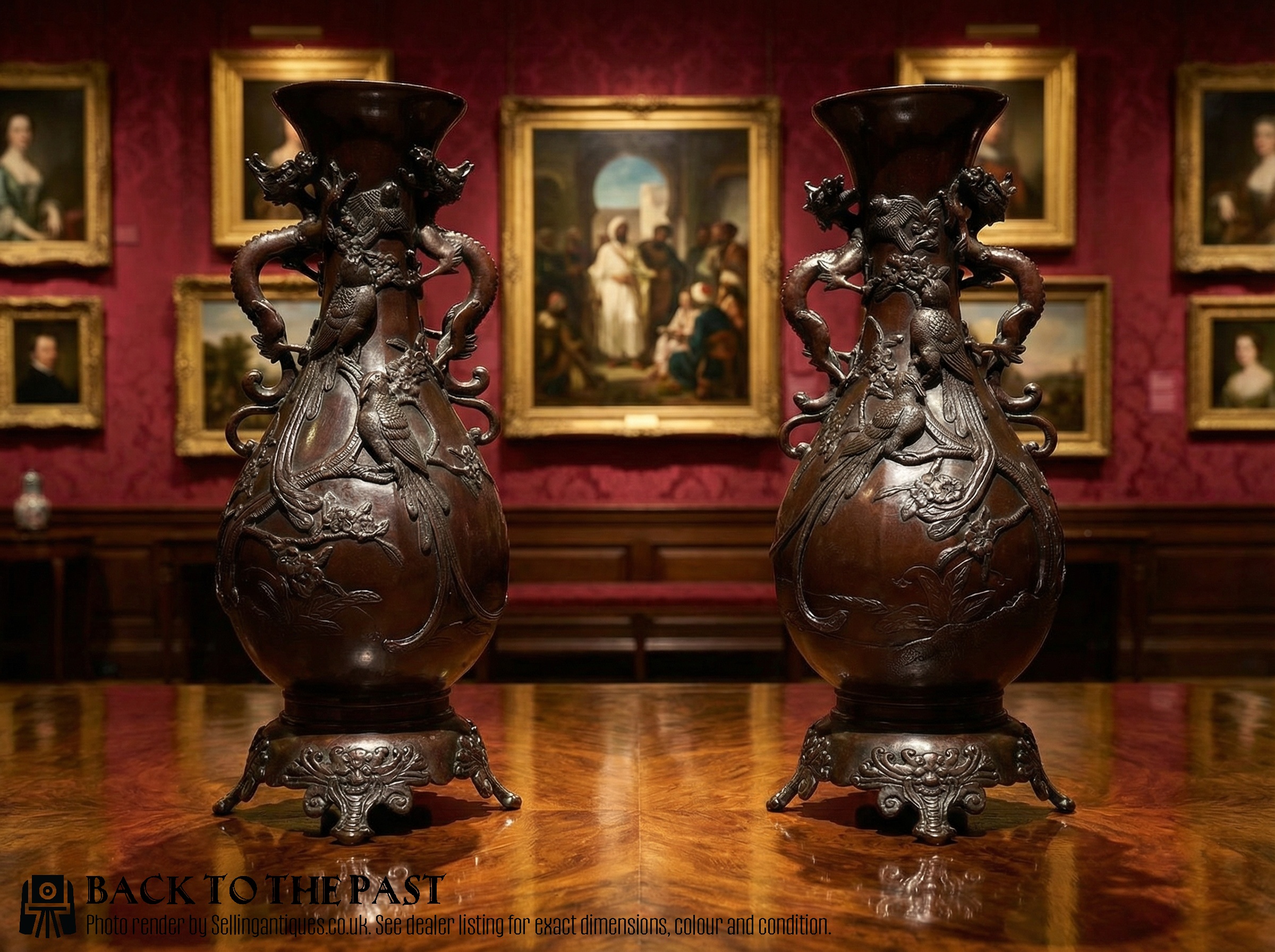
High Relief Bronze Vase
A high relief bronze vase is a substantial decorative vessel defined by prominent, three-dimensional surface decoration. When searching for a high relief bronze vase, buyers encounter items originating predominantly from the Meiji period of Japan and the Qing dynasty of China, alongside pieces dated to the nineteenth century, nineteen hundred, and nineteen ten.
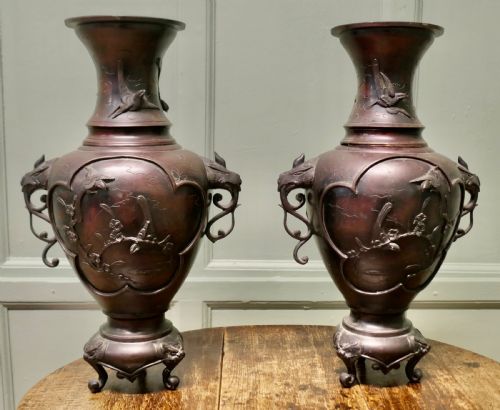
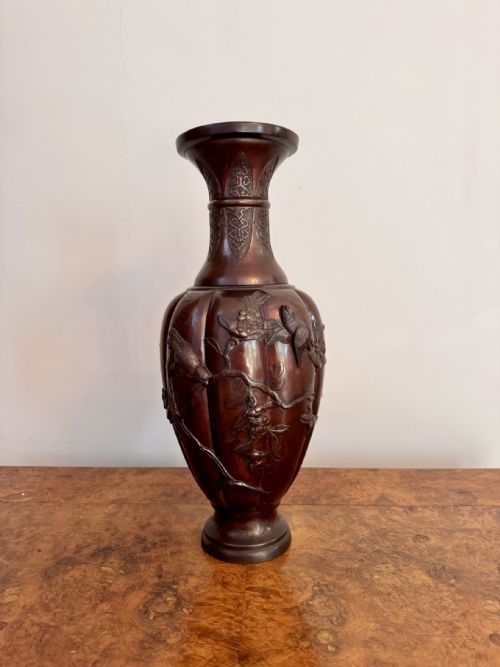
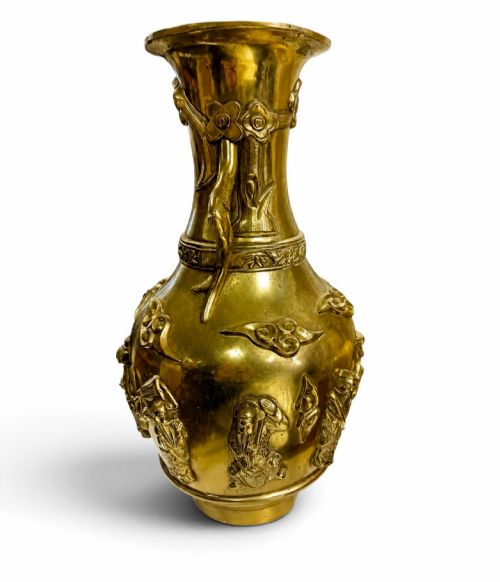
The forms vary widely across the selection, ranging from large baluster shapes and amphorae to dedicated posy vases, jardinières, and urns. Many examples are presented as matched pairs rather than single items, featuring surface details that depict floral arrangements, birds, and figures such as Daoist immortals.
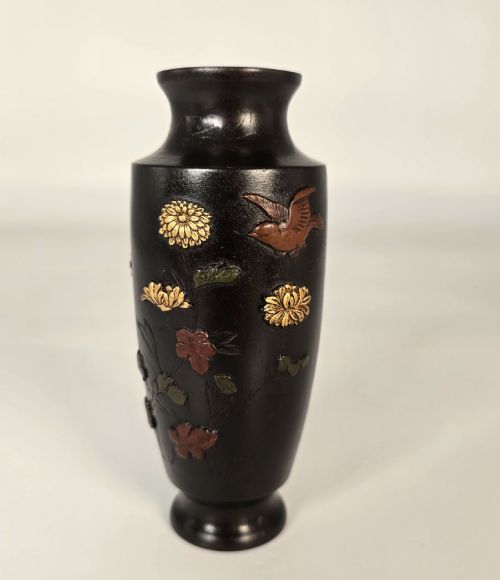
Originating largely from East Asian decorative traditions, these vessels frequently incorporate mixed metal elements, enamel accents, and raised decorative elements. Buyers meet both modest fifteen-centimetre vessels and massive forty-three-centimetre display pieces produced during the Victorian era.
What varies in quality
Quality in these vessels is evident in the crispness and complexity of the raised metalwork. The finest examples demonstrate meticulous rendering of intricate floral, avian, and figural subjects without loss of detail across the high-relief surface.
The integration of mixed metals, gold inlay, and controlled patination distinguishes superior items from standard production pieces. Additionally, the overall balance of large forms, such as baluster bodies and amphora shapes, reflects the skill applied during casting.
Materials documented across the available inventory include patinated bronze, copper alloy, gilt bronze, brass, copper, and gold inlay.
Genryusai Seiya
The High Relief Bronze Vase Glossary
- Baluster
- A tall vase form characterised by a bulbous lower portion tapering to a narrow neck and flared rim. This traditional shape provides a stable foundation for expansive relief decoration.
- Patinated Bronze
- Bronze metal treated with chemical solutions to produce a specific surface colour and aged appearance. This treatment deepens the tonal contrast beneath the raised elements.
- Mixed Metal
- An alloy technique combining different metals such as copper, brass, and bronze within a single design. It creates varied metallic hues across the surface of the vessel.
- High Relief
- A sculptural technique where figures and motifs project significantly from the background plane. In these vases, the technique gives birds, flowers, and immortals a three-dimensional presence.
High Relief Bronze Vase: Frequently Asked Questions
What is a high relief bronze vase?
A high relief bronze vase is a decorative metal vessel featuring prominent three-dimensional motifs that project significantly from the body.
These pieces typically showcase detailed depictions of flora, fauna, and figural scenes created by skilled metalworkers.
How do I identify a Meiji period bronze vase?
Meiji period vessels originate from late nineteenth and early twentieth-century Japan, often displaying traditional Japanese artistic motifs.
Look for distinctive casting styles, signature marks, and the incorporation of mixed metals or fine patination typical of that era.
Where should I display a large bronze vase?
Large bronze vases require a sturdy surface capable of supporting substantial weight, such as a heavy wooden cabinet or a dedicated pedestal.
Placing them in spaces with adequate clearance allows the three-dimensional relief work and patinated surfaces to be viewed from multiple angles.
Are these bronze vases sold in pairs?
Many listings comprise matched pairs of vases intended for balanced decorative placement on mantelpieces or cabinets.
Single vessels also appear, offering distinct focal points for interior spaces.