
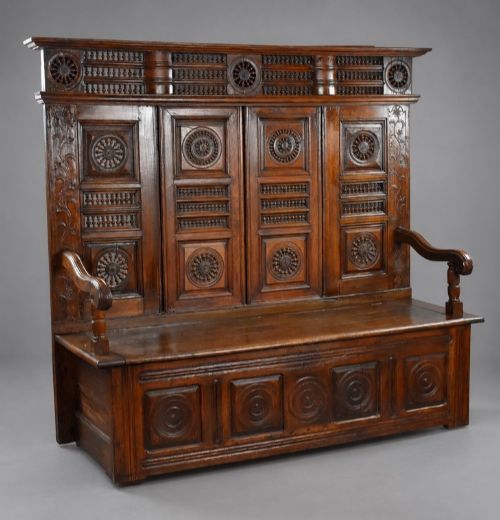
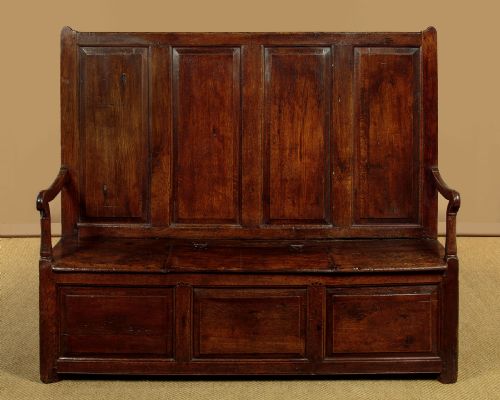
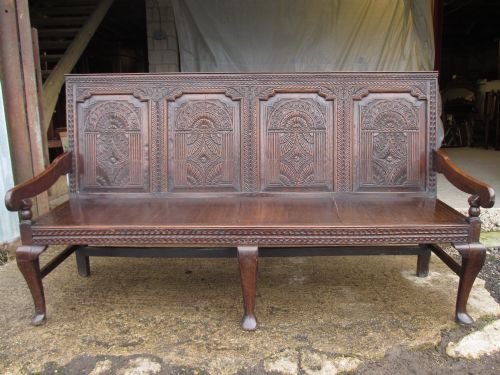
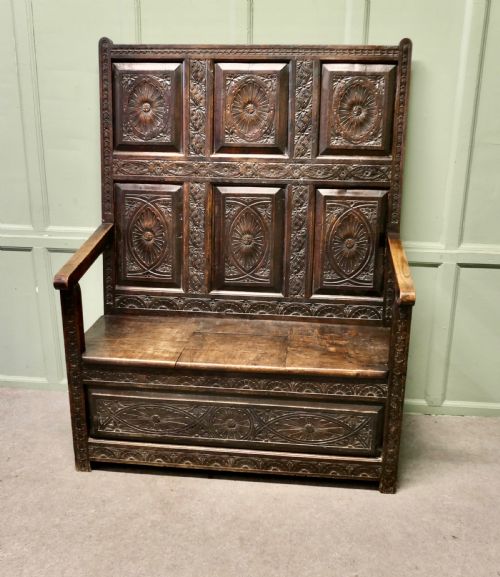
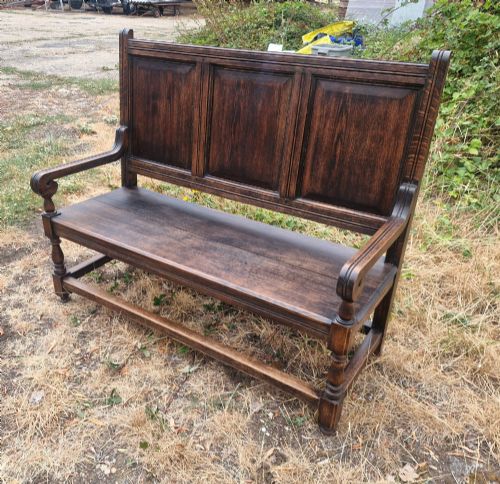
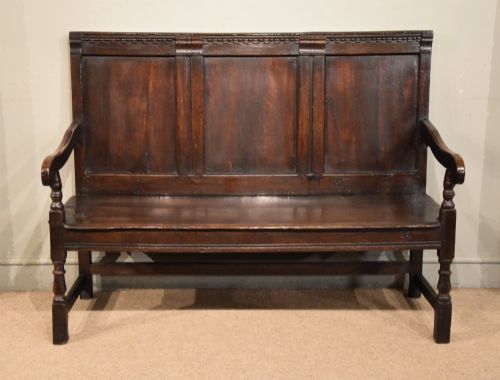
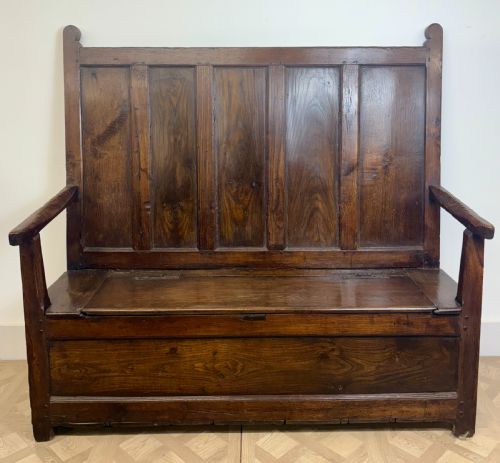
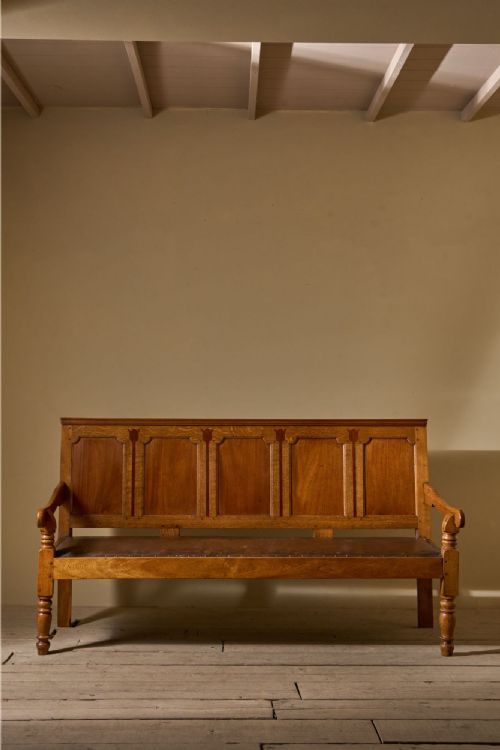
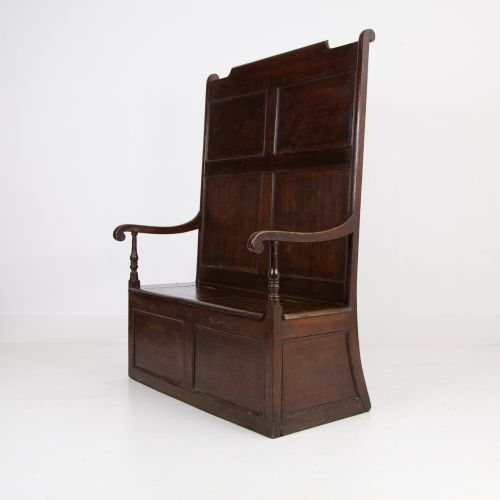
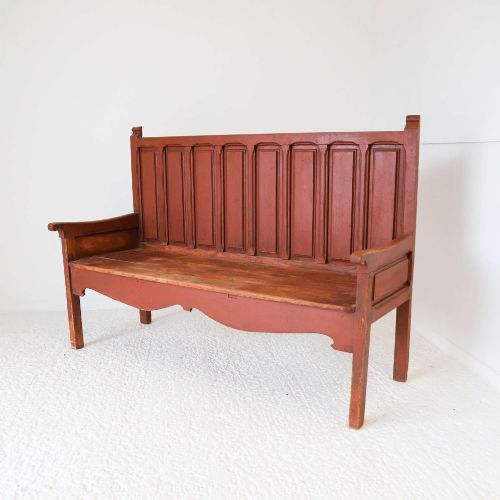
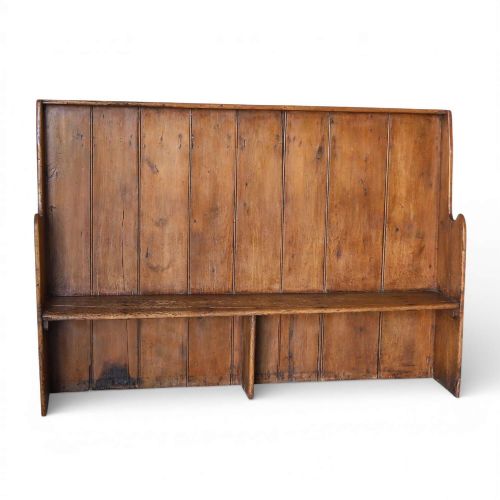
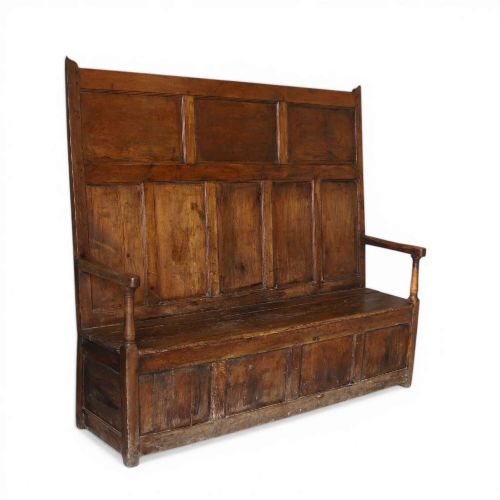


High Panelled Back Bench
A high panelled back bench provides substantial timber seating designed to block draughts in traditional rooms.
High Panelled Back Bench
A high panelled back bench represents a sturdy form of domestic seating developed to shelter occupants from cold air currents in historical interiors. These pieces typically combine a high wooden back with solid sides and a box base or open legs, functioning historically as a primary seat near the hearth.
The selections span centuries of vernacular woodworking traditions, primarily emerging from 17th-century origins through Georgian workshops and into Victorian revivals. Oak dominates the earliest examples, while pine, elm, and ash appear frequently in regional country pieces alongside Spanish and Italian variants.
Forms vary from straightforward multi-panelled backs to elaborate carved constructions and enclosed box seats designed for storage. Buyers encounter both utilitarian painted pine tavern pieces and finely panelled domestic seating bearing period joinery.
How they were made
Makers constructed these benches using heavy solid timbers, primarily oak and pine, joined through traditional mortise and tenon framing. Panels fit into grooved stiles and rails, allowing the wood to expand and contract naturally across seasonal temperature shifts without cracking the structure.
Surface treatments range from waxed natural patinas and honey brown tones to original historic paint finishes. Carving, when present, utilises chip carving or relief work directly into the solid wood panels rather than applied ornamentation.
Some box settles doubled as makeshift beds by the fire on exceptionally cold winter nights.
What varies in quality
The integrity of the structural joinery and the extent of original timber remaining dictate the standing of an individual piece. Retaining original panel pegs, uncompromised seat boards, and untouched surface patinas separates superior historical examples from heavily restored or altered items.
Proportion and stylistic cohesion separate provincial utility from accomplished regional design. Superior pieces demonstrate balanced panel proportions and harmonious carving that reflects the aesthetic standards of their specific period and origin.
The High Panelled Back Bench Glossary
- Settle
- A wooden bench with high back and solid arms designed to shield the sitter from draughts. These seats served as principal furniture items in domestic halls and taverns.
- Box settle
- A variation featuring a storage compartment beneath the seat accessible via a hinged lid or lift-up panel. This design kept hearth fuel or household goods close at hand.
- Stile and rail
- A frame construction method where vertical stiles and horizontal rails hold a central floating panel. This technique provided stability against warping in large wooden backs.
- Vernacular
- Furniture built by local tradesmen using regional traditions and materials rather than following metropolitan court styles. These pieces emphasise utility and local timber availability.
- Patina
- The surface sheen and colour developed by wood through decades of handling, waxing, and ageing. A desirable surface exhibits depth and consistency gained through long use.
High Panelled Back Bench: Frequently Asked Questions
Where were high panelled back benches placed?
These benches traditionally stood near the fireplace in large hall spaces or kitchens to intercept cold draughts. Their high backs and solid sides created a microclimate of warmth for the occupants.
Later examples migrated to hallways and porches as decorative seating or reception furniture in country houses.
How do I date an oak settle?
Dating relies on examining the construction methods, tool marks, and style of the panel joinery. Early 17th-century pieces display hand-riven timber, pegged joints, and simple geometric mouldings.
Eighteenth and nineteenth-century variants introduce standardised sawmill timber, thinner panels, and revival decorative motifs such as linenfold or scrolling.
What is the difference between a settle and a bench?
A settle incorporates a solid high back and enclosed sides designed specifically for wind protection. Standard benches offer open seating without protective barriers or integrated storage bases.
High panelled back benches combine these architectural elements to function almost as moveable partitions within a room.
How do I care for antique wood furniture?
Maintain stable indoor humidity levels and keep wooden seating away from direct heat sources and radiators. Sudden temperature changes cause timber to split and historical glues to fail.
Apply a traditional beeswax polish sparingly to nourish the surface and preserve the natural patina without building up greasy residue.