
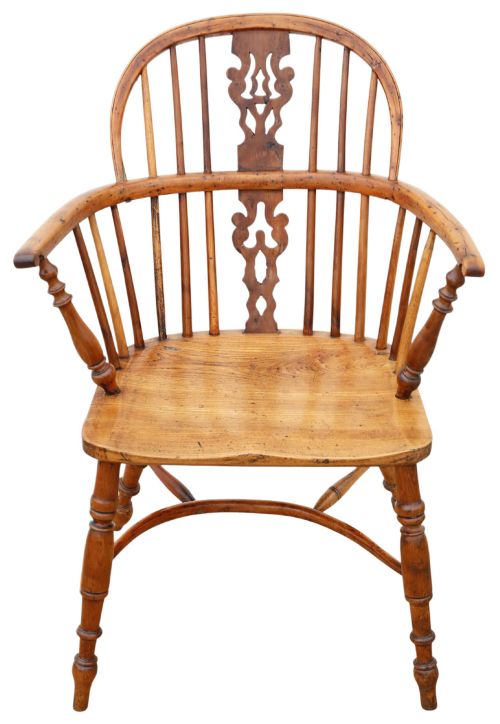
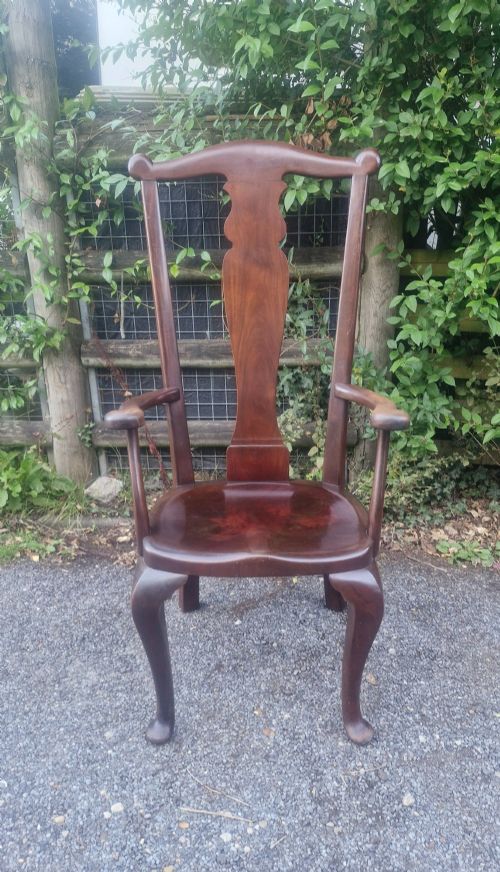
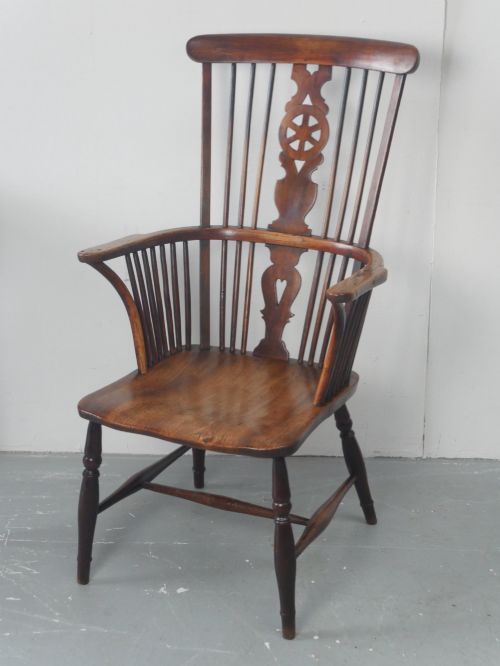
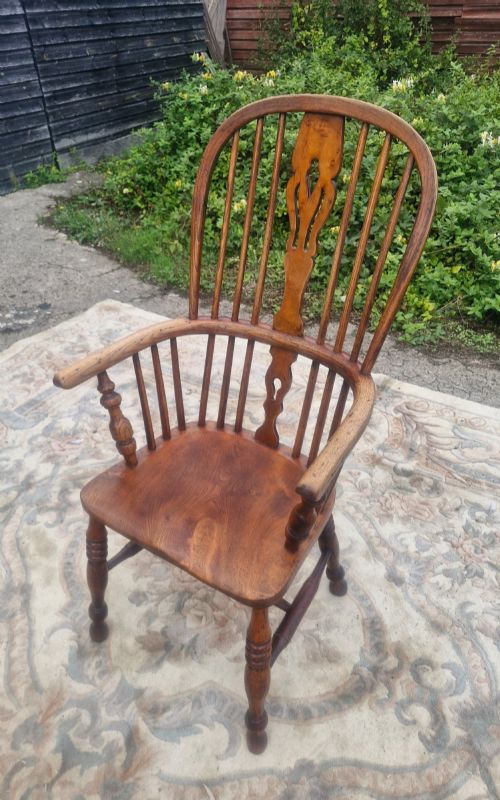

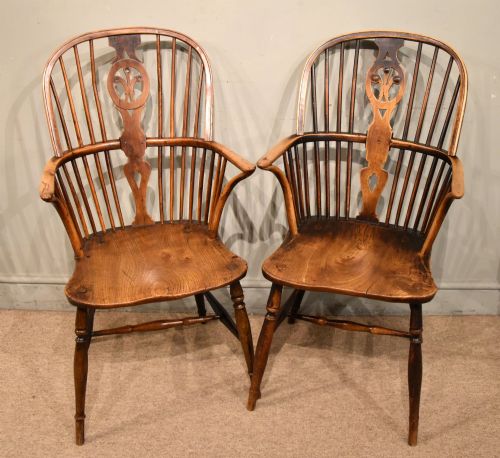
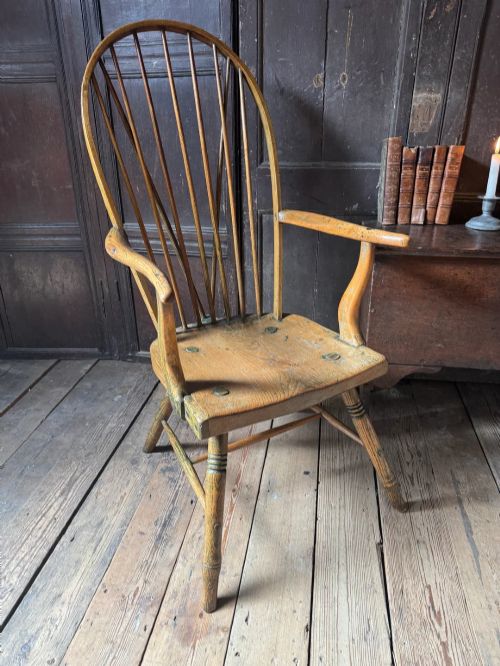
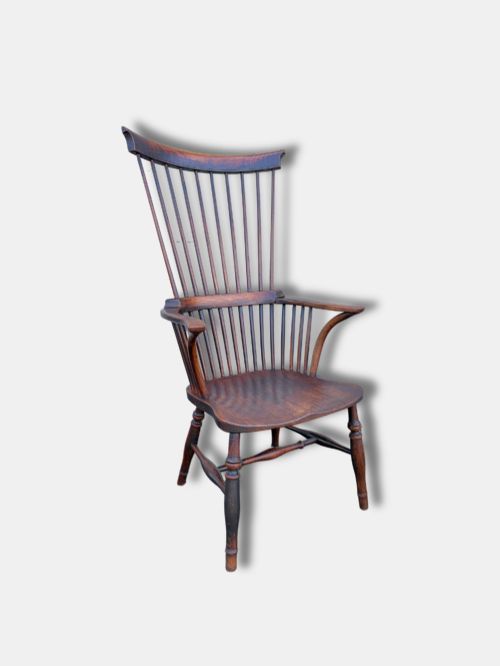
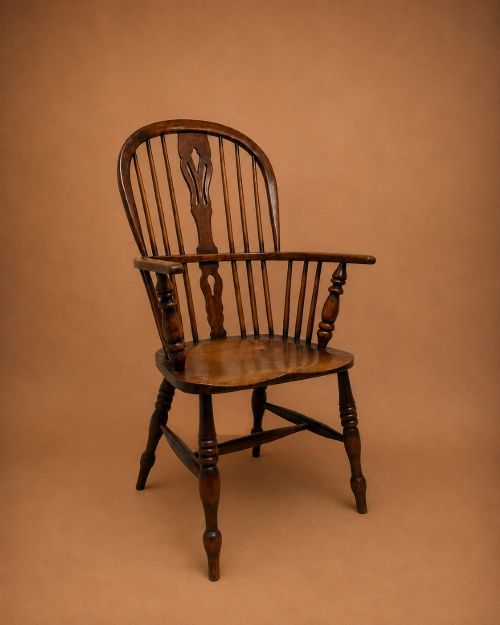
High Back Wooden Armchair
A high back wooden armchair offers substantial timber construction and upright support, emerging in various vernacular and formal idioms.
High Back Wooden Armchair
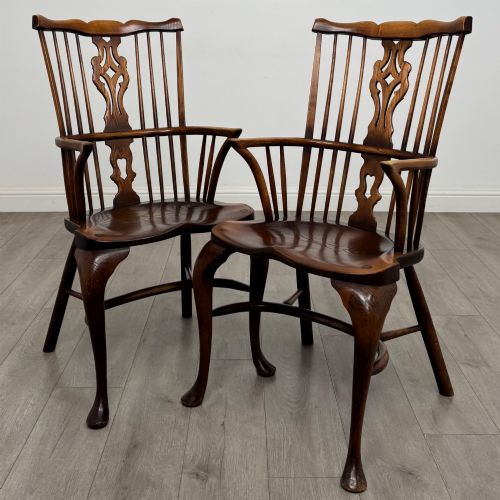
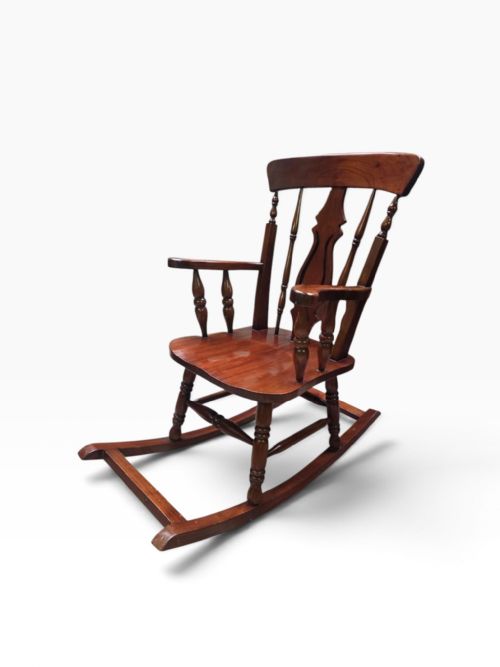
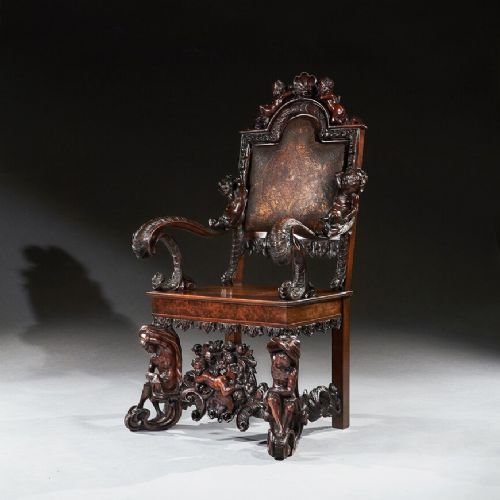
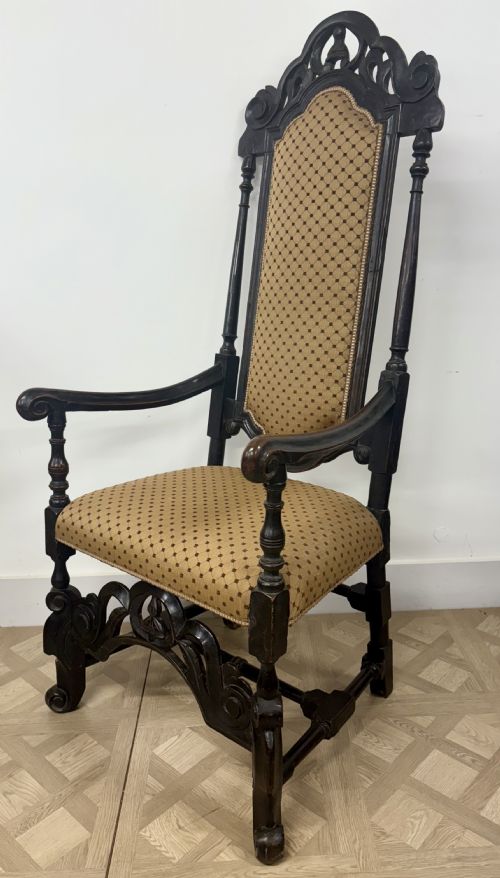
A high back wooden armchair encompasses traditional Windsor forms, kitchen seating, and carved revival pieces spanning several centuries. The search phrase covers regional vernacular designs alongside more formal walnut and mahogany iterations.
Most examples found in this inventory hail from the 18th and 19th centuries, utilising native hardwoods for sturdy domestic use. These seating options range from comb-back and hoop-back Windsor variations to heavy oak and walnut frames.
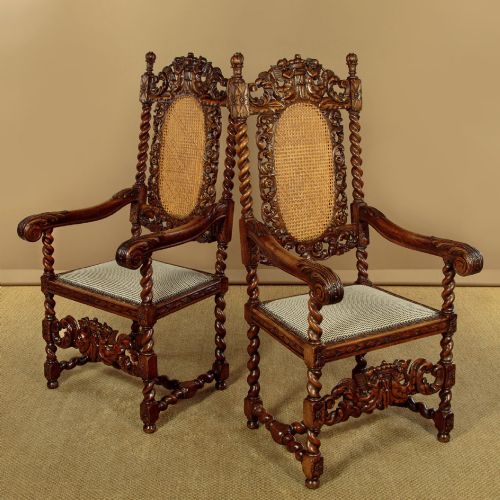
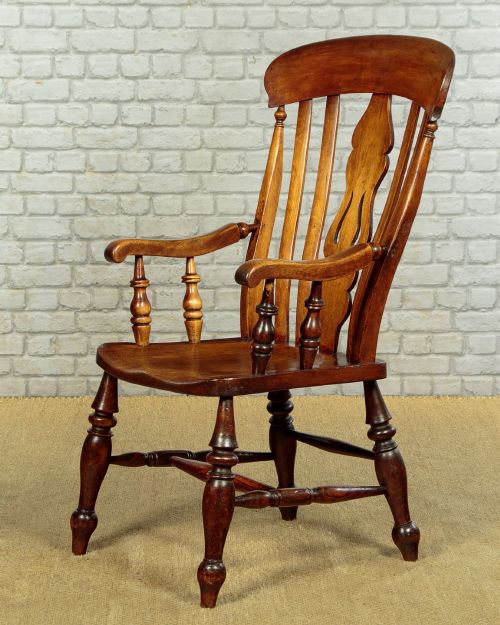
Country house and farmhouse pieces dominate the selection, frequently pairing elm seats with ash or yew spindles. Formal counterparts include carved walnut and mahogany chairs reflecting earlier Baroque and Georgian styles.
Materials and Construction Methods
Chairmakers relied on a combination of native timbers, frequently using dense elm for solid saddle-shaped seats and flexible ash, yew, or beech for steam-bent hoops and spindles. This multi-wood construction allowed each component to perform its specific structural task efficiently.
Joinery methods involved traditional wedged tenons and mortise joints, binding turned legs and arms directly into the solid plank seat without metal fixings. Formal variants utilised pegged oak or carved walnut frames assembled with tenons and decorative mouldings.
Evaluating Seating Quality
Quality rests upon the preservation of the original timber and the crispness of the turned spindles or carved details. Chairs retaining their initial surface patination and untouched wedged joinery command greater appreciation among collectors.
Proportion and comfort distinguish superior vernacular pieces from standard utilitarian seating. The subtle tapering of a comb back and the balanced grain of a thick elm seat reflect the maker's eye for form.
Liberty Morris And Co·Andrea Brustolon·William Morris
The High Back Wooden Armchair Glossary
- Windsor
- A traditional chair construction where legs and back spindles are tenoned directly into a solid wooden seat. These chairs often feature bentwood hoops and distinct regional styles.
- Hoop back
- A continuous bentwood bow forming the arms and the arched back of a chair. This technique provides inherent spring and resilience to the frame.
- Carver
- A traditional term for an armchair, typically used to describe a larger elbow chair designed to match a set of smaller dining chairs.
- Vernacular
- Unpretentious, locally made furniture designed for practical domestic use rather than following strict academic architectural styles.
High Back Wooden Armchair: Frequently Asked Questions
What woods were used for these chairs?
Makers utilised native hardwoods suited to different structural demands. Elm provided a tough, non-splitting surface for solid seats.
Ash and yew offered flexibility for steam-bent components and slender spindles, while oak and walnut appeared in formal revival frames.
Where were these chairs originally made?
Many regional pieces emerged from English country workshops, farmhouse kitchens, and provincial centres like the West Country or Lincolnshire.
Other formal examples reflect continental design influences and urban cabinet makers.
How should I care for wooden frames?
Keep wooden furniture away from direct heat sources and sudden humidity changes to prevent timber shrinkage and cracking.
Apply traditional wax polish occasionally to nourish the surface and maintain the historic patination.