
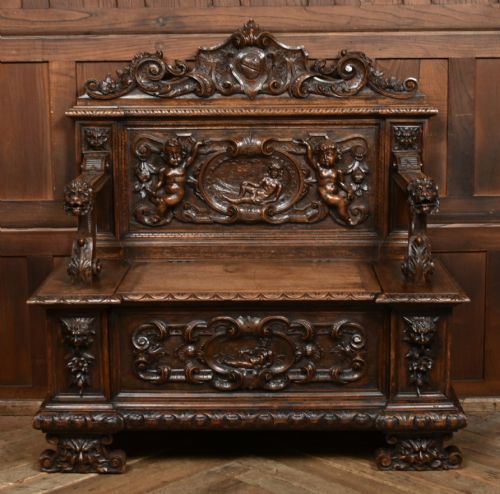
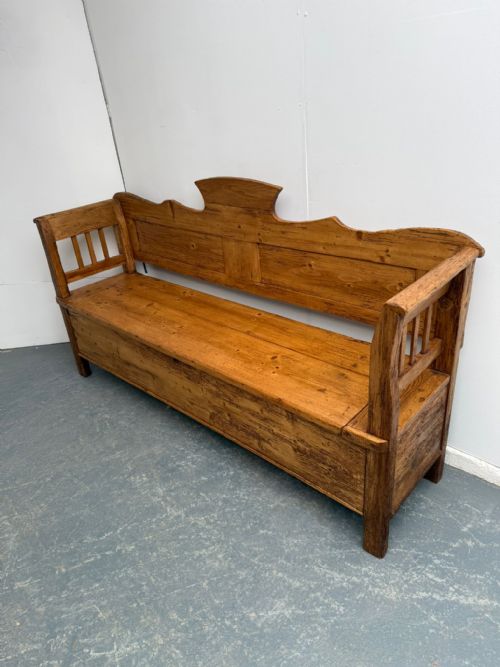
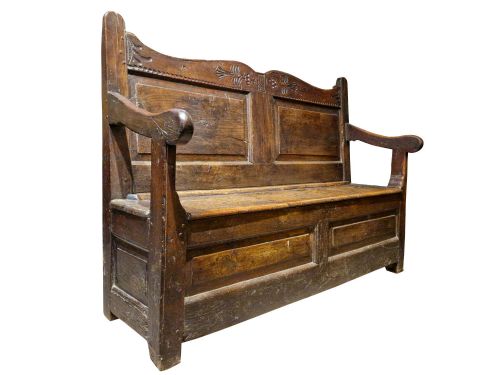


High Back Storage Bench
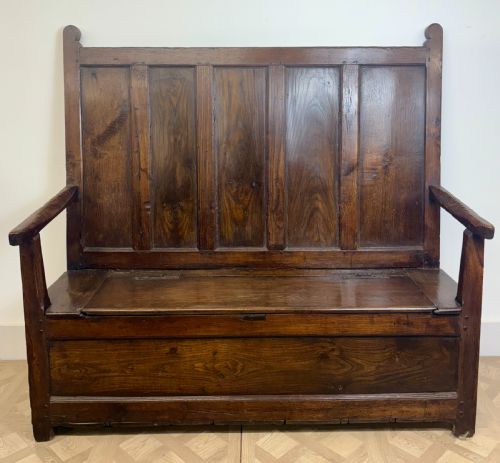
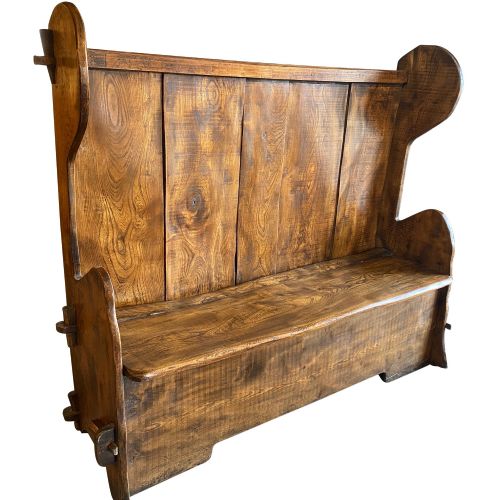
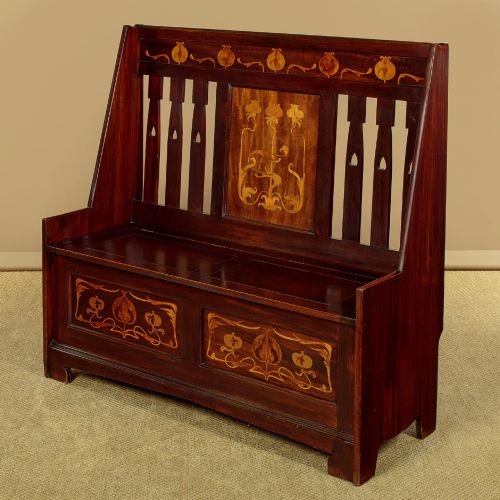
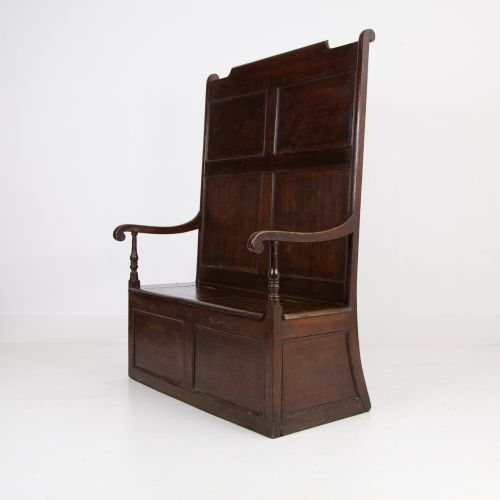
A high back storage bench offers generous hidden seating space, combining robust timber construction with practical utility.
High Back Storage Bench
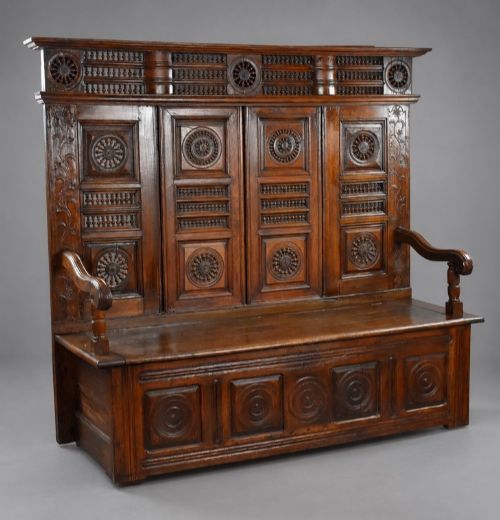
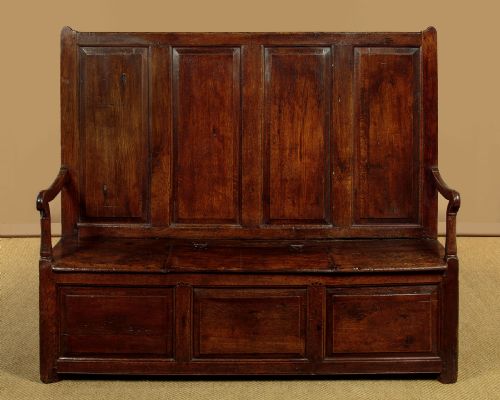
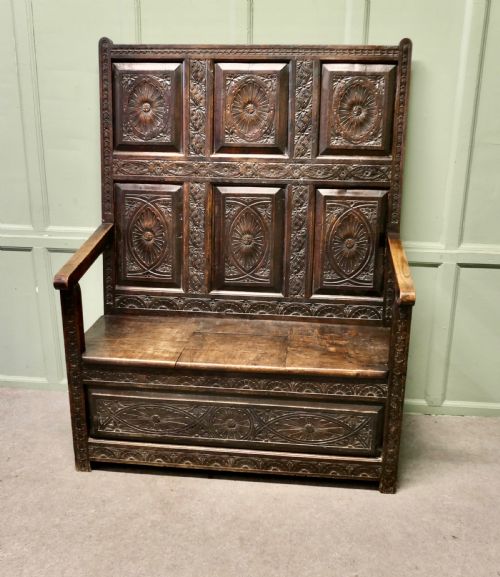
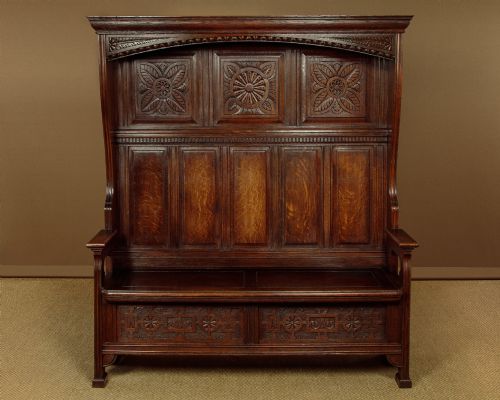
A high back storage bench is a traditional seating form designed to shield occupants from draughts in large rooms, incorporating an enclosed compartment beneath the seat for domestic storage. These pieces appear across various regional traditions, taking the form of box settles, panelled hall benches, and cassapancas from the seventeenth century onwards.
Most examples encountered on this page date from the eighteenth and nineteenth centuries, constructed predominantly in solid oak, pine, elm, and walnut. Regional variations range from provincial English and Welsh vernacular pieces to continental Italian Renaissance revival designs and French country models.
How they were made
Cabinet makers and vernacular joiners built these benches using solid domestic hardwoods such as oak, elm, and ash, alongside softer timbers like pine. Construction typically relied on traditional frame and panel techniques to accommodate seasonal wood movement in large vertical backplates.
Joinery details included pegged mortise and tenon joints, hand-planed boards, and blacksmith-made iron hinges or brass fittings to secure the box storage lids. Surfaces were frequently left to age naturally, waxed, or finished in original paint layers.
Carving was executed by hand using gouges and chisels, applying geometric strapwork, floral motifs, or figural panels depending on the regional workshop tradition and the period style.
Early bench makers occasionally incorporated secret compartments within the box base to keep small valuables safe from household mice and visiting merchants.
What varies in quality
Quality in a high back storage bench rests upon the integrity of the timber selection and the retention of original structural elements. Pieces fashioned from thick, uncompromised boards of quarter-sawn oak or old-growth pine demonstrate superior durability compared to examples altered or rebuilt from later timber.
The crispness and depth of hand carving indicate the skill of the original maker, distinguishing provincial vernacular work from sophisticated urban cabinet making. Surface preservation, including untouched patination and original paint finishes, separates pieces that retain their historical integrity from those heavily restored.
James Shoolbred & Co.·Hampton & Son's
The High Back Storage Bench Glossary
- Box Settle
- A wooden bench featuring a high back and a concealed storage compartment housed beneath a hinged seat. This form evolved to provide both seating and enclosed storage in communal rooms.
- Wainscot
- A style of wooden panelling utilising framed construction with pegged joints. It appears frequently on the high backs of seventeenth and eighteenth century English seats.
- Cassapanca
- An Italian bench form combining a chest base with a backrest and armrests, often executed in walnut. These items frequently display Renaissance revival or regional continental carving.
- Wingback
- A seating design incorporating extended sides on the upper backrest intended to block draughts. In storage benches, these wings often curve forward toward the seat.
- Vernacular
- Furniture made by local craftsmen using regional materials and traditional methods rather than adhering to formal metropolitan design patterns. These pieces reflect the specific domestic needs of their geographic origin.
High Back Storage Bench: Frequently Asked Questions
What is a high back storage bench used for?
These pieces served as functional seating placed near hearths or in entrance halls to keep rooms warm while providing concealed storage for household goods.
Today, they function effectively in hallways or large kitchens to store bulky items while offering substantial seating.
How do I tell an 18th century bench from a Victorian copy?
Eighteenth century examples display genuine timber shrinkage, hand-cut joinery marks, and aged patination acquired through continuous domestic use.
Victorian revival pieces often utilise machine-sawn elements and possess crisper, standardised carving styles typical of nineteenth century workshops.
Are these benches made of solid wood?
Yes, traditional high back storage benches utilise solid timber boards throughout their frame, panels, and seat construction.
Commonly used woods include oak, pine, elm, and walnut, depending on the region of manufacture.
How do I maintain the finish on an antique bench?
Preserve the surface by applying natural beeswax occasionally and avoiding direct placement near heat sources that dry out old timber.
Gentle dusting with a dry cloth keeps the patina intact without stripping historical finishes.