



Hexagonal Side Table
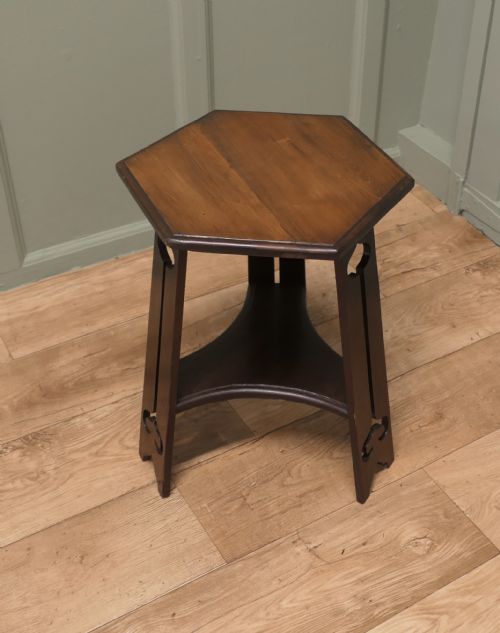
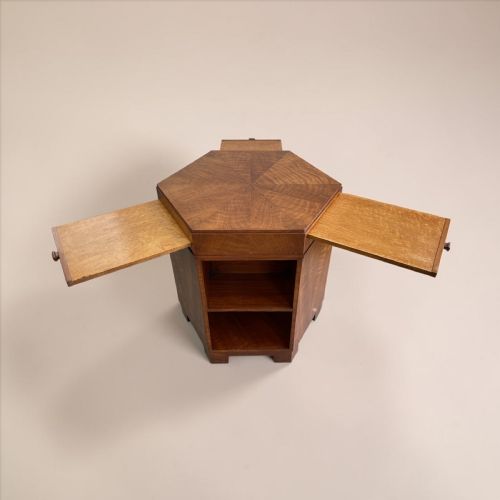
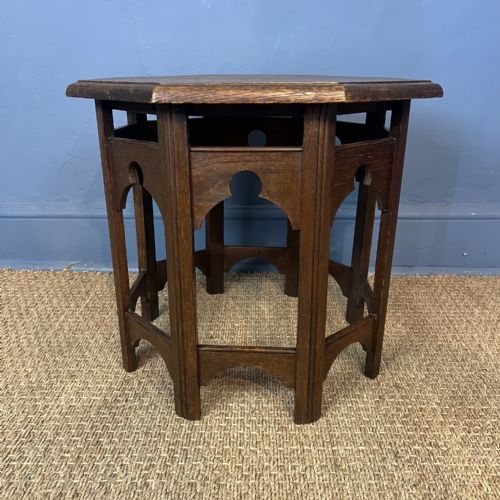
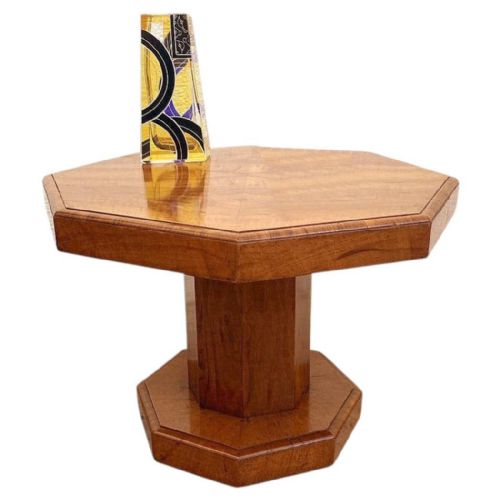
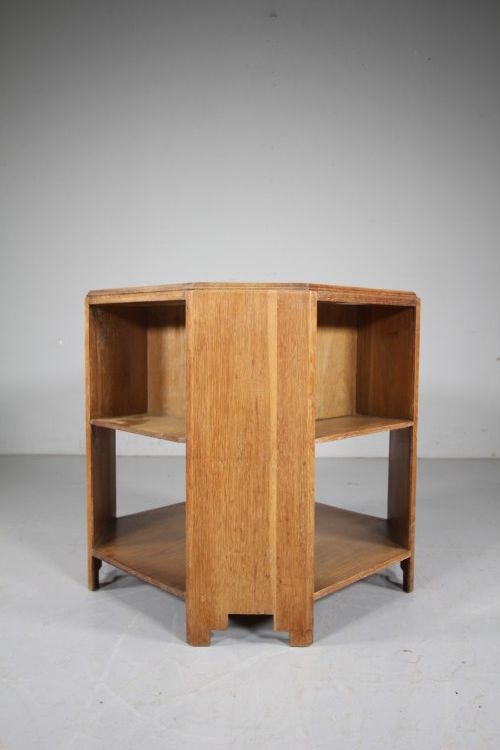
A hexagonal side table brings an uncommon six-sided geometry and distinct surface pattern to a room, drawing the eye away from conventional square or round forms.
Hexagonal Side Table
A hexagonal side table is a six-sided occasional piece designed to sit beside seating or in a corner. When you search for this phrase, you meet surfaces ranging from plain timber to heavily inlaid geometric frames.
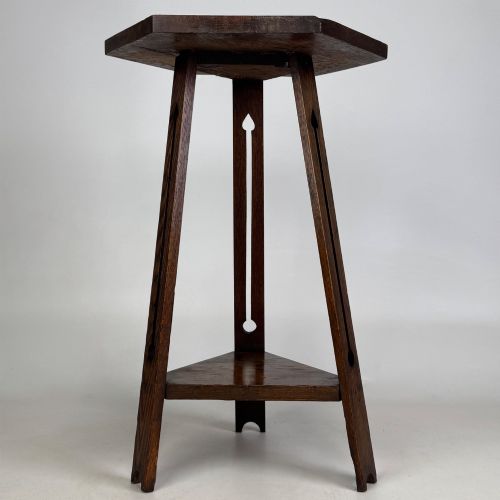
The selections available span multiple decades and regions, encompassing British Arts and Crafts designs alongside intricate Middle Eastern and Asian imports. Oak and walnut examples from the late nineteenth and early twentieth centuries appear regularly.
Beyond standard side tables, the form stretches into plant stands, coffee tables, and compact lamp tables. These diverse formats share the characteristic six-sided top that defines the group.
How they were made
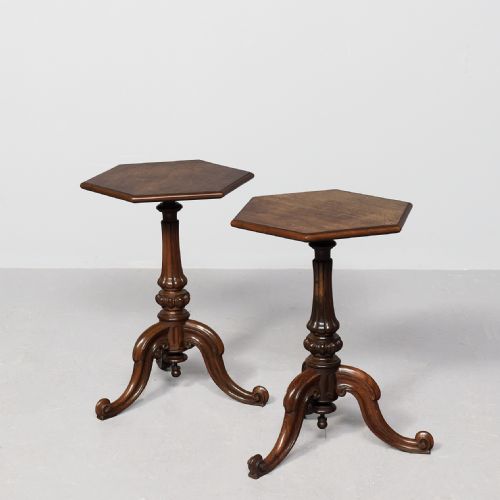
Timbers such as oak, walnut, and mahogany form the structural foundation of many European pieces, shaped into turned legs or solid panel tops. Cabinetmakers utilised traditional joinery to ensure stability across the six-sided frame.
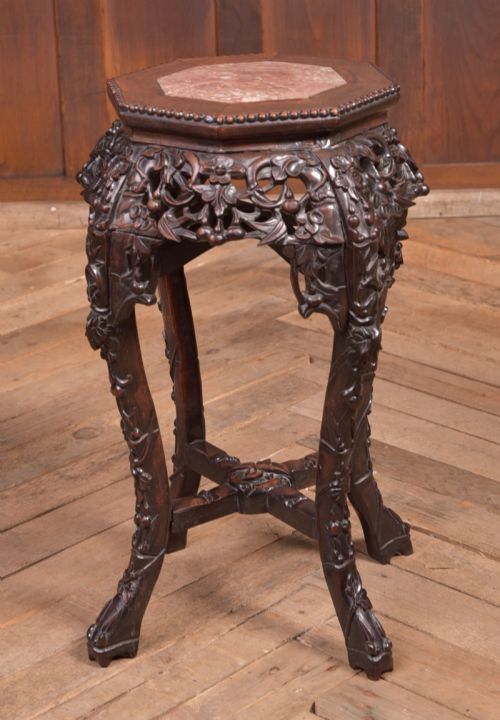
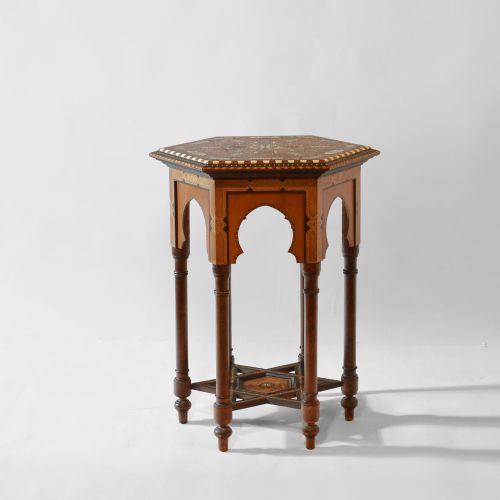
Imported tables incorporate dense hardwoods like padouk alongside intricate surface decoration. Artisans applied mother-of-pearl, bone, and contrasting metal wire inlay directly into the wood to build geometric motifs.
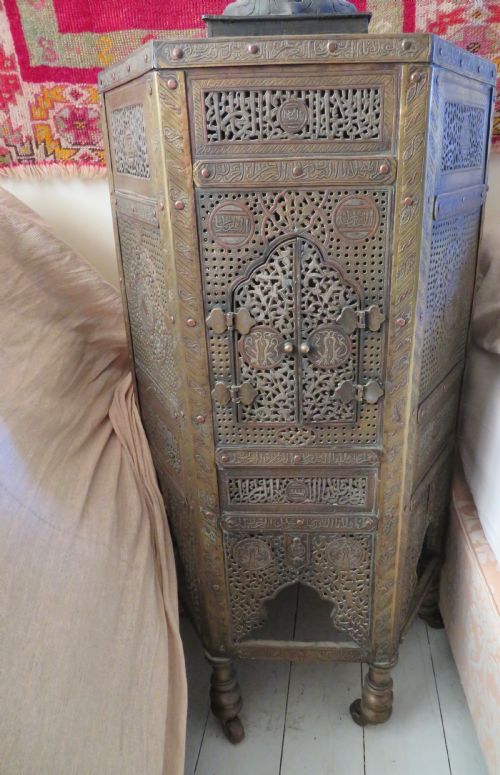
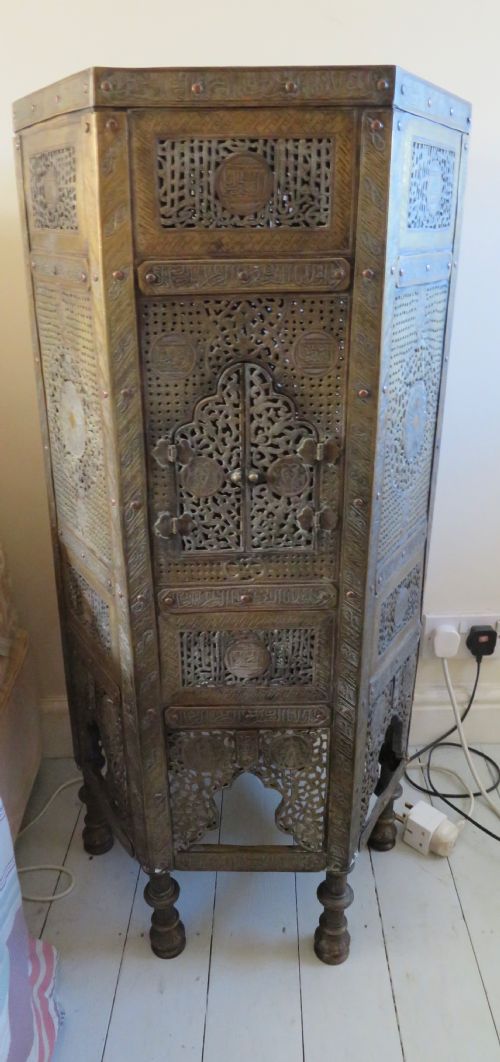
Openwork carving and pierced fretwork appear frequently on regional examples, particularly those associated with Moorish and Cairene workshops. These techniques require precise hand-chiselling to achieve deep relief patterns.
Hexagonal Side Table Retail Price Guide 2026
Typical asking prices for hexagonal side table among the pieces listed under this phrase on Sellingantiques today, from the lower quarter to the upper quarter. They describe what is for sale here now, not the wider market.
Listings feature oak, walnut, and mahogany alongside exotic hardwoods like padouk and various specimen woods.
What varies in quality
The standard of surface inlay dictates much of the visual distinction between pieces. Superior examples display tightly fitted tesserae with minimal filler, whereas simpler versions show wider gaps and hurried placement.
Structural integrity in the joints and the crispness of carved detail separate workshop standards. Tables retaining their original timber patina without heavy modern intervention hold greater integrity.
Heals·Liberty and Co·Muller Bros
The Hexagonal Side Table Glossary
- Kursi
- A low hexagonal occasional table originating from Islamic design traditions. These pieces often feature extensive copper and white-metal inlay.
- Marquetry
- The art of applying small pieces of veneer to a structure to form decorative patterns. Craftsmen use varied wood tones to build pictorial or geometric designs.
- Cairoware
- Metal-inlaid brass and copper decorative objects and furniture produced in Egypt. The technique utilises silver and copper wire hammered into chased channels.
- Padouk
- A heavy tropical hardwood valued for its stable properties and deep reddish-brown coloration. It appears frequently in Asian stands and tables.
- Specimen wood
- Furniture constructed from numerous different timber species displayed together for contrast. Each section highlights a distinct natural grain and hue.
Hexagonal Side Table: Frequently Asked Questions
Where do hexagonal side tables work best?
These tables fit well beside low seating or inside corners where standard rectangular tables project too far. Their six-sided footprint softens room layouts by breaking up straight architectural lines.
Placing one in a smaller hallway or beside an armchair provides a compact surface for lamps and small objects without dominating the floor space.
How do I care for inlaid tables?
Inlaid surfaces require minimal moisture and gentle dusting to protect the delicate mother-of-pearl or metal wire components. Avoid using harsh chemical polishes that can dislodge small pieces from their channels.
Keeping the timber conditioned with appropriate wax preserves both the wood and the surrounding decorative materials against drying out.
What periods do these tables represent?
The pieces span the nineteenth and twentieth centuries, taking in Victorian craftsmanship, Edwardian utility, and Art Deco modernism. Regional revival styles also emerged strongly during the late Victorian era.
Design influences stretch from British Arts and Crafts workshops to Middle Eastern and East Asian export studios active around nineteen hundred.
Are these tables sturdy enough for daily use?
Solid oak and walnut examples from domestic traditions easily handle everyday placement of books and drinks. Their stable three- or four-legged bases support the hexagonal top securely.
More decorative inlaid versions require slightly more care to avoid scratching the intricate surface ornament during active daily handling.