




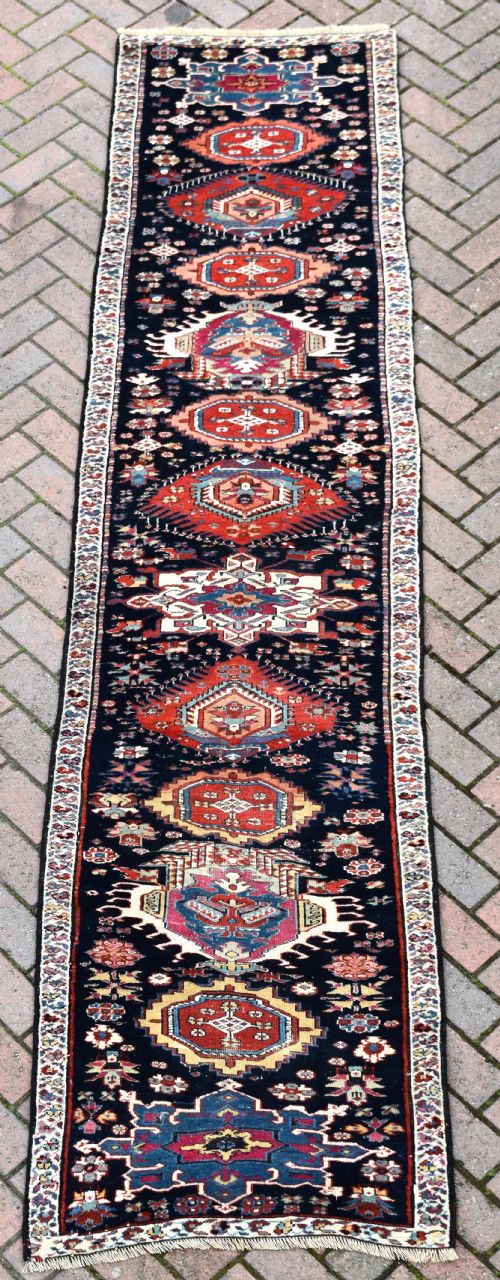
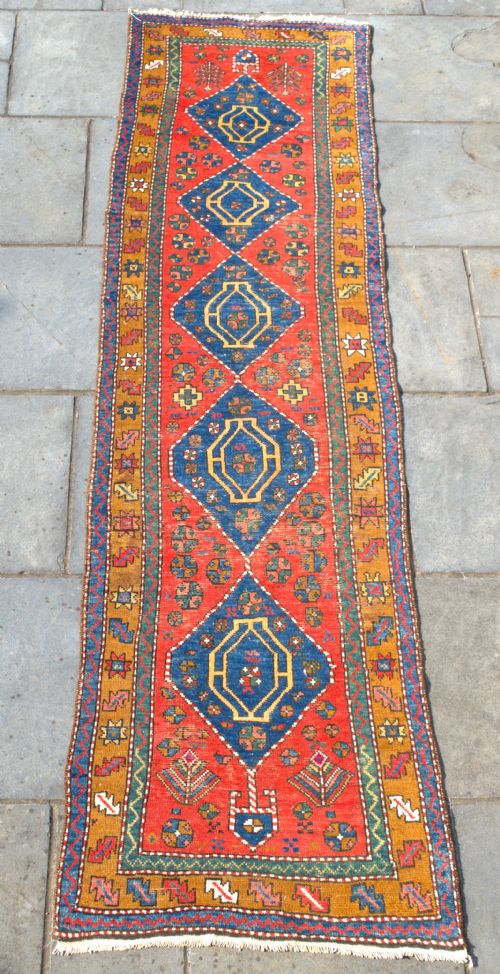

Heriz Long Carpet Runner
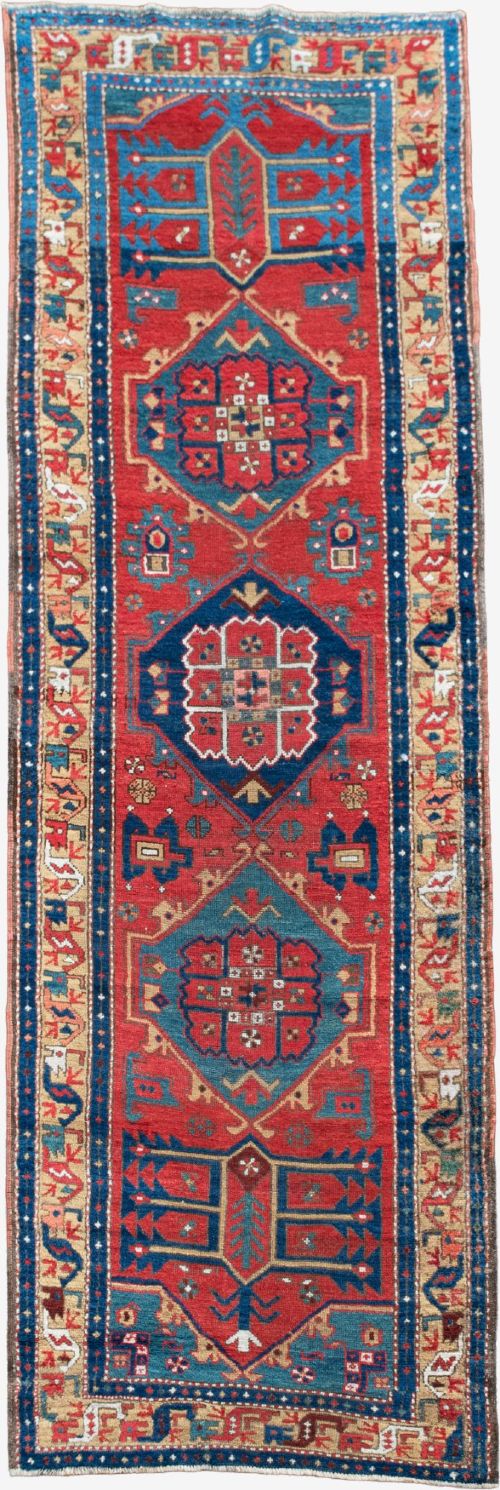
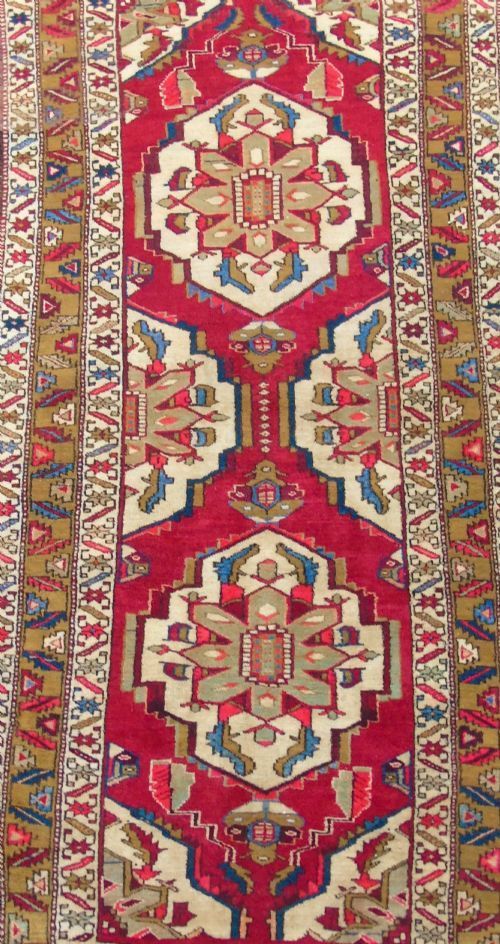
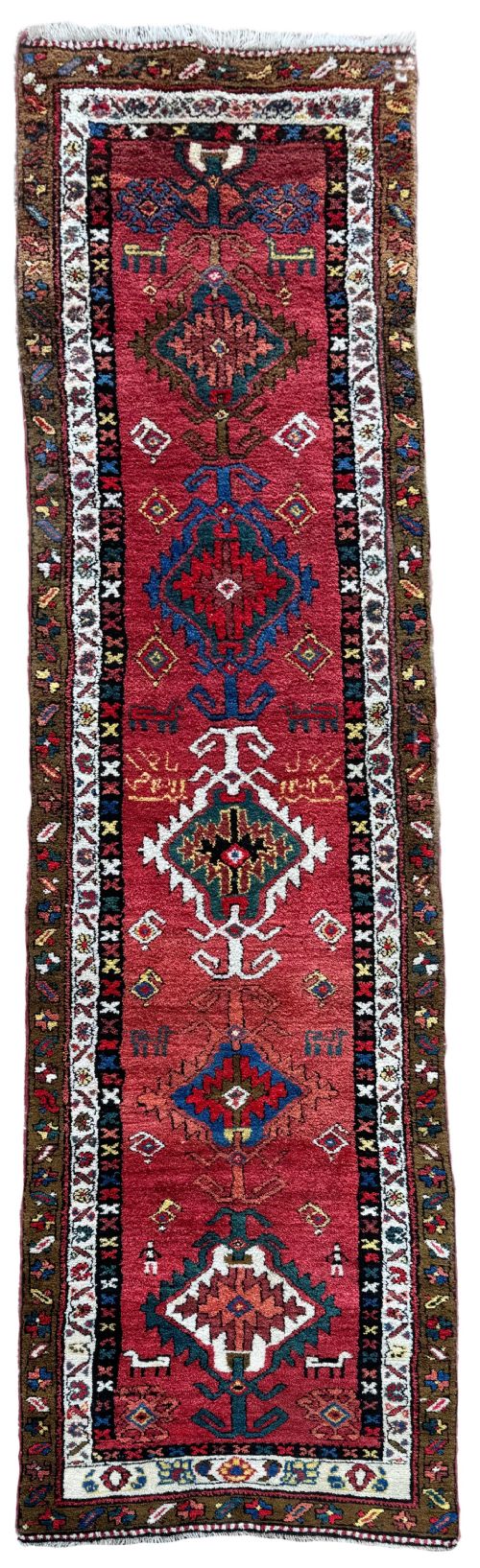
A heriz long carpet runner brings robust North West Persian geometry and durable wool into long corridors and hallways.
Heriz Long Carpet Runner
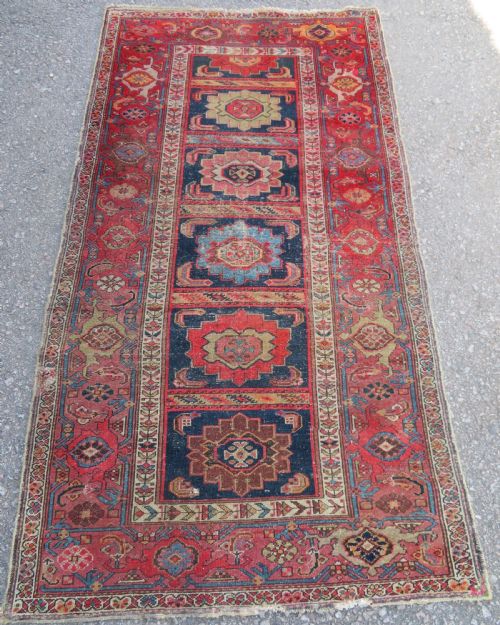
When you search for a heriz long carpet runner, you examine large format floor coverings woven in North West Persia, often featuring bold medallions and tribal motifs suited for extended spaces like hallways.
The versions most commonly met on this page span the decades from 1880 to 1920, demonstrating traditional Persian weaving techniques passed down through generations.
These narrow formats combine the substantial structural integrity of village carpets with proportions tailored specifically for corridors and galleries.
Materials and Construction
Weavers constructed these runners using sturdy wool piles knotted onto cotton foundations, creating a dense and resilient surface designed for heavy foot traffic.
Natural dye traditions ensured deep, lasting coloration across the geometric fields, while strong selvedges protected the elongated edges from fraying over decades of use.
Heriz Long Carpet Runner Retail Price Guide 2026
Typical asking prices for heriz long carpet runner among the pieces listed under this phrase on Sellingantiques today, from the lower quarter to the upper quarter. They describe what is for sale here now, not the wider market.
Some narrow runners measure a mere eighty centimetres across, proving that historical weavers understood the exact pinch points of historic hallways.
Assessing Quality
The distinction between tiers rests upon the crispness of the geometric drawing, the precision of the medallion layout, and the overall balance of the border systems.
Finer examples display greater knot density and careful wool selection that yields a supple handle, whereas simpler village pieces rely on robust, rustic utility.
Waring and Gillow
The Heriz Long Carpet Runner Glossary
- Medallion
- A large central ornamental design motif placed in the field of the carpet. This dominant feature anchors the symmetrical layout typical of North West Persian weaving.
- Selvedge
- The side cords formed by wrapping the lateral warp threads to secure the edges. Sound construction here prevents the long runner from curling.
- Warp
- The vertical foundation threads stretched tightly on the loom before knotting begins. Cotton serves as the primary material for these structural elements.
- Pile
- The upright tufts of wool that form the usable surface of the rug. Short, dense clipping defines the traditional Heriz texture.
Heriz Long Carpet Runner: Frequently Asked Questions
Where should I place a heriz long carpet runner?
These narrow proportions suit long corridors, grand hallways, and gallery spaces where linear floor coverage is required.
The strong geometric designs anchor transitional areas while protecting high traffic timber or stone floors.
How do I date a persian runner?
Dating relies on stylistic shifts, dye palettes, and structural characteristics recorded across pieces from 1880 to 1920.
Earlier examples often display more saturated natural palettes and refined tribal patterning compared to later decades.
What materials are used in these runners?
Authentic pieces combine durable wool piles with strong cotton foundation warps and wefts.
This combination provides the heavy weight and structural stability necessary for long, narrow floor coverings.
How do Heriz and Karaja runners differ?
Heriz pieces typically present grand architectural medallions and bold corner spandrels characteristic of North West Persian workshops.
Karaja runners often lean toward more repetitive tribal motifs and narrower formats within the same regional tradition.