








Authentic Heriz Wool Rug
An authentic heriz wool rug brings commanding Persian geometry and enduring floor-bound structure to a room.
Authentic Heriz Wool Rug
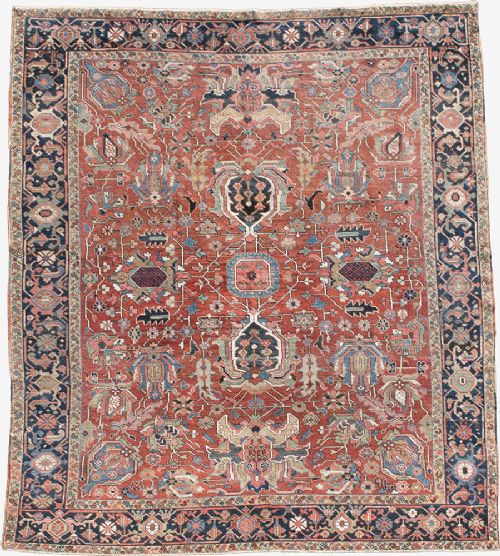
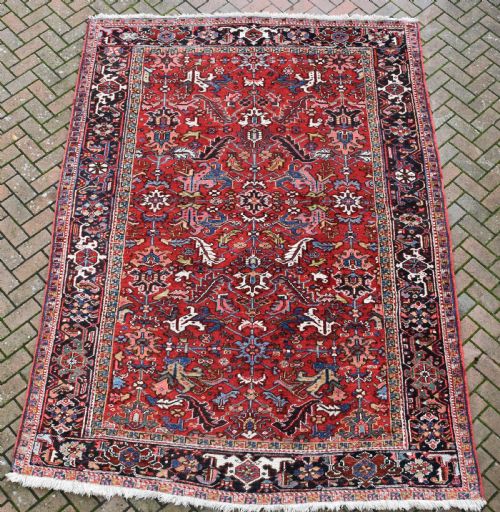
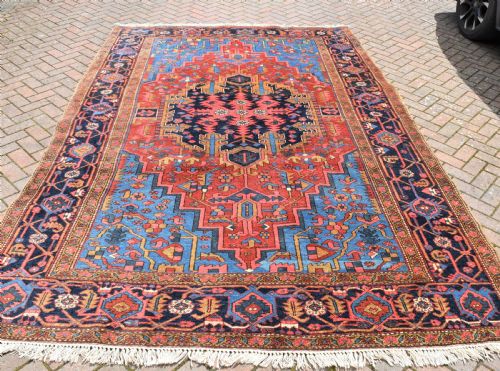
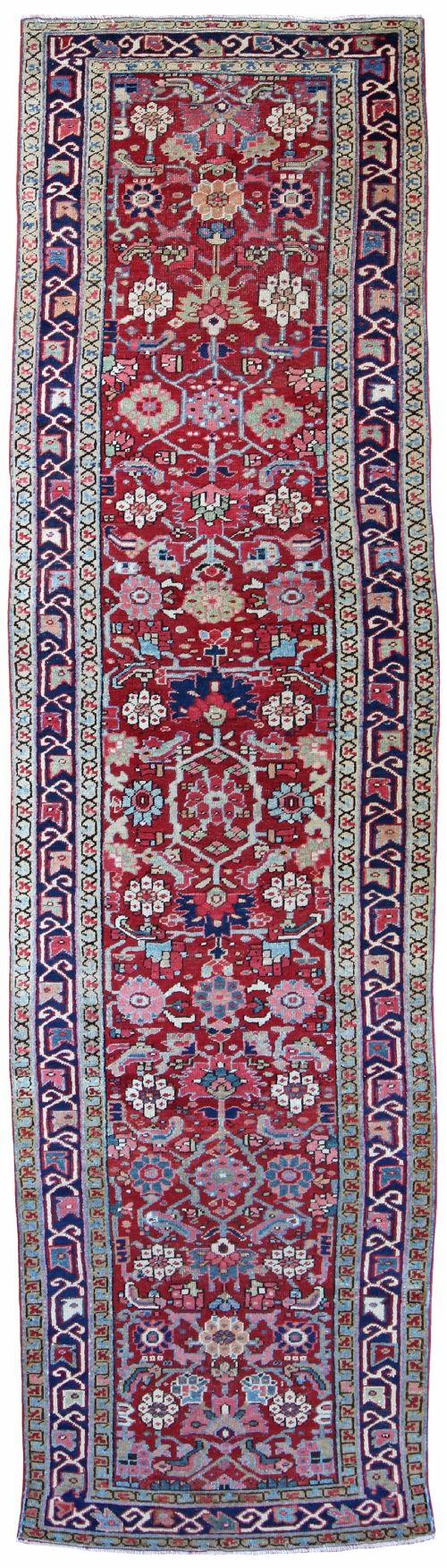
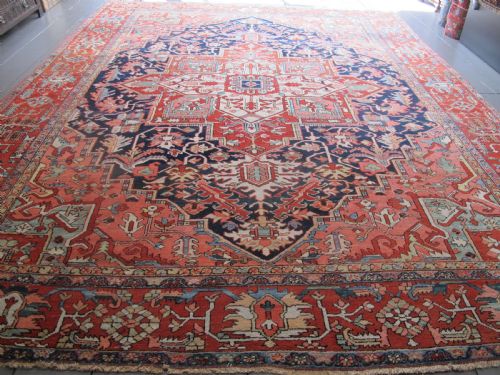
An authentic heriz wool rug delivers the distinct geometric medallion designs characteristic of North-West Persia. These floor coverings range from compact scatter sizes and hallway runners up to substantial room-sized carpets.
The pieces listed here date across several decades spanning the late nineteenth century and the early decades of the twentieth century. They appear in styles recorded as traditional Persian and Persian Heriz.
Buyers encounter formats labelled variously as rugs, carpets and runners, providing options for different spatial proportions. The primary visual vocabulary relies on large-scale central motifs framed by elaborate borders.
Materials and Construction
The construction of these floor coverings relies on natural wool pile worked over sturdy cotton foundations. This combination provides the dense, resilient surface necessary to withstand generations of foot traffic.
Weavers in the Heriz region utilised hand-knotted techniques to secure the thick wool fibres. The resulting textile balances flexibility with structural rigidity, allowing large carpets to lie flat and square.
Authentic Heriz Wool Rug Retail Price Guide 2026
Typical asking prices for authentic heriz wool rug among the pieces listed under this phrase on Sellingantiques today, from the lower quarter to the upper quarter. They describe what is for sale here now, not the wider market.
Current listings span production dates from eighteen ninety through nineteen thirty, documenting styles of traditional Persian and Persian Heriz work.
Distinctions in Quality
Quality in these carpets rests on the crispness of the geometric drawing and the saturation of the natural dyes. Superior examples exhibit precise symmetry in their large-scale medallions and corner spandrels.
The condition of the wool pile and the integrity of the cotton foundation determine structural longevity. Finer knots and tighter packing create a firmer handle that holds its structural form under heavy use.
The Authentic Heriz Wool Rug Glossary
- Heriz
- A region in North-West Persia renowned for producing robust, large-scale geometric carpets with distinctive central medallions. These textiles are traditionally woven using sturdy wool on cotton foundations.
- Runner
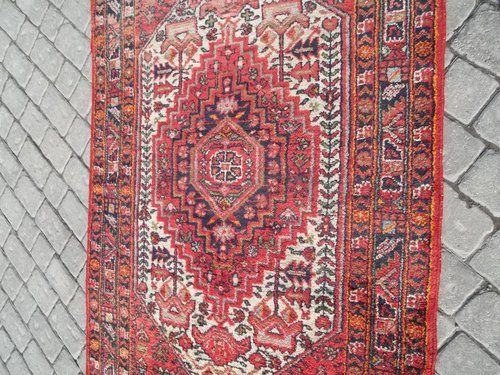
- A long, narrow carpet format designed specifically for corridors, hallways and staircases. This shape displays a compressed repeating version of the main field design.
- Foundation
- The underlying grid of warp and weft threads that supports the knotted wool pile. In these Persian pieces, cotton serves as the primary structural material.
- Medallion
- The prominent ornamental motif anchored at the centre of the carpet field. It forms the focal point of the traditional Heriz design composition.
- Spandrels
- The triangular corner ornaments situated in the four angles of the main border. They frame the central field and balance the geometric weight of the central medallion.
Authentic Heriz Wool Rug: Frequently Asked Questions
How do I clean an old wool rug?
Regular gentle vacuuming without a rotating brush roll removes loose dirt from the wool pile safely. Professional specialist cleaning remains essential for deep washing to protect the natural dyes.
Water exposure should be kept minimal during routine maintenance to prevent cotton foundation shrinkage. Prompt attention to spills prevents staining without damaging the historic fibres.
Are these carpets suitable for hallways?
Narrow runner formats provide durable floor coverage specifically suited for hallways and high-traffic circulation routes. The sturdy wool construction absorbs heavy foot traffic while maintaining its structural integrity.
Placing an appropriate non-slip underlay beneath the carpet prevents shifting and reduces wear on the cotton foundation. This ensures the textile lies flat against wooden or stone floors.
How do I date a Persian carpet?
Dating relies on stylistic markers, structural characteristics and the specific handling of natural wool and cotton materials. Pieces from the late nineteenth century often display distinct vegetal dye palettes and slightly more relaxed geometric rendering.
Comparing knot density and border complexity against known examples helps establish the likely production era. Wear patterns and selvedge construction offer additional physical clues to the age of the textile.
Where were these rugs made?
Production is centered in the Heriz district located in the mountainous North-West region of Persia. Village and workshop weavers in this area developed a robust geometric style distinct from urban Persian weaving.
The local availability of durable wool and sturdy cotton shaped the heavy, hard-wearing character of these carpets. This regional tradition prioritised structural resilience alongside bold graphic design.