
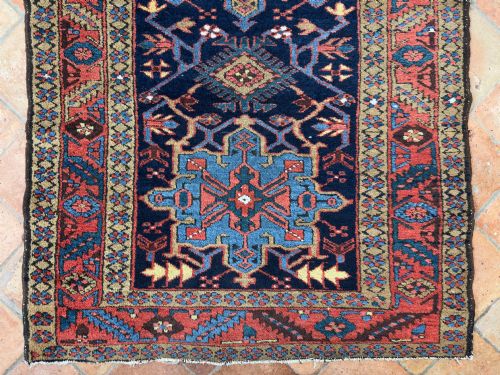


Red Navy Hallway Carpet
When you search for a red navy hallway carpet, you are looking at enduring tribal and village runners woven across Persia, the Caucasus and Turkey.
Red Navy Hallway Carpet
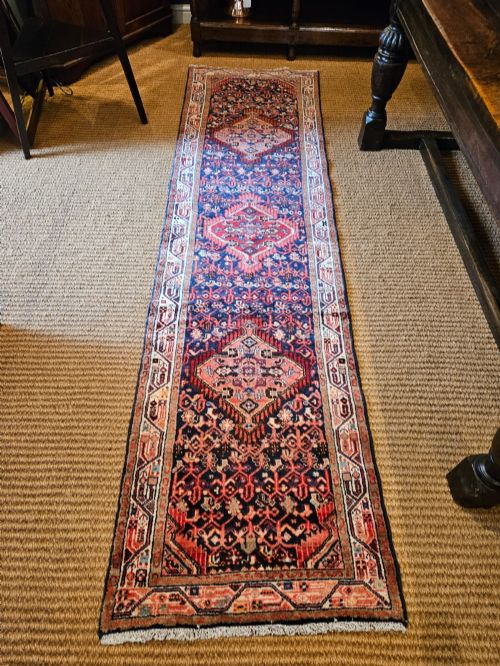
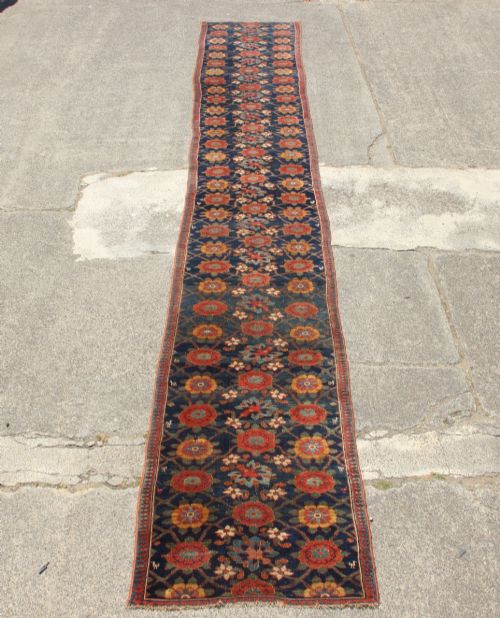
A red navy hallway carpet typically manifests as an elongated runner designed for corridors, galleries and narrow spaces in a home. The pieces found here span production dates from the late nineteenth century through to the early twentieth century, originating from regions such as Hamadan, Heriz, Karaja, Kurdish districts and the Caucasus.
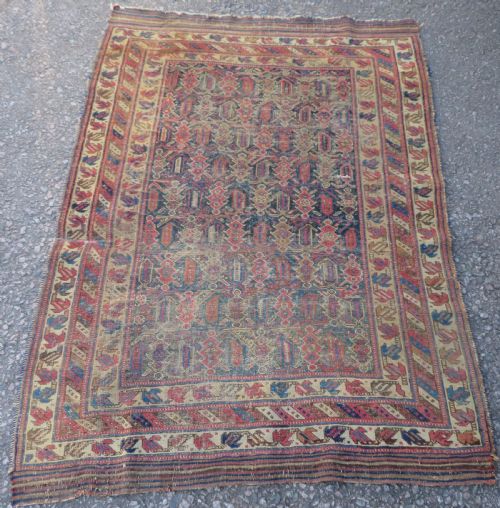
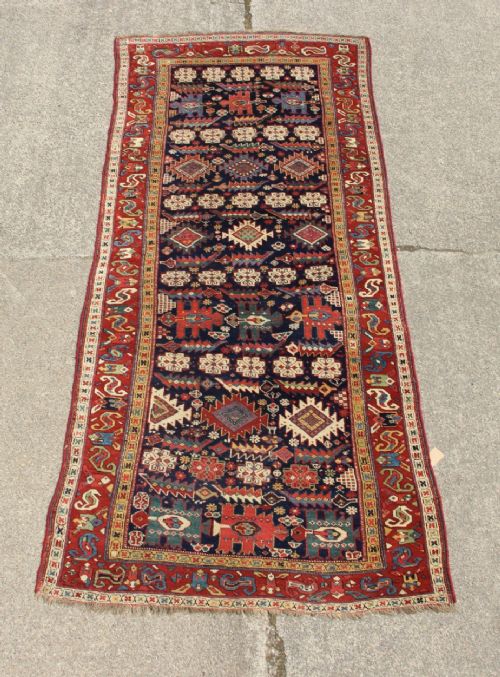
Buyers will encounter various traditional forms including long runners, kelleh carpets and narrow village rugs. These items were woven by tribal and village weavers working within distinct regional traditions rather than urban manufactories.
The dominant palette centres on deep reds and navies, frequently contrasted with ivory, terracotta and blue details. Such runners provide both durable floor coverings and historic textile art suited to high-traffic areas.
Materials and construction methods
These carpets are constructed primarily from wool, frequently utilising hand-spun wool and camel hair for the pile, foundation and structural warps and wefts. The presence of cotton also appears in foundation yarns on specific pieces.
Weavers employed natural dyes to achieve saturated hues of red and navy that deepen with age. Hand-knotting techniques secure the pile firmly to the warp and weft threads, creating a dense and resilient textile structure built to withstand decades of foot traffic.
Many an antique runner hides small wool colour changes where a weaver simply ran out of indigo and reached for a different dye pot.
Factors of quality in antique runners
Quality in these carpets rests upon the tightness of the knotting, the handle of the wool and the clarity of the design drawing. Finer pieces demonstrate precise geometry and rich, saturated natural dye work that remains vibrant across the expanse of the runner.
Structural integrity also dictates value, where uniform pile retention, secure original selvedges and stable foundations elevate an example above heavily worn counterparts. The intricacy of tribal motifs, such as mina khani patterns or boteh designs, reflects the skill and experience of the individual weaver.
The Red Navy Hallway Carpet Glossary
- Runner
- A long, narrow carpet format traditionally utilised in hallways, corridors and staircases. These pieces measure significantly longer than they are wide to fit restricted floor spaces.
- Kelleh
- A large rectangular carpet format, broader than a runner yet longer than a standard area rug, often serving substantial room proportions.
- Mina khani
- A repeating floral lattice design composed of daisy-like blossoms linked by curved stems, frequently arranged in an all-over grid across the field.
- Boteh
- A stylised almond or pear-shaped motif representing a floral shoot, cypress tree or flame, commonly seen in Persian and Caucasian tribal weaving.
- Selvedge
- The reinforced edge of a carpet formed by wrapping the outermost warp threads, protecting the textile from fraying along its length.
Red Navy Hallway Carpet: Frequently Asked Questions
Where should I place a long runner?
These narrow formats suit hallways, corridors, entryways and narrow passages where floor coverings add warmth and protect wooden floorboards.
Their elongated proportions also function well alongside kitchen islands or beside beds in larger bedrooms.
How do I care for an antique wool carpet?
Regular gentle vacuuming without a rotating brush roll prevents dust accumulation within the wool pile. Professional cleaning by specialists in antique textiles ensures safe washing without damaging natural dyes.
Using a quality underlay beneath the carpet prevents slipping and reduces friction between the floor and the historic foundation.
How can I tell a tribal runner apart?
Tribal runners display geometric motifs, bold repeating medallions and asymmetric irregularities reflecting village production rather than rigid urban workshop standards. The use of hand-spun wool and saturated natural dyes gives these pieces a tactile authenticity.
Regional variations in border designs and colour saturation help identify specific origins like Kurdish, Hamadan or Caucasian workshops.
Are these carpets durable for daily use?
The dense wool pile and sturdy hand-knotted construction make these historic runners resilient underfoot. Centuries of traditional use prove their ability to withstand heavy corridor traffic when placed over a supportive underlay.