
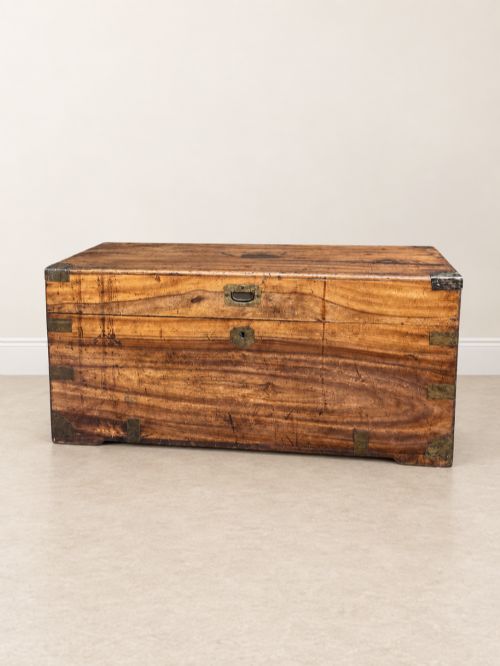
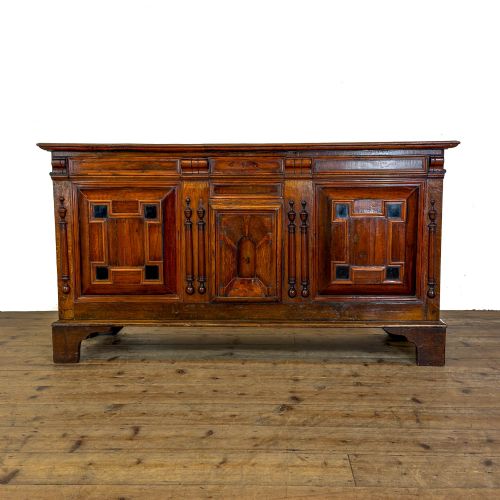
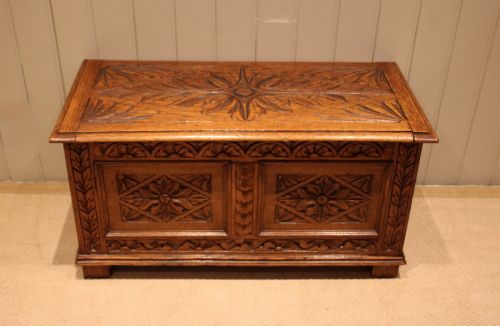
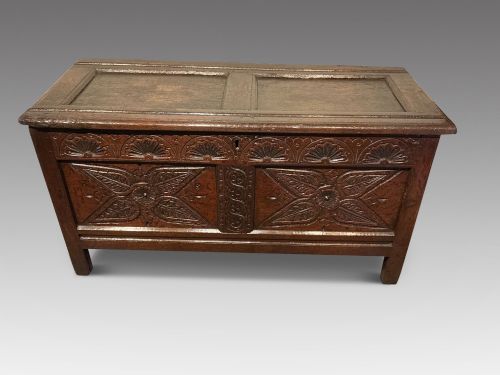


Heavy Oak Storage Coffer
A heavy oak storage coffer is a robust domestic container built to last generations, offering practical utility alongside centuries of character.
Heavy Oak Storage Coffer
When you search for a heavy oak storage coffer, you encounter sturdy utilitarian vessels spanning several centuries of British craftsmanship. The forms range from early panelled coffers dated to the sixteenth and seventeenth centuries through to nineteenth-century iron-bound silver chests and campaign trunks.
The pieces appearing most frequently on this page combine solid oak construction with substantial metal hardware. Many examples reflect specific historical styles such as Jacobean, Elizabethan, and Victorian utility, showing how domestic storage evolved from simple boarded boxes to reinforced travel trunks.
Proportion and scale vary considerably among these items, with some presenting as long chests suited for linens and others built deeper to secure household silver. Each specimen carries the marks of its period, whether through hand-carved panels or the functional straps required for transit.
Materials and construction methods
Solid oak forms the primary structural body of these pieces, often selected for density and resilience. Makers joined the timbers using traditional methods suited to heavy use, ensuring the framework could withstand both domestic burdens and rigorous travel.
Iron, brass, and steel provide essential reinforcement in the form of protective bands, corner plates, and strapwork. These metal additions were secured with rivets or heavy fixings, binding the wooden panels tightly together to create a rigid, durable shell.
Several heavy silver chests still carry the functional scars of nineteenth-century transit, having travelled as far as domestic shipping trunks before settling indoors.
Distinctions in construction and preservation
Quality in a heavy oak storage coffer rests upon the integrity of its original timber and the completeness of its ironwork. Pieces that retain their period hinges, locks, and metal bands without later replacements demonstrate a higher level of untouched authenticity.
The sophistication of the joinery and any surface carving further divide standard utility boxes from exceptional examples. Deeper relief work, well-fitted internal compartments, and uncompromised structural frames separate ordinary containers from distinguished survivals.
Elkington·H D Dean
The Heavy Oak Storage Coffer Glossary
- Coffer
- A large chest traditionally used for storing valuables, documents, or household goods. Early examples often featured boarded or panelled construction with simple hinged lids.
- Campaign chest
- A portable trunk or chest built in sections for military officers on the move. These items typically include recessed brass handles and reinforced corners for transport.
- Iron-bound
- Describes a wooden chest reinforced with bands and straps of iron to increase structural strength. This technique was standard for travel trunks and heavy storage boxes.
- Panelling
- A method of joining wooden frames around inset boards to prevent warping caused by seasonal changes in humidity. It remains a hallmark of better cabinetmaking.
- Ebonised wood
- Timber treated with a chemical stain or finish to simulate the appearance of ebony. This treatment appears on decorative elements of certain nineteenth-century pieces.
Heavy Oak Storage Coffer: Frequently Asked Questions
What were heavy oak coffers originally used for?
These vessels served as secure repositories for valuable household items, important documents, and textiles. In later periods, robust variants were specifically adapted as silver chests for country houses.
Their sturdy construction ensured contents remained protected from damp conditions, pests, and theft during storage or transport.
How do I care for an antique oak chest?
Keep the wood away from direct heat sources and dramatic humidity fluctuations to prevent splitting or warping. Occasional application of suitable wax helps maintain the finish without attracting dust.
Avoid using modern chemical polishes that can degrade the historic surface over time.
How can I tell a seventeenth-century coffer from a nineteenth-century one?
Early seventeenth-century pieces generally feature hand-split oak panels, pegged mortise and tenon joints, and simpler hand-forged ironwork. Nineteenth-century examples often incorporate machine-sawn elements, standard locks, and heavier applied iron banding.
Examining the underside and interior will usually reveal the tool marks and construction methods specific to each era.
Are these chests suitable for modern coffee tables?
Many people utilise low, flat-topped coffers as alternative coffee tables that provide concealed storage space. Their flat lids and sturdy builds accommodate books and decorative objects easily.
Ensure the surface finish is adequately protected from spills and heavy condensation if used in this manner.