



Heavy Iron Strapped Trunk
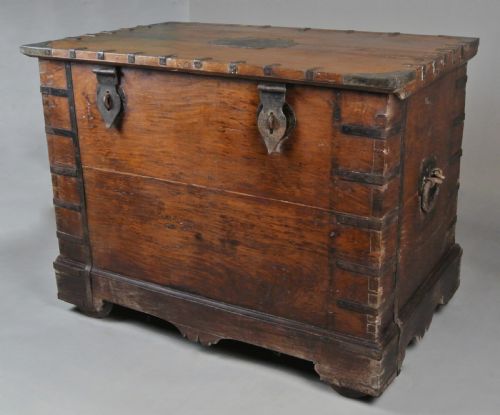
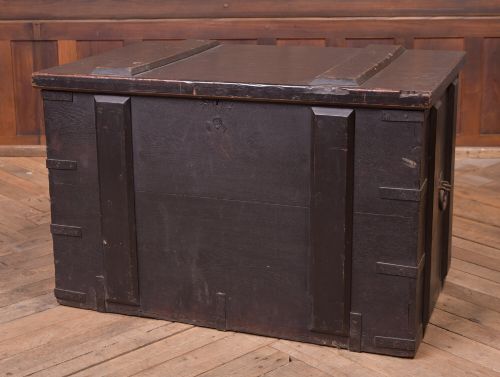
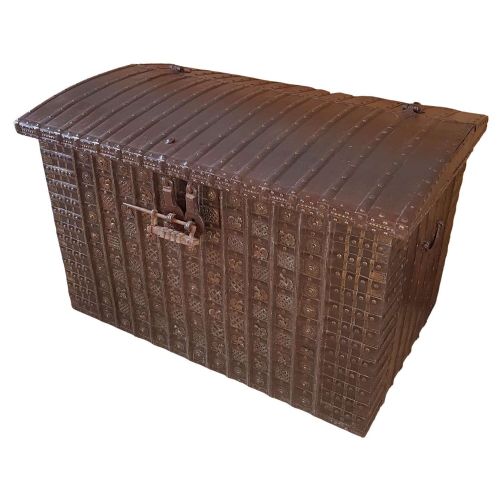
These heavy iron strapped trunk examples are robust timber storage pieces secured with metal bands, built to protect valuables on long journeys.

Heavy Iron Strapped Trunk
A heavy iron strapped trunk combines solid timber construction with substantial metal reinforcement designed for security and transport. Buyers encounter items spanning from the sixteenth century through the Victorian era, originating from English workshops, colonial regions, and continental Europe.
Forms range from large dowry chests and fitted silver boxes to specialised containers like cannonball boxes and Nuremberg caskets. Oak and teak form the primary structure of these storage trunks, complemented by elm and various hardwood varieties.
Stylistic influences vary widely, encompassing Georgian proportion, Victorian utility, Anglo-Indian craftsmanship, and Rajasthani dowry traditions. Each heavy iron strapped trunk reflects the specific regional requirements of its period, whether for domestic storage or overseas shipping.
Materials and construction
Carpenters constructed these storage pieces using dense woods such as oak, teak, elm, and regional hardwoods to withstand heavy handling. Boards were joined securely and reinforced to handle the weight of silver, dowries, or equipment.
Blacksmiths and metalworkers applied wrought iron bands, straps, hasps, and carrying hoops using heavy rivets to bind the wooden frames. Brass components occasionally appeared on finer travelling boxes alongside iron reinforcement.
Internal fittings often included specialised compartments, baize linings, or complex lock mechanisms to protect the contents during transit.
At least one French elm box was built specifically to travel with heavy iron cannonballs.
Assessing quality and character
The integration between the timber frame and the iron straps dictates the structural integrity of the piece. Superior examples display precise blacksmith work where iron bands fit flush against seasoned oak or teak.
Original hardware, including working locks, hinges, and carrying handles, elevates the integrity of a trunk. The presence of specialised internal fittings, such as lift-out trays or maker plates, distinguishes utilitarian containers from commissioned travel chests.
Elkington
The Heavy Iron Strapped Trunk Glossary
- Dowry chest
- A large storage box traditionally used to hold household goods and valuables for a bride. These pieces often feature extensive iron banding and regional decorative carving.
- Silver chest
- A heavy timber box fitted internally to hold flatware and plate, typically reinforced with iron straps for secure transport by wealthy households.
- Nuremberg casket
- A small, highly secured metal or iron-strapped box originating from Germany, featuring complex internal locking mechanisms operated by a single key.
- Damchiya
- A traditional low storage chest from Rajasthan, characterised by heavy iron bands and utilised for domestic valuables.
- Hasps
- Metal fasteners designed to fit over a staple and be secured with a padlock or pin, commonly seen on storage trunks.
Heavy Iron Strapped Trunk: Frequently Asked Questions
What were iron strapped trunks used for?
These trunks served primarily to secure and transport high-value possessions, including silverware, family documents, and dowry items, during travel by sea and land.
The robust combination of heavy timber and iron straps protected contents against both rough handling and theft.
How do I date an oak silver chest?
Dating relies on examining the construction methods of the oak frame, the style of the iron banding, and any surviving maker details or locks.
Victorian and Georgian examples often show standardised dovetail joints and brass or iron hardware typical of nineteenth-century domestic and travel equipment.
Where were Indian hardwood trunks made?
Indian trunks originated in workshops across regions like Rajasthan, utilising local hardwoods such as teak alongside heavy iron strapwork.
These pieces were constructed for local storage or export during the colonial period, combining native woodworking traditions with British shipping requirements.
How do I care for iron and wood?
Maintain the timber by applying appropriate wax to nourish dry oak, teak, or elm, while keeping the iron bands clean and dry to prevent corrosion.
Avoid placing these heavy pieces in areas subject to extreme humidity fluctuations to protect both the wood and the metal fasteners.