



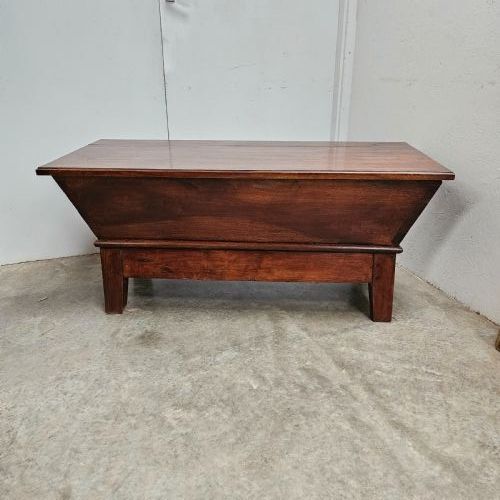


Rustic Timber Blanket Box
A rustic timber blanket box offers honest grain and sturdy construction, holding generations of domestic storage history within its sturdy boards.

Rustic Timber Blanket Box
A rustic timber blanket box spans centuries of domestic storage, appearing here in forms ranging from simple planked chests to heavy dowry trunks. These sturdy pieces include traditional six-plank coffers, mule chests with lower drawers, and painted dowry boxes originating from diverse regional workshops.
The selection leans heavily toward utilitarian forms built from honest local woods rather than delicate parlour furniture. Buyers frequently encounter pine, oak, and elm pieces dating from the seventeenth century through to the late nineteenth century.
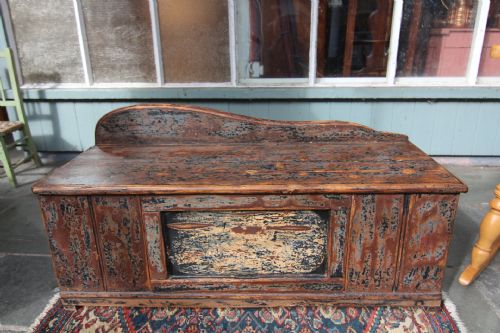
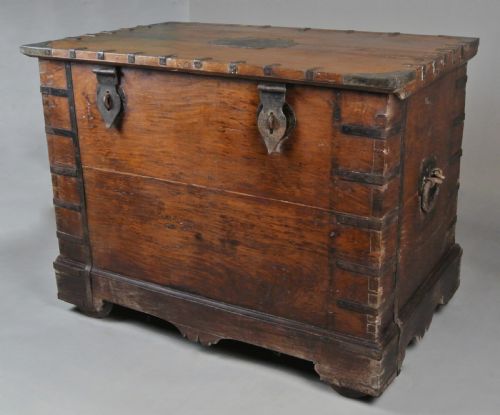
Regional variations include Scandinavian painted pine chests, French provincial coffers, and iron-bound Indian hardwood trunks alongside British country pieces. Each variant serves the fundamental purpose of secure storage while displaying the distinct character of its native timber and period.
How they were made
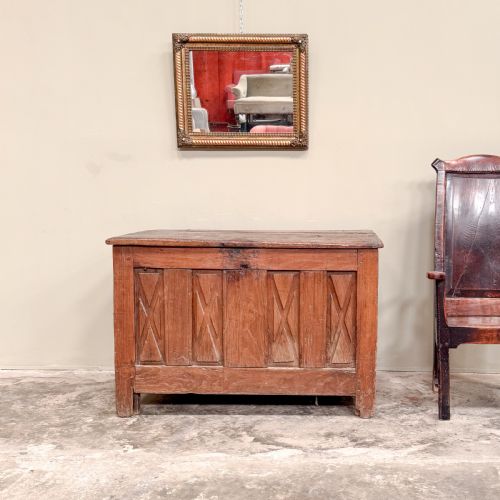
Joinery on these boxes relies on straightforward, durable construction methods such as six-plank assembly, panel framing, and dovetailing. Early examples often utilise simple pegged joints and heavy hand-sawn boards that reveal the mill marks of the period.
Iron and wrought iron fittings provide structural reinforcement and security, appearing as strap hinges, heavy corner plates, and carrying handles. Paint, graining, and polychrome finishes frequently coat the softwood surfaces, protecting the timber while adding distinct regional decoration.
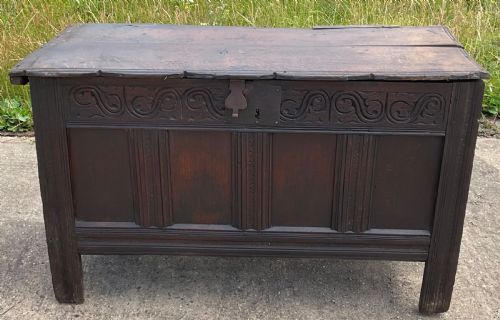
Listings feature robust nineteenth-century pine and elm trunks alongside seventeenth-century oak coffers.
What varies in quality
The integrity of the original timber and the survival of early hardware distinguish superior examples from heavily restored pieces. Boxes retaining their original painted surfaces, undisturbed hinges, and unreplaced floorboards command greater interest from collectors.
Proportion and scale dictate the visual weight of a piece, with well-balanced proportions and honest patination reflecting superior country craftsmanship. Heavy structural alterations or replaced lids diminish the historical authenticity of older coffers and trunks.
The Rustic Timber Blanket Box Glossary
- Six-plank coffer
- A simple chest constructed from six principal boards joined at the edges, representing one of the earliest forms of domestic furniture. These pieces rely on pegged joints and end boards for stability.
- Mule chest
- A storage chest featuring one or more drawers built beneath the main interior compartment. This form emerged as a development from the traditional blanket box to offer more organised access.
- Dowry chest
- A large decorative box traditionally prepared for a bride to hold household linen and personal possessions. They often feature specialised painted decoration, carved panels, or substantial iron bindings.
- Dowry chest
- A large decorative box traditionally prepared for a bride to hold household linen and personal possessions. They often feature specialised painted decoration, carved panels, or substantial iron bindings.
- Sword chest
- A narrow, elongated coffer specifically designed to store long weapons securely. These seventeenth-century examples are exceptionally deep and sturdy.
- Grained paint
- A decorative finish applied to softwoods to imitate the richer figure of more expensive timbers like oak or walnut. Craftsmen used specialised combs and brushes to replicate natural grain patterns.
Rustic Timber Blanket Box: Frequently Asked Questions
How do I date a timber blanket box?
Examine the construction marks, nail types, and hinge styles to establish the likely period of manufacture. Hand-forged ironwork and pegged joinery generally point towards earlier centuries, while machine-cut nails suggest Victorian production.
Timber shrinkage, wear patterns around the keyhole, and the underlying patina of the wood further help confirm the age of the piece.
Were these boxes used only for blankets?
While named for blanket storage, these versatile chests held woollens, winter garments, important documents, and valuable household linen. Families kept them at the foot of beds or in common rooms for daily access to textiles.
Larger dowry trunks travelled with brides to their new homes, carrying their entire worldly accumulation of fabrics and personal goods.
How do I care for antique pine furniture?
Maintain a stable room temperature and avoid placing the timber near direct heat sources or strong sunlight. Excessive dryness causes pine and elm to split, while dampness encourages woodworm.
Feed the dry wood occasionally with a traditional beeswax polish to protect the surface without sealing the historic pores of the timber.
What is the difference between a coffer and a trunk?
A coffer typically describes a heavy box constructed from thick timber planks with structural framing, often associated with earlier centuries and joined construction. Trunks frequently incorporate bound edges, domed lids, and materials intended for travel.
Both serve primary storage functions, but coffers generally display more architectural joinery while trunks prioritise portability and reinforcement.