



Heavy Iron Fireplace Dogs
Heavy iron fireplace dogs hold logs above the hearth for better draught, and you want a pair that anchors the grate.
Heavy Iron Fireplace Dogs
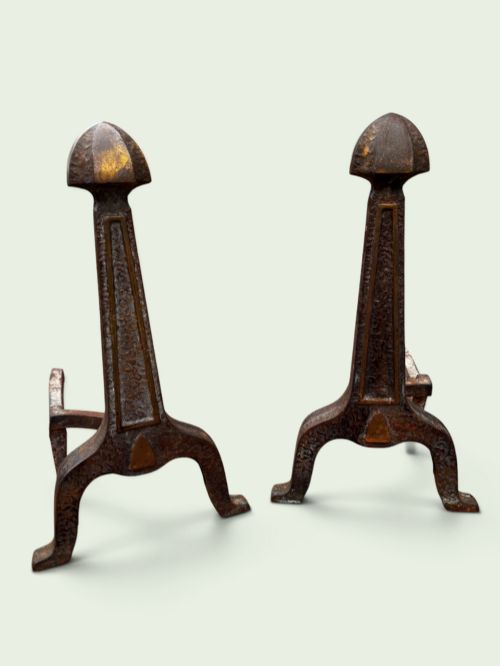
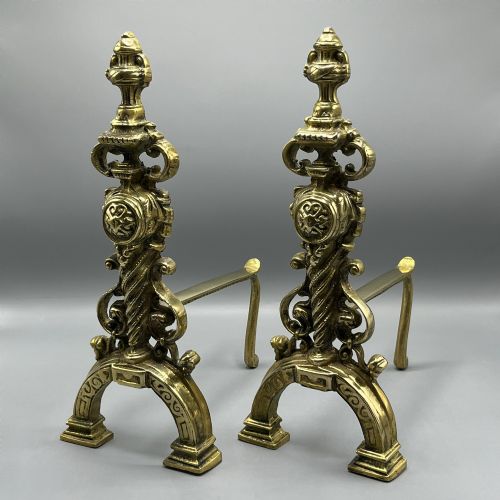
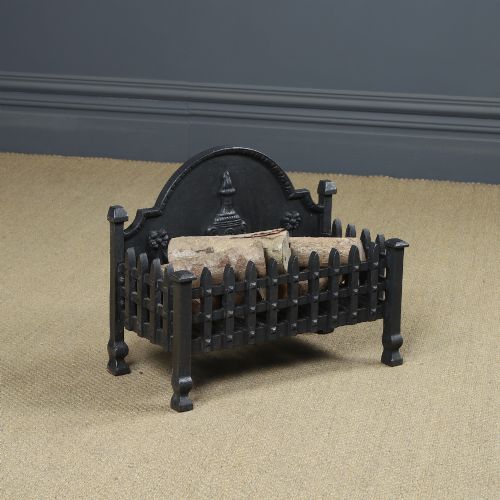
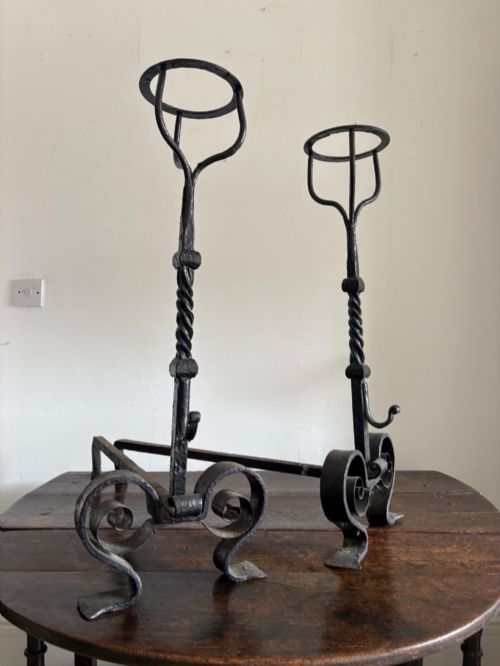
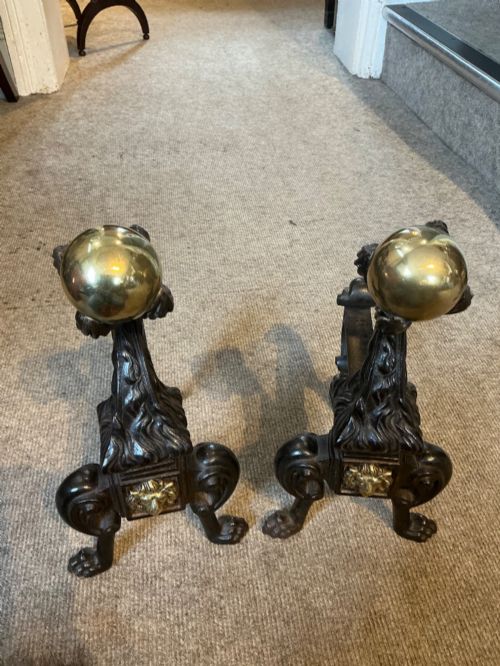
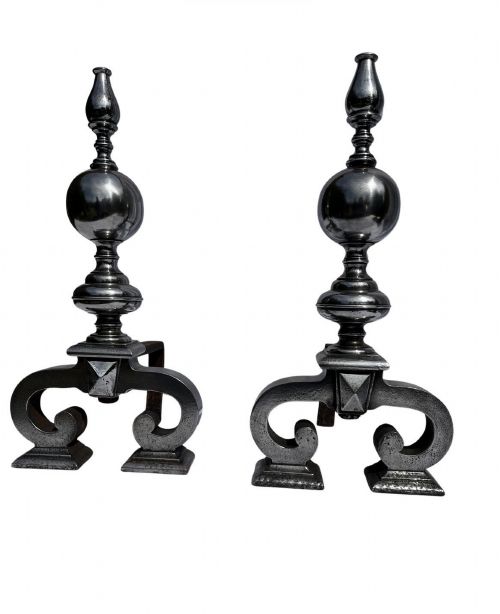
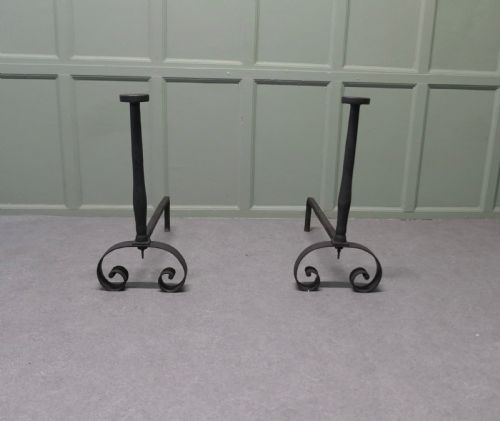
When you search for heavy iron fireplace dogs, you look at utilitarian hearth furniture designed to support firewood in an open hearth. These heavy iron fireplace dogs appear across the nineteenth century alongside later twentieth century revivals, taking forms from simple upright standards to pairs incorporating fire grates and log baskets.
The versions most common on this page are nineteenth century cast and wrought iron andirons, often accompanied by brass details or paired with larger fire baskets. They range from small domestic examples to monumental pairs standing nearly a metre tall.
How they were made
Maker foundries utilised cast iron for rigid structural standards and decorative front plates, pouring molten metal into sand moulds to achieve intricate Gothic or Neoclassical motifs. Wrought iron was shaped by hand at the forge for strength in the load bearing billets and shafts.
Makers combined these iron bodies with solid brass finials or bronze mounts, securing the components with heavy threaded bolts or traditional riveting to withstand intense hearth temperatures.
Some pairs stand so tall they require their own microclimate.
What varies in quality
Quality rests on the weight of the metal and the clarity of the casting, distinguishing heavy workshop production from lighter domestic wares. Superior examples show crisp detailing in the cast iron or bronze mounts without excessive pitting or modern replacement parts.
Proportion and scale dictate the visual weight in the hearth, where monumental pairs demand deeper forging and thicker billets to maintain structural integrity over centuries of use.
The Heavy Iron Fireplace Dogs Glossary
- Andirons
- Iron supports placed in a hearth to hold logs above the floor. They typically consist of an upright standard and a horizontal bar.
- Fire basket
- A metal grate holding fuel within an open fireplace, often used in conjunction with matching andirons or fire dogs.
- Wrought iron
- Iron that has been heated and hammered into shape by hand. This material provides distinct fibrous strength compared to brittle cast variants.
- Fireback
- A heavy iron plate placed at the back of a fireplace to reflect heat into the room and protect the masonry wall.
Heavy Iron Fireplace Dogs: Frequently Asked Questions
What is the difference between fire dogs and andirons?
Fire dogs and andirons describe the same hearth furniture items used to support logs in an open fireplace. The terms are interchangeable across most antique listings.
Historically, regional preferences determined which word makers used on bills and inventories.
How do I know if they fit my fireplace?
Measure the depth of your hearth and the clearance of your opening before selecting a pair. Height and billet length dictate whether the dogs sit comfortably inside the brick recess.
Larger monumental pairs require deep inglenook hearths to allow adequate space around the ironwork.
Can these be used in a working fireplace?
Cast and wrought iron pieces are designed specifically for solid fuel fires and withstand high temperatures well. Ensure the metal has no deep structural fractures from past heat stress before lighting a fire.
Periodic cleaning and light oiling protect the iron surface from ash corrosion during use.
How do I date a pair of iron fire dogs?
Stylistic clues such as Gothic revival tracery or Neoclassical urn motifs point towards specific nineteenth century periods. Tool marks on wrought sections and casting quality help narrow the decade of production.
Earlier sixteenth century examples display distinct hand forged characteristics and dated inscriptions.