




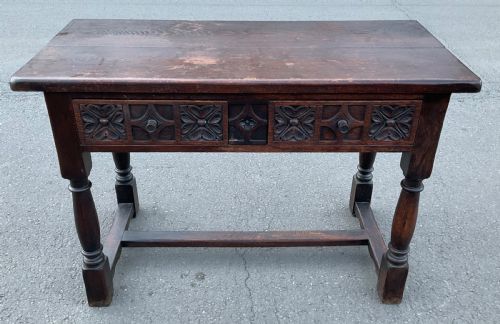


Heavy Dark Oak Desk
A heavy dark oak desk brings centuries of honest grain and solid proportion into a room, offering a sturdy surface that withstands daily use.
Heavy Dark Oak Desk
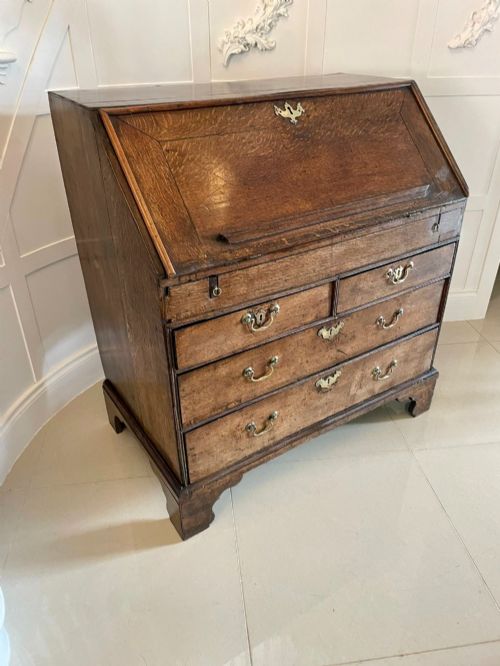
When you search for a heavy dark oak desk, you encounter pieces spanning from the seventeenth century through to the early twentieth century. These items include bureau desks and writing tables built with substantial timber frames.
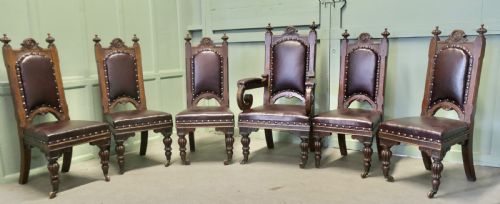
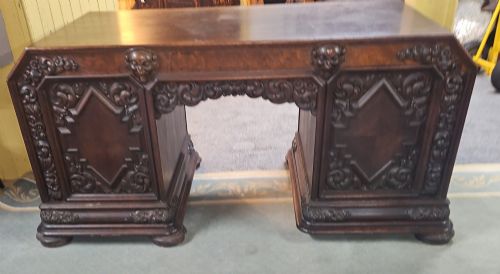
The Victorian era contributes heavily to this selection, often incorporating revival styles such as Jacobean and Gothic Revival. Such pieces combine functional work surfaces with robust construction and carved ornamentation.
How they were made
Construction relies primarily on solid oak, chosen for its durability and prominent grain pattern. Joinery techniques from earlier periods provide structural integrity without modern mechanical fasteners.
Makers occasionally integrated secondary materials such as brass fittings or leather inserts on writing surfaces. Carved details and panel work required skilled hand woodworking across the framework.
Heavy Dark Oak Desk Retail Price Guide 2026
Typical asking prices for heavy dark oak desk among the pieces listed under this phrase on Sellingantiques today, from the lower quarter to the upper quarter. They describe what is for sale here now, not the wider market.
Listings for heavy dark oak desks span from the seventeenth century through the Victorian period up to nineteen twenty.
What varies in quality
Quality rests upon the depth and precision of the carved elements and the selection of the timber. Pieces with well-figured grain and crisp, hand-cut detailing stand apart from simpler iterations.
The integrity of the original construction and the preservation of the dark surface finish dictate the standing of a piece. Finer examples retain their original structural elements and proportion without unnecessary alterations.
The Heavy Dark Oak Desk Glossary
- Bureau desk
- A sloping desk lid that opens to reveal an interior fitted with small compartments and pigeonholes. This form provides a concealed writing surface.
- Jacobean revival
- A nineteenth-century stylistic movement imitating the heavy turned legs and geometric panel carving of the early seventeenth century. It emphasises deep relief and dark timber.
- Gothic revival
- An architectural and decorative style drawing on medieval forms, featuring pointed arches, tracery, and heavy carved motifs. This style appears frequently on Victorian seating and desks.
Heavy Dark Oak Desk: Frequently Asked Questions
What is a heavy dark oak desk?
A heavy dark oak desk is a sturdy wooden writing or bureau table constructed from dense oak timber, often finished in a deep hue. These pieces date from the seventeenth century up to the early twentieth century and frequently display traditional carved details.
Such furniture serves as a functional workspace while bringing historical character to a room. Their solid construction ensures they remain stable and durable for daily tasks.
How do I care for oak furniture?
Caring for an oak desk involves keeping the timber away from direct heat sources and excessive moisture. Regular dusting with a dry cloth maintains the surface finish without stripping the natural oils of the wood.
Applying a traditional beeswax occasionally helps nourish the dark grain. Avoid modern chemical sprays that can damage the antique finish over time.
Are these desks practical for daily use?
These desks offer substantial surface areas and sturdy frames suited for writing or placing modern equipment. Their solid oak construction provides the stability needed for everyday work.
Drawers and internal compartments help keep stationery organised. Their enduring build quality means they handle routine use reliably.
How do I identify the period?
Identifying the period involves examining the joinery methods, hardware, and decorative styles present on the item. Seventeenth-century pieces typically feature hand-cut joints and distinct early carving techniques, whereas Victorian examples often incorporate revival styles like Jacobean or Gothic motifs.
Hardware such as brass handles and the overall proportion of the piece offer further clues to its age. Comparing the timber patination helps confirm the span of time it has existed.