



Warm Brown Oak Bureau
A warm brown oak bureau brings the deep, honest grain of English timber and practical writing space into any room.
Warm Brown Oak Bureau
When you search for a warm brown oak bureau, you are looking at practical writing furniture and storage pieces built from durable timber. These items range from early seventeenth-century examples up to twentieth-century reproductions, reflecting centuries of cabinet-making traditions.
You are most likely to meet desks, bureaux, and chests of drawers finished in rich tones of brown oak. The forms span simple country styles, Georgian proportions, and Dutch baroque influences, offering both fitted writing compartments and generous drawer space.
How they were made
These pieces rely on solid oak construction, often enhanced with brass or iron hardware such as handles, hinges, and locks. Cabinet-makers utilised traditional joinery methods to shape the wood, creating robust carcases that withstand heavy daily use.
Surfaces show careful attention to grain and colour, finished with turned knobs, wooden handles, or turned legs. Some specialised examples feature elaborate fitted interiors with small drawers and pigeonholes tucked behind a sloping fall-front.
Warm Brown Oak Bureau Retail Price Guide 2026
Typical asking prices for warm brown oak bureau among the pieces listed under this phrase on Sellingantiques today, from the lower quarter to the upper quarter. They describe what is for sale here now, not the wider market.
Listings span multiple eras from the seventeenth century through the Georgian and Edwardian periods up to the twentieth century.
What varies in quality
The distinction between standard examples and the finest pieces lies in the crispness of the timber's figure and the complexity of the interior joinery. Early pieces from the seventeenth and eighteenth centuries demonstrate superior hand-carving and meticulous attention to structural proportions.
Later twentieth-century reproductions and Edwardian items offer sturdy utility but generally display simpler construction methods and less articulate grain patterns. The integration of original brass or iron fittings also elevates the integrity of a piece.
The Warm Brown Oak Bureau Glossary
- Bureau
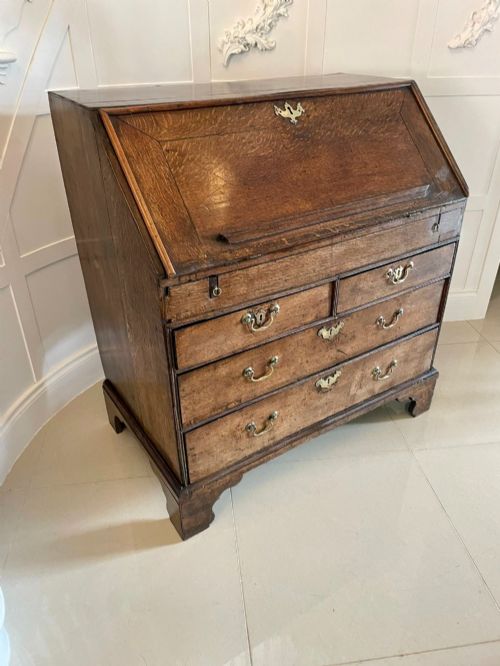
- A writing desk typically featuring a sloping hinged lid that opens to reveal a fitted interior of pigeonholes and small drawers. This form combines enclosed storage with a dedicated writing surface.
- Fall-front
- The hinged writing flap on a bureau that drops down to a horizontal position for writing. When closed, it conceals the inner compartments.
- Chest of drawers
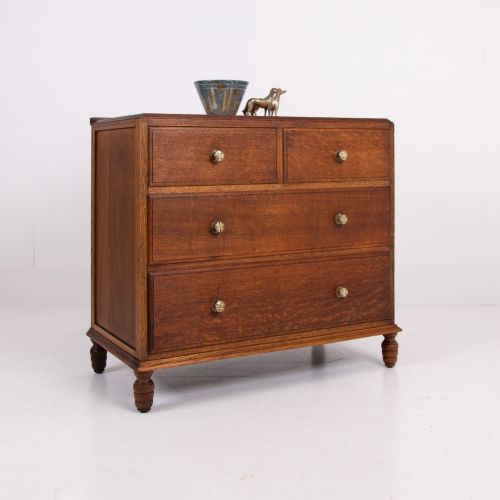
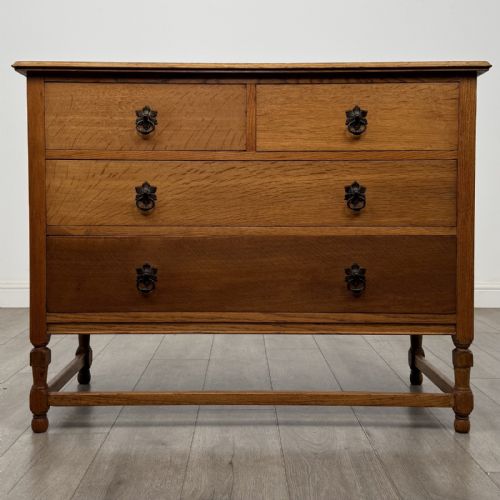
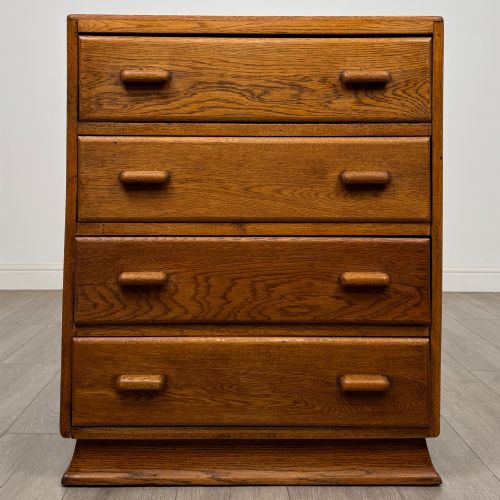
- A piece of furniture consisting of multiple stacked drawers used for storing clothing and household items. The listings include versions with turned legs and wooden knobs.
- Roll top desk
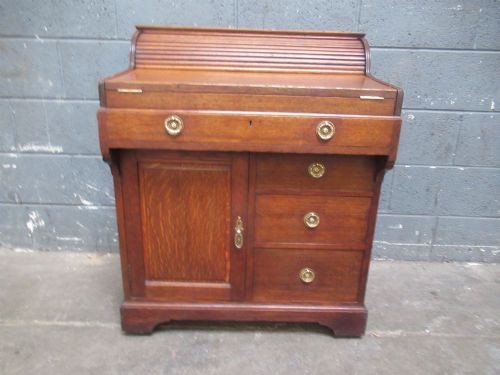
- A desk featuring a flexible tambour shutter that slides up and down to cover the writing area and pigeonholes. It provides secure closure for working papers.
- Georgian style
- A design aesthetic spanning the eighteenth century characterised by classical symmetry, balanced proportions, and understated elegance. Pieces in this style often use heavy oak timbers.
Warm Brown Oak Bureau: Frequently Asked Questions
What is an oak bureau?
An oak bureau is a traditional desk constructed from oak timber, typically featuring a sloping front flap that lowers to create a writing surface. Inside, it usually contains small drawers and pigeonholes for organising documents.
Beneath the writing area, these pieces frequently incorporate chest-style drawers for additional storage. They combine the functions of a writing desk and a set of drawers into a single compact unit.
How do I date an oak bureau?
Dating an oak bureau involves examining the construction techniques, hardware, and overall style of the piece. Earlier examples from the seventeenth and eighteenth centuries often display hand-cut joints and distinct patina.
Twentieth-century reproductions and Edwardian pieces tend to show more uniform machining and standardised fittings. Comparing the handle types and leg turning styles against known period characteristics helps narrow down the age.
How do I care for warm brown oak?
Caring for oak furniture requires maintaining stable humidity levels and avoiding direct sunlight to prevent the timber from drying out or fading. Regular dusting with a soft, dry cloth preserves the natural finish.
Applying a traditional beeswax polish occasionally helps nourish the oak grain and maintain its warm brown tone. Avoid using harsh chemical cleaners that can strip the historic polish from the wood.
Where should I place a bureau?
A bureau fits well in a living room, study, or hallway where its compact footprint and dual purpose provide both workspace and storage. Position it away from direct heat sources like radiators to protect the timber.
Ensure there is adequate clearance in front of the piece for the fall-front flap to lower completely. This allows comfortable access to the writing surface without crowding the room.