


Heavy Copper Pan
A heavy copper pan is a robust kitchen essential built for service, prized for rapid heat distribution and lasting utility.
Heavy Copper Pan
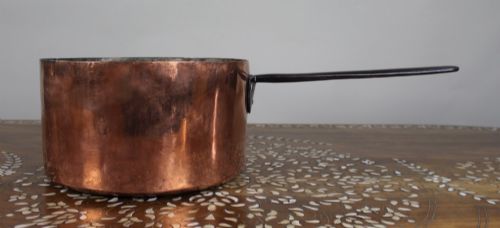
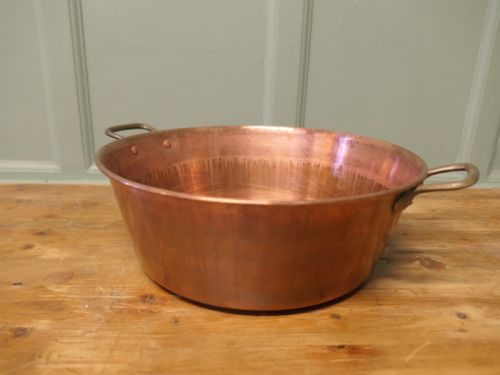
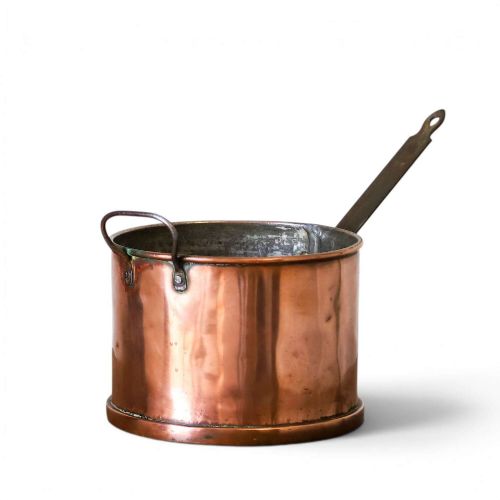
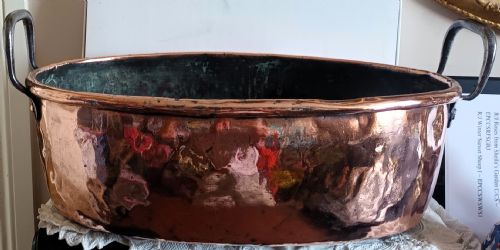
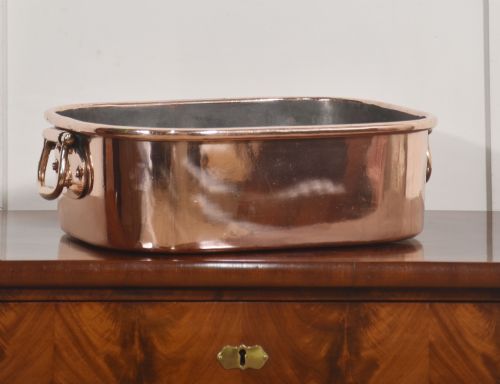
A heavy copper pan functions as practical kitchenware and utilitarian cookware originating from the Georgian, Victorian, and 19th-century periods. These vessels encompass saucepans, preserving pans, jam pans, fish kettles, and cooking pots suited for domestic service.
Buyers encounter single saucepans alongside sets of multiple pans, French country items, and rustic farmhouse vessels. Many examples incorporate brass or wrought iron handles, tin linings, and robust gauge metals designed for culinary use.
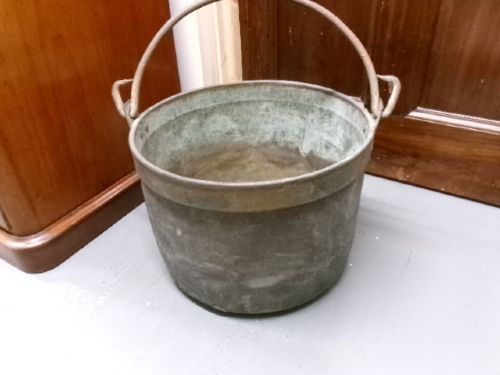
Forms extend beyond standard pans to include cauldrons, cream setting pans, grain measures, baking dishes, and steaming pans. These kitchen accessories display the practical manufacturing methods of 1800, 1860, 1900, and 1930.
How They Were Made
Makers utilised heavy gauge copper combined with brass, iron, bronze, and tin to build durable vessels. Hand-beaten techniques shaped the metal sheets into saucers, bowls, and saucepans with substantial walls.
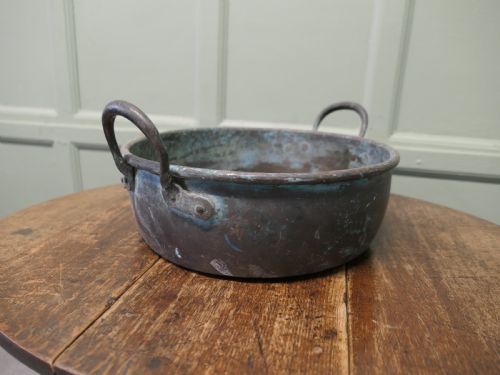
Construction details include riveted handles made from wrought iron or brass, alongside swing handles fitted to cauldrons and jam pans. Original patinas develop naturally across the metal surfaces through age and use.
Listings feature items spanning the Georgian period, the Victorian era, and the 1930s.
What Varies in Quality
The weight and thickness of the metal gauge distinguish sturdier utilitarian cookware from lighter domestic items. Substantial metal thickness ensures even thermal performance and structural integrity across centuries.
The integrity of construction, such as secure hand-riveting and the presence of makers' marks or stamps, elevates certain pieces. Original fittings, such as matching lids and iron handles, contribute to the integrity of surviving vessels.
Hodges And Sons·Liptons·Benham And Froude·Helvetia England
The Heavy Copper Pan Glossary
- Gauge
- The thickness of the metal sheet used to form the vessel wall. Heavier gauges provide greater durability for daily kitchen tasks.
- Patina
- The surface film and coloration developed on metal through age, handling, and oxidation. It records the history of the object.
- Preserving Pan
- A wide, open vessel designed for boiling fruit and sugar. These pans feature smooth interiors and sturdy handles for lifting.
- Fish Kettle
- An elongated oblong vessel equipped with a lid and handles. It accommodates whole fish for poaching.
- Tin Lining
- A protective coating applied to the interior surface of copper cookware. This layer prevents direct food contact with the copper metal.
Heavy Copper Pan: Frequently Asked Questions
Can I cook with a heavy copper pan?
Many surviving pans remain entirely suitable for modern culinary use once the interior tin lining is inspected.
Buyers should verify the condition of the protective lining before preparing food in antique vessels.
How do I clean an antique copper pan?
Traditional cleaning methods utilise mild agents to preserve the historic metal surface without removing the accumulated patina.
Abrasive materials should be avoided to protect the hand-beaten texture of the copper.
What is a cream setting pan?
A cream setting pan is a specialised dairy vessel used historically to separate cream from milk.
These wide, shallow pans provide the surface area required for traditional dairy processing.
How do I date a copper pan?
Dating relies on manufacturing style, handle construction, riveting techniques, and any stamped maker marks.
Georgian and Victorian pieces display distinct hand-working methods that separate them from later twentieth-century kitchenware.