


Hearth Fireside Irons
Hearth fireside irons bring practical utility and period character to a chimney corner, spanning companion sets, fuel holders and rests.
Hearth Fireside Irons
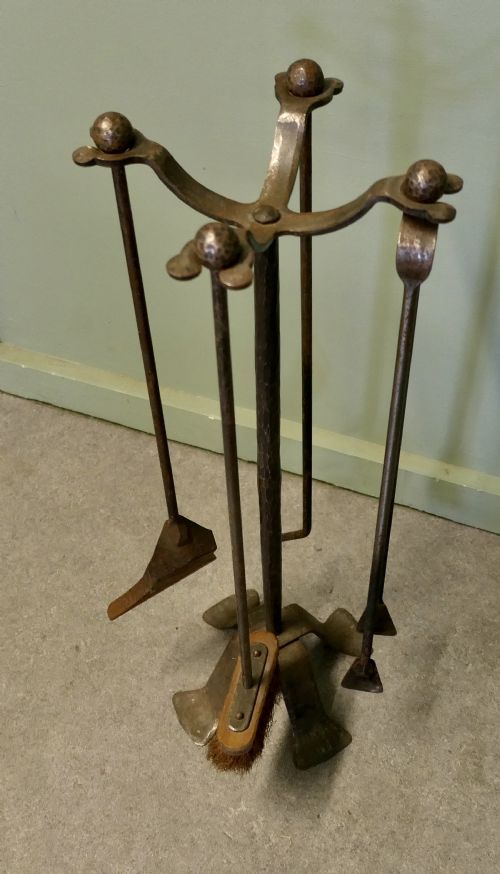
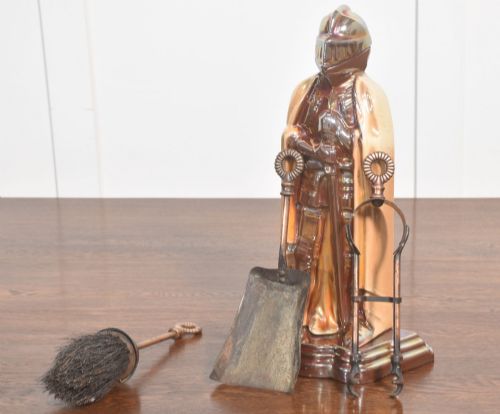
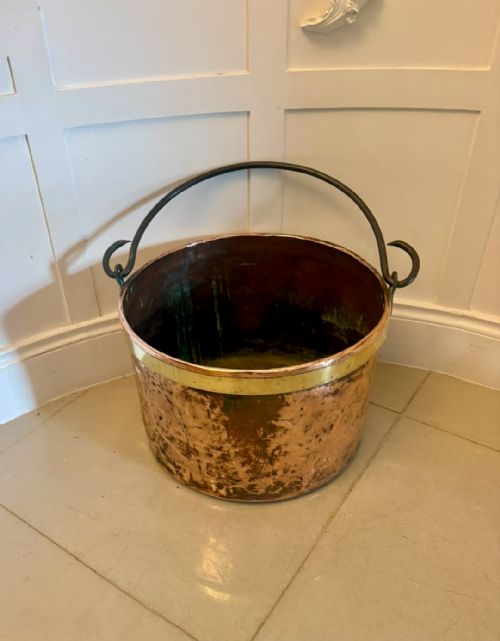
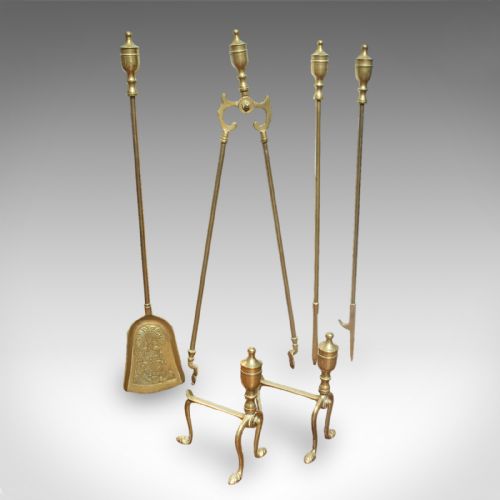
When you search for hearth fireside irons, you encounter a varied selection of utilitarian and decorative metalwork designed for solid fuel hearths. These items range from companion sets and tool rests to copper log bins, coal scuttles and heavy andirons.
The pieces appearing on this page stretch across Victorian, Georgian and Edwardian periods alongside early twentieth-century examples. You will frequently find brass companion sets, wrought iron implements and large copper coal containers used to manage coal and wood fires.
Origins shift between English workshops, French foundries and Scottish metalworkers, encompassing styles from Rococo revival and Gothic details to clean Arts and Crafts and flowing Art Nouveau lines.
Materials and Metalworking Techniques
Construction relies heavily on durable metals like cast iron, wrought iron, steel, brass and copper, often paired together within a single piece such as a copper bin set inside a wrought iron frame.
Articles are shaped through traditional blacksmithing, casting and hand-beating techniques. Many items feature applied decorative elements, polished surfaces or painted metal finishes, while some fuel containers integrate leather or swing handles.
Listings feature items from the Georgian, Victorian and Edwardian eras, executed in copper, brass, cast iron and wrought iron.
Judging Quality in Fireside Metalwork
Quality rests upon the weight and substance of the metal used, distinguishing substantial cast bronze, thick gauge copper and forged iron from lighter, pressed sheet alternatives. Robust construction ensures that pokers, shovels and companion stands withstand active daily use on the hearth.
Artistic execution and detail in styling define the upper tier of pieces, whether through crisp casting on figural andirons, hand-hammered surfaces on Arts and Crafts copper vessels, or balanced proportions on companion tool rests.
The Hearth Fireside Irons Glossary
- Companion set
- A matched assembly of fireplace tools, typically including a poker, shovel and tongs, gathered together on a dedicated stand.
- Andirons
- Heavy metal supports placed on either side of a hearth to elevate logs for better airflow beneath the fire.
- Coal scuttle
- A specialised bucket or container designed for holding and transporting coal to the fireplace.
- Trivet
- A small metal platform raised on legs, used historically for standing pots or kettles close to the coals.
- Fender
- A low metal guard placed around the hearth opening to keep embers contained within the fireplace area.
Hearth Fireside Irons: Frequently Asked Questions
What is included in a companion set?
Companion sets comprise essential fire-tending implements mounted together on a common base or resting frame. The standard configuration includes a poker for moving logs, a shovel for clearing ash and tongs for handling smaller fuel.
Additional items sometimes accompany these tools, such as brushes or specialised rests, offering a complete hearth management solution in matching metal.
How do I clean brass and copper?
Maintenance depends on the desired appearance and the age of the metal object. Many collectors prefer to preserve a deep, aged patina rather than achieving a bright, polished shine.
Gentle dusting and occasional cleaning with appropriate non-abrasive metal cleaners will maintain the surface without removing historical character or wear.
What are andirons used for?
Andirons support logs above the floor of an open fireplace to improve combustion. By elevating the wood, they allow air to circulate freely underneath the fuel.
Beyond this practical role, heavy metal andirons provide a decorative anchor for the hearth, often matching the style of surrounding fire tools.
Where were these metal items made?
The pieces originate from various European workshops, with a strong representation of English, French and Scottish manufacture. Country house collections and urban foundries alike produced utilitarian ironwork alongside decorative copper and brass.
Regional preferences emerge in styles ranging from formal Georgian designs to organic Art Nouveau curves and sturdy Arts and Crafts construction.