
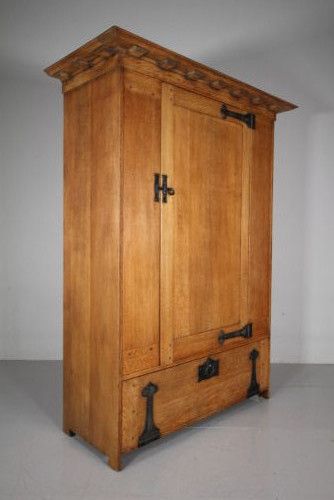
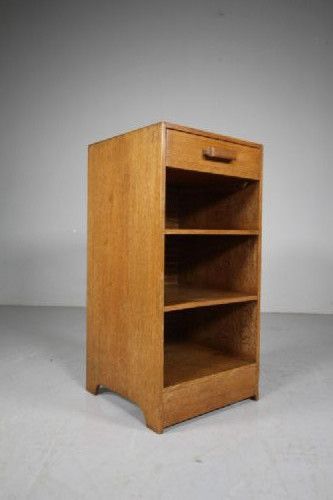
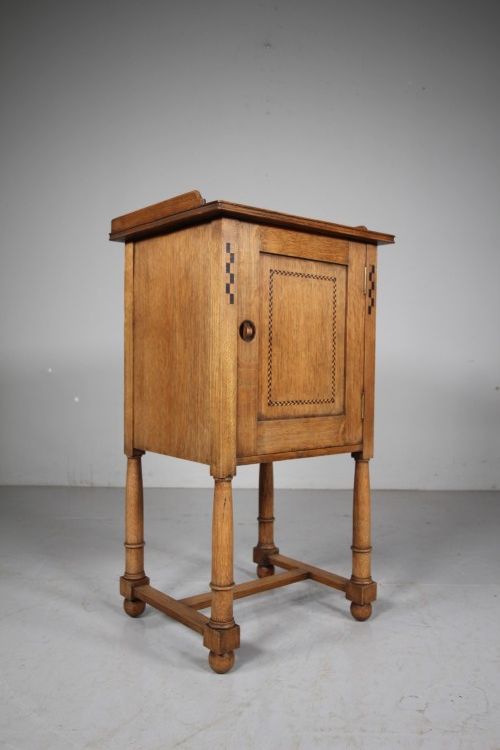


Heals Oak Cupboard
A heals oak cupboard brings honest craftsmanship and clean lines into a room, offering practical storage grounded in solid wood.
Heals Oak Cupboard
A heals oak cupboard represents a tradition of utility and thoughtful design spanning from the nineteenth century through the Arts and Crafts movement, Edwardian era, 1920s, and 1930s. Buyers searching for a heals oak cupboard encounter diverse forms, including tallboy cupboards, bedside cabinets, linen presses, corner units, and nursery cupboards.
The pieces originate predominantly from early twentieth-century production, appearing alongside Edwardian examples and later 1930s modern or Art Deco variations. Many items retain original stamps, paper labels, or distinct regional designations such as Letchworth and Lechlade.
While some pieces emerge as specialised designs like shoe cupboards or hanging wardrobes, standard storage forms remain the most common items met in daily handling. The enduring appeal lies in straightforward construction that suits both period interiors and contemporary spaces.
Materials and construction methods
Makers utilised solid oak as the primary structural material, often pairing it with contrasting elements such as wrought iron hardware, metal fittings, and glass panels. Decorative touches frequently include subtle boxwood inlay, ebony inlay, or specialised surface treatments like limed oak finishes.
Joinery techniques prioritize durability and plain utility, aligning with the ethos of Arts and Crafts workshops and later twentieth-century manufacturing standards. Stamped signatures, burned-in marks, and paper trade labels authenticate the workshop origin of individual items.
Listings feature oak, limed oak, wrought iron, and occasional ebony or boxwood inlay across pieces from the nineteenth century to the 1930s.
Distinguishing quality in storage pieces
Quality rests upon the integrity of the solid timber construction, the crispness of any inlaid detailing, and the preservation of original hardware such as wrought iron hinges and handles. Pieces retaining clear maker stamps or paper labels command stronger interest from collectors.
Proportion and configuration dictate differentiation within the range, separating standard commercial output from special order commissions or unusual regional models like the St. Ives designs. The application of specialised finishes, such as a well-maintained limed oak surface, alters the character of the piece.
Heals of London
The Heals Oak Cupboard Glossary
- Limed oak
- A wood finish created by applying a white or pale pigment to oak to accentuate the open grain. This treatment gained popularity during the interwar decades for modern bedroom and dining furniture.
- Tallboy cupboard
- A vertical storage unit combining drawer space and cupboard compartments in a single tall carcass. These pieces maximise vertical storage capacity in compact rooms.
- Linen press
- A large storage cabinet traditionally used for household linens, featuring sliding trays or shelves behind upper doors above a base of wider drawers.
- Arts and Crafts
- A design movement advocating traditional craftsmanship, simple forms, and the use of natural materials without excessive ornament. This philosophy influenced cabinet making at the turn of the twentieth century.
- Boxwood inlay
- Narrow strips or small geometric motifs of pale boxwood inserted into a contrasting dark wood surface for subtle decoration.
Heals Oak Cupboard: Frequently Asked Questions
How do I identify a stamped piece?
Makers often marked their furniture with a physical stamp pressed directly into the wood, usually found along the top edge of a drawer or on the back panels. These marks generally show the company name in plain capital letters.
Paper labels and inked signatures also appear on many pieces from this period. Checking internal surfaces and drawer runners helps locate these workshop identifiers.
Where were these cupboards used?
These storage units served multiple domestic functions across bedrooms, nurseries, and living spaces. Tallboy cupboards and wardrobes provided bedroom storage, while specialised pieces like corner units fitted smaller rooms.
Smaller bedside cabinets sat alongside sleeping quarters to hold personal items. Their adaptable proportions suit modern hallways and living areas just as well.
How do I date an Edwardian piece?
Edwardian furniture often displays transitional characteristics between heavy Victorian styling and the simpler lines of the Arts and Crafts movement. Construction methods rely on solid timber framing and traditional joinery.
Examining handles, hinges, and secondary woods helps confirm the period alongside any surviving paper labels or stamps.