


Single Door Oak Wardrobe
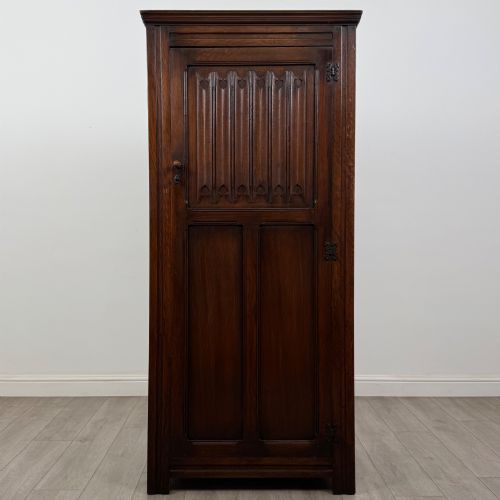
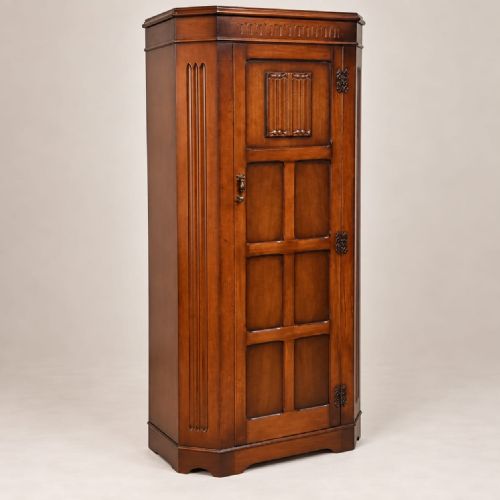
These single door oak wardrobe examples offer compact hanging space for smaller rooms, blending solid timber construction with period character.
Single Door Oak Wardrobe
A single door oak wardrobe provides full-length hanging capacity within a narrower footprint than standard double doors, making it a practical choice for bedrooms with limited wall space. These pieces appear across various eras, spanning the Victorian period through to the 1930s.
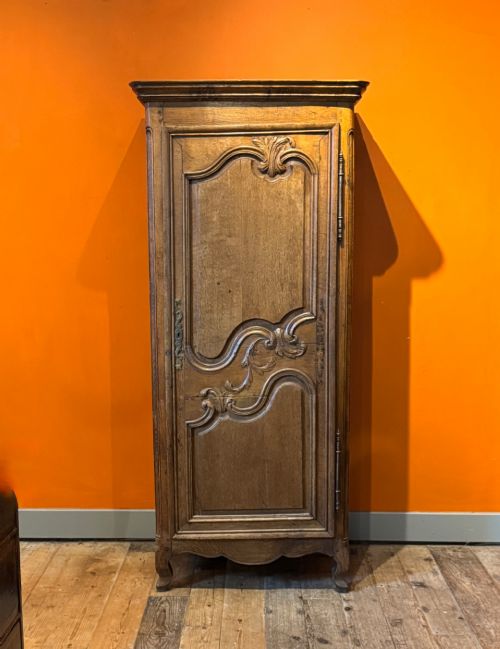
The selection encompasses tall bedroom pieces alongside compact hall robes and bonnetieres. Regional influences span domestic English workshops to French provincial designs.
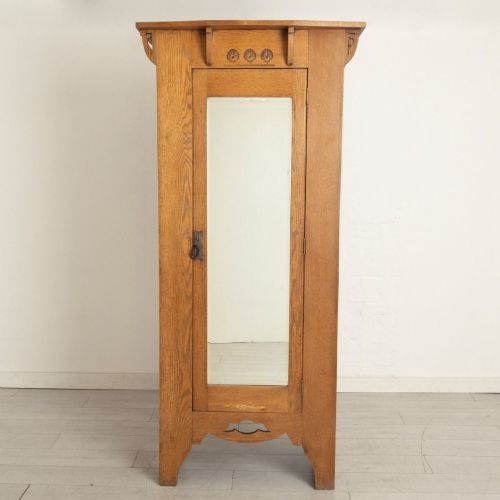
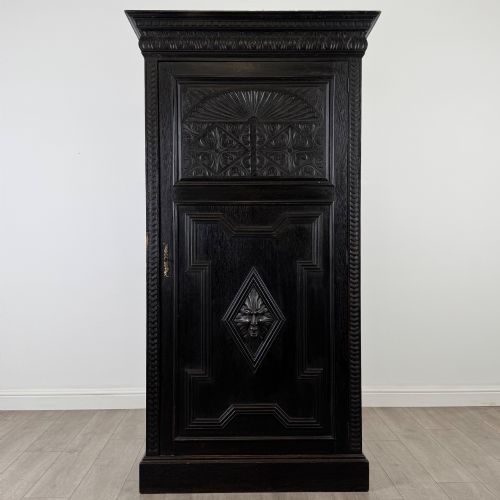
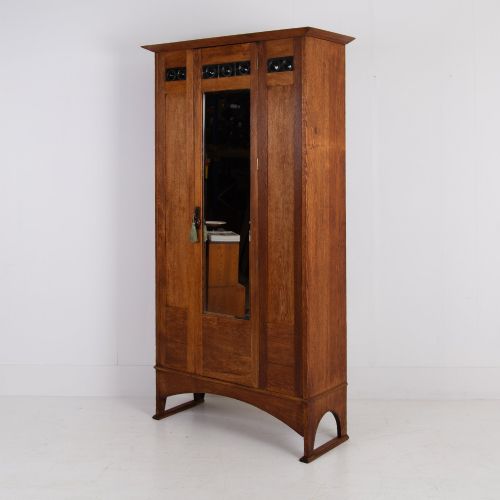
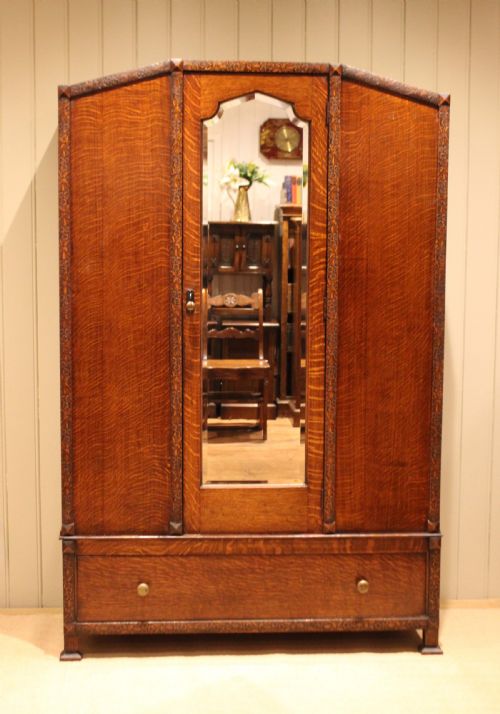
Buyers encounter distinct stylistic interpretations, including Arts and Crafts designs, Jacobean Revival carvings, and clean early twentieth-century lines. Some examples incorporate fitted mirrored panels or lower storage drawers to maximise daily utility.
How they were made
Cabinet makers utilised solid oak and golden oak as the primary structural timbers, often selecting quarter-sawn boards to display prominent medullary rays. Construction relied on traditional mortise and tenon joinery to ensure stability across tall, narrow frames.
Surface decoration frequently involved carved panels, linen fold motifs, or marquetry inlay. Functional hardware, including hinges and hanging hooks, was cast in brass or iron, whilst doors occasionally housed bevelled glass mirrors.
Listings feature solid oak and polished finishes alongside decorative elements like bevelled glass mirrors and brass hardware across multiple eras.
What varies in quality
The distinction between standard utility pieces and finer examples lies in the selection of timber and the execution of decorative details. Workshops such as Heals of London or Gillows of Lancaster employed superior materials and refined hand-carving that elevated simple storage items into distinguished furniture.
Structural integrity depends upon the thickness of the timber panels and the precision of the door hanging. Pieces that retain original brass or iron hardware and labelled maker marks command greater interest among collectors.
Heals of London·Gillows of Lancaster
The Single Door Oak Wardrobe Glossary
- Marquetry inlay
- Decorative patterns formed by fitting small pieces of veneer into a prepared wood surface. This technique adds pictorial detail to door panels and cornices.
- Linen fold
- A carved wooden panel motif resembling folded fabric or parchment. It is frequently seen on vernacular and revival furniture.
- Bonnetiere
- A tall, narrow single door cabinet originating in France, traditionally used for storing headwear and garments. It shares a similar slender footprint to a hall robe.
- Quarter-sawn oak
- Timber cut radially through the growth rings, producing a stable board with a distinct figure known as silver grain. High-end makers favoured this cut for visible exterior surfaces.
Single Door Oak Wardrobe: Frequently Asked Questions
Will a single door oak wardrobe fit standard hangers?
Most interiors provide adequate depth for modern clothes hangers, though older pieces occasionally feature front-to-back sliding pull-out rails rather than traditional lateral rails.
Buyers should verify internal dimensions if storing bulky winter coats or wide garments.
How do I distinguish Edwardian pieces from 1920s examples?
Edwardian versions often display heavier crown mouldings, carved floral motifs, or art nouveau brass fittings. Pieces from the 1920s tend towards cleaner, simplified geometric lines and lighter polished finishes.
Both periods frequently utilise solid oak construction with panelled doors.
What is the difference between a hall robe and a wardrobe?
Hall robes are generally shallower and shorter than bedroom wardrobes, designed originally for coats and hats in an entrance hallway rather than full outfits in a bedroom. Many share the same single door oak configuration and internal hanging depth.
Both function well in compact contemporary bedrooms.