

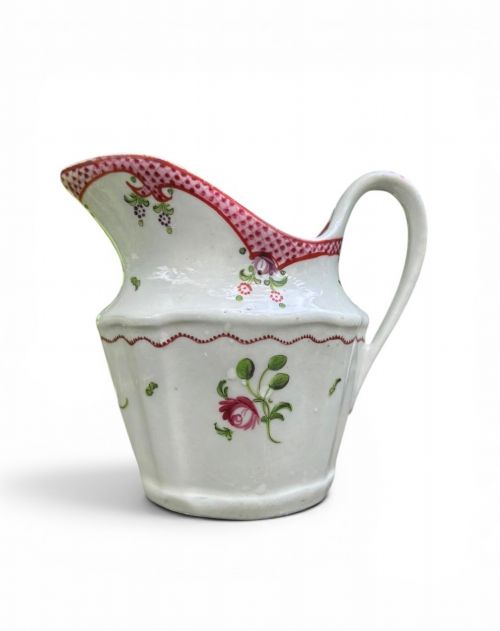


Hard Paste Porcelain
Hard paste porcelain brings together durable bodies and painted enamels, offering collectors figures, teacups, and candlesticks from the eighteenth and nineteenth centuries.

Hard Paste Porcelain
Hard paste porcelain pieces encompass figures, groups, teacups, saucers, jugs, and candlesticks produced across the eighteenth and nineteenth centuries. Buyers encounter both domestic teawares and continental display figures spanning Georgian, Victorian, and later periods.
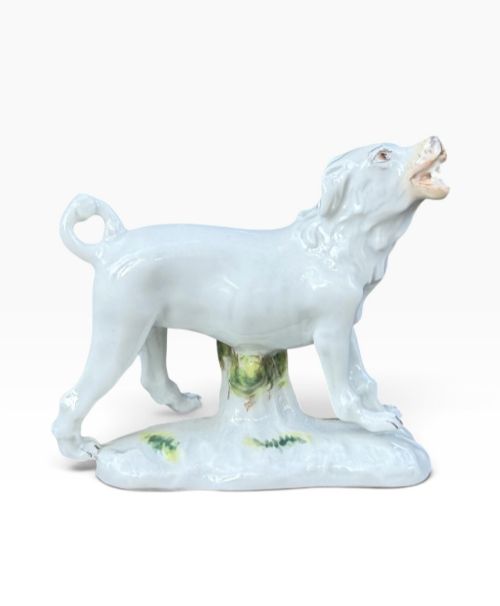
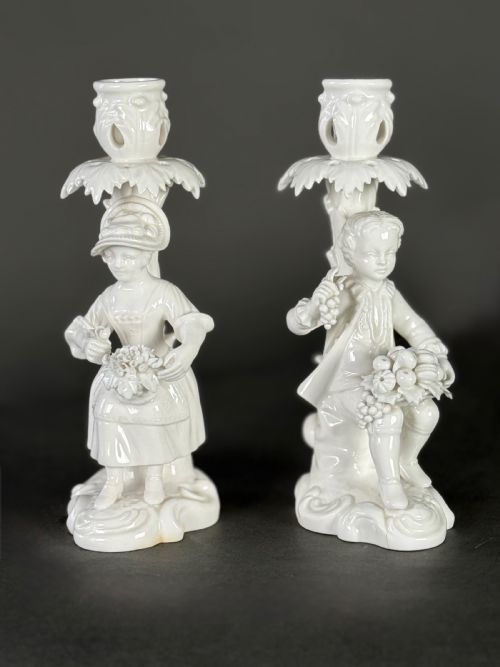
Figurines dominate the selection, including street traders, musicians, gardeners, and allegorical subjects alongside animal groups and pairs of candlesticks. These objects reflect rococo styles and revival aesthetics from German, French, and English workshops.
Materials and production
Makers formed hard paste porcelain using a vitrified ceramic body fired at high temperatures, creating a durable foundation for subsequent decoration. Enamel colours were applied over or under the glaze to build detailed surface scenes.
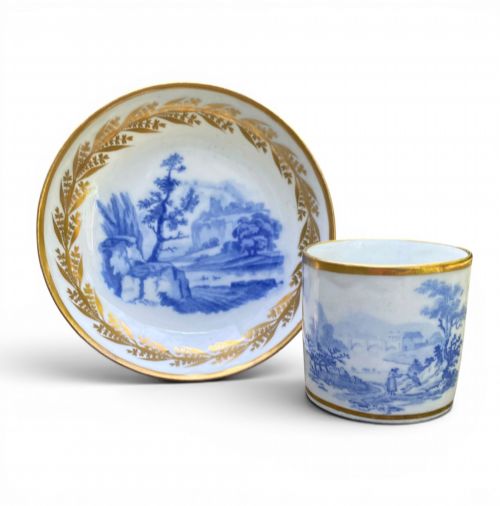
Gilding and gold leaf highlights enhanced decorative bowls, figures, and teawares, while translucent glazes sealed the ceramic surfaces. Artisans shaped these materials into intricate groups, jugs, and lidded vases.
Monkey musicians and street traders share the shelf with elegant ladies, proving that eighteenth-century porcelain makers loved a touch of theatrical fun.
Assessing quality
The sophistication of the form dictates value, with complex multi-figure groups and detailed animals demonstrating greater technical ambition than simple domestic wares.
Meissen·New Hall·Samson Paris·C G Schierholz
The Hard Paste Porcelain Glossary
- Hard-paste porcelain
- A true porcelain made from kaolin and petuntse fired at high temperatures. This creates a hard, vitreous body that resists scratching and absorbs little moisture.
- Enamel
- Opaque or transparent coloured glass fused to the porcelain surface during firing. It provides the vibrant palette seen on figures and teawares.
- Gilding
- The application of gold leaf or powdered gold to decorate rims, handles, and surfaces. It accents key architectural and figural details.
- Rococo revival
- A nineteenth-century style reviving the asymmetrical scrolls, C-curves, and natural motifs of the earlier eighteenth-century movement. It appears frequently on continental figures and vases.
- Blanc de chine
- A descriptive term for white porcelain without coloured enamel decoration. It highlights the pure tone of the ceramic body.
Hard Paste Porcelain: Frequently Asked Questions
What is hard paste porcelain?
Hard paste porcelain is a true ceramic composition fired at high temperatures to create a dense, durable, and vitrified body. It forms the foundation for many eighteenth and nineteenth-century European figures and teawares.
This material differs from soft paste through its resistance to scratching and its ability to withstand higher kiln temperatures during manufacture.
How do I date these figures?
Dating relies on stylistic markers such as rococo scrolls, costume details, and factory marks recorded across Georgian and Victorian production periods. Comparing the modelling style to documented pieces helps narrow the decade of origin.
Secondary clues include the colour palette of the enamels and the composition of the glaze applied to the base.
How were these pieces used?
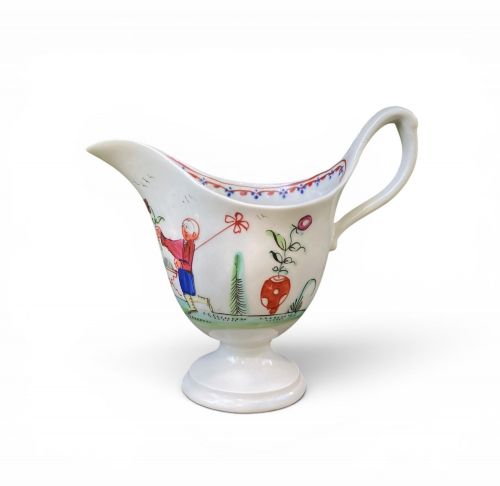
Many items served practical functions in the home, such as teacups, saucers, cream jugs, and lidded vases used during formal dining and tea service. Other objects, including figurines and candlesticks, functioned purely as decorative ornaments for mantelpieces and tables.
Figural groups often depicted pastoral scenes, street vendors, or allegorical subjects intended to display cultural refinement.
How should I care for antique porcelain?
Antique porcelain requires gentle handling and cleaning with a soft, dry cloth to protect fragile enamel paints and delicate gilding. Avoid harsh chemical cleaners and submersing pieces in water, particularly items with exposed body joints or old repairs.
Display figures and teawares safely away from edges where vibrations might cause accidental drops or impacts.