
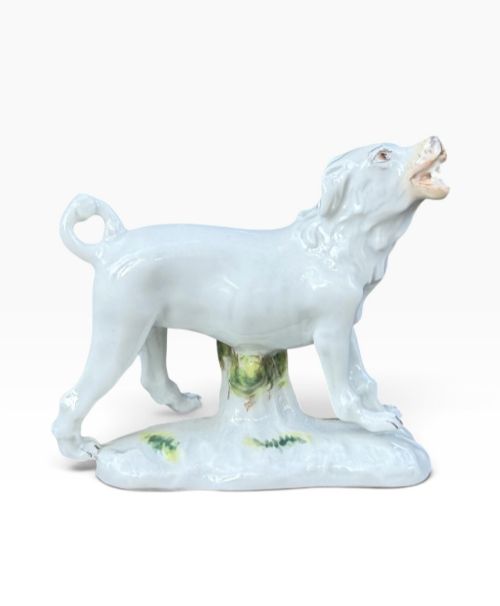


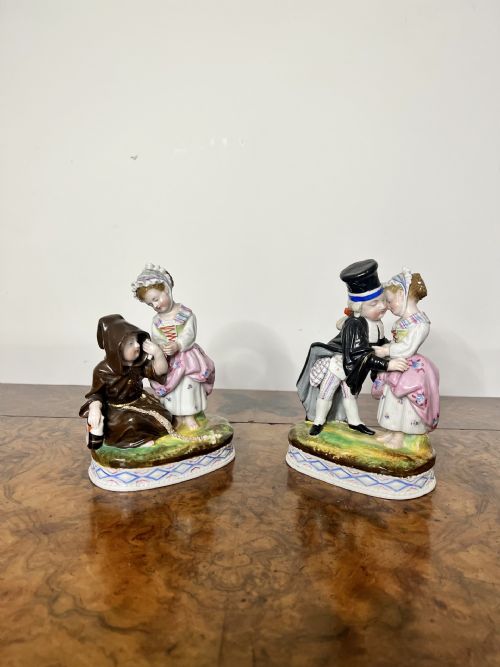


Hard Paste Porcelain Figurine
These hard paste porcelain figurine examples bring delicate modelling and glazed detail straight to a mantelpiece.
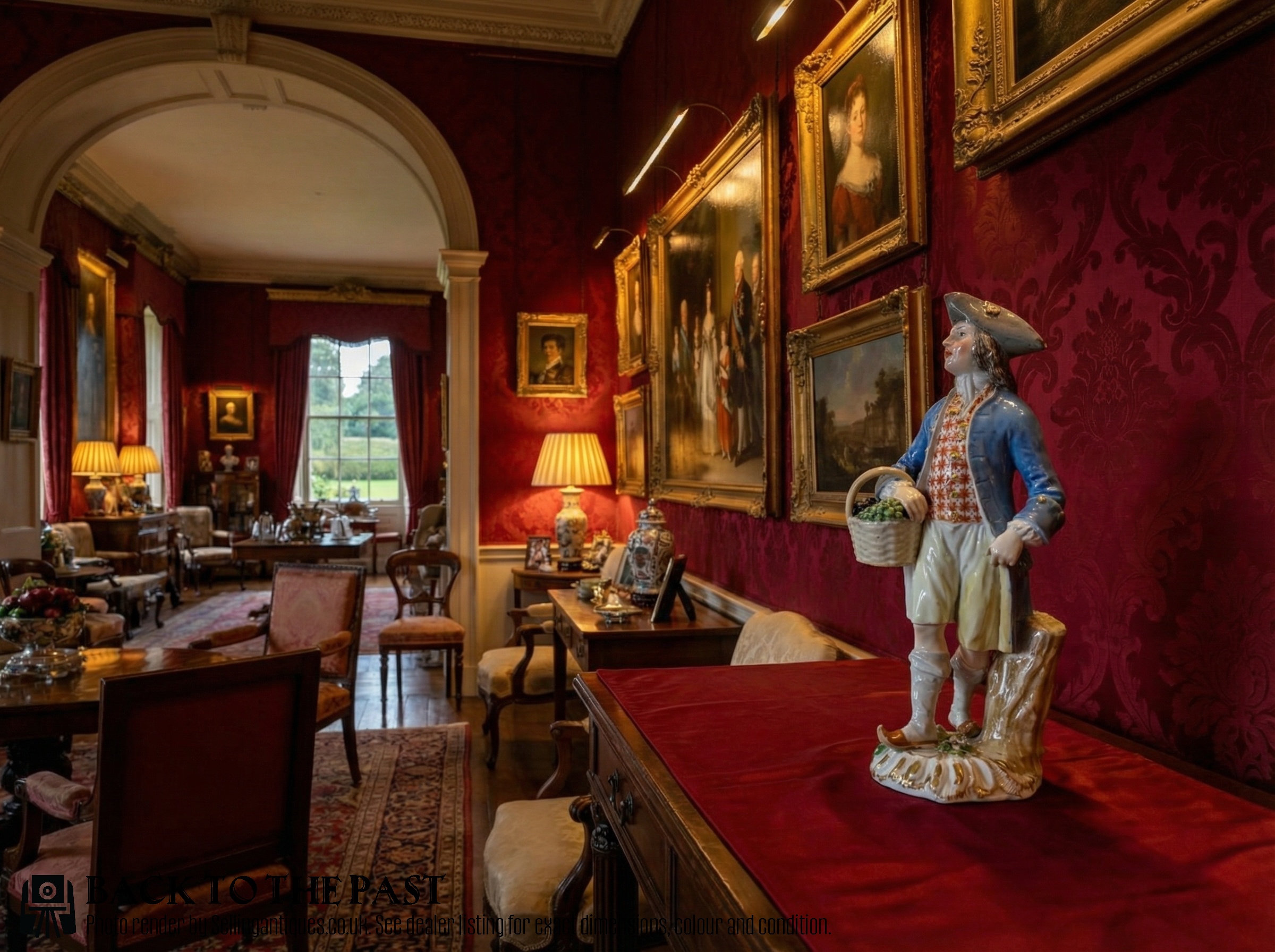
Hard Paste Porcelain Figurine
A hard paste porcelain figurine is a modelled ceramic sculpture shaped in human, animal or allegorical forms. When you search for this phrase, you meet continental European works, particularly from German and French factories. The selection ranges from solo street traders and musicians to complex multi-figure groups.
The periods represented span from the eighteenth century through the Victorian era into the twentieth century. Eighteenth-century pieces include eighteenth-century Meissen models such as gardeners and street vendors. Later nineteenth-century examples often emulate earlier Rococo styles or replicate historic models.
Most entries function as decorative objects rather than utilitarian vessels. You encounter individual subjects like women playing instruments alongside paired compositions and dramatic animal groupings. The scale varies from cabinet-sized figures up to substantial nineteenth-century pairs.

How they were made
Makers shaped hard-paste porcelain using a dense, high-firing ceramic paste composed of kaolin and petuntse. This mixture vitrified at high temperatures to produce a durable body with a bright, vitreous white surface. Artisans then applied liquid glaze before a secondary firing fixed the glassy coating.
Colour and surface detail came from enamel paint applied over or under the glaze. Craftsmen added highlights using gold leaf and gilt detailing to accentuate garments, bases and decorative attributes. Figures were cast in moulds, often in multiple sections, then assembled and hand-finished before firing.
Hard Paste Porcelain Figurine Retail Price Guide 2026
Typical asking prices for hard paste porcelain figurine among the pieces listed under this phrase on Sellingantiques today, from the lower quarter to the upper quarter. They describe what is for sale here now, not the wider market.
Listings span the eighteenth, nineteenth, and twentieth centuries, featuring German Porcelain and French Rococo Revival styles.
What varies in quality
The application of enamel paint and gilding separates standard production from exceptional artistry. Skilled painters introduced subtle shading and precise polychrome decoration, whereas basic pieces rely on flat, uniform washes of colour.
Meissen·Samson Paris·C. G. Schierholz
The Hard Paste Porcelain Figurine Glossary
- Hard-Paste Porcelain
- A true porcelain made from kaolin and petuntse, fired at very high temperatures to create a hard, vitrified body. It resists scratching and takes a smooth, glassy glaze.
- Enamel
- A powdered glass mixture fused to the ceramic surface during firing to provide durable colour. Enamel paints allow vibrant polychrome decoration on finished porcelain bodies.
- Gilt
- A thin layer of gold applied to the porcelain surface for decorative enrichment. It frequently highlights borders, garment details and base elements.
- Rococo Revival
- A nineteenth-century design style reviving the asymmetrical, ornate curves and natural motifs of the mid-eighteenth century. Figures from this movement often feature scrolling bases and elaborate costumes.
- Marcolini Period
- The tenure of Count Marcolini as director of the Meissen factory between seventeen-seventy-four and seventeen-fourteen-fourteen, known for specific factory marks and neoclassical influences. Pieces from this era carry distinct historical weight.
Hard Paste Porcelain Figurine: Frequently Asked Questions
How do I identify Meissen figures?
Meissen pieces often feature factory marks painted underneath the base, such as the famous crossed swords. The modelling quality and historical subject matter also provide strong clues.
Looking closely at the paste and enamel work helps distinguish genuine eighteenth-century production from later revivals.
What is the difference between hard paste and soft paste?
Hard paste porcelain uses kaolin and fires at much higher temperatures, resulting in a durable, vitrified body. Soft paste relies on glass frit and clay mixtures, firing at lower temperatures.
Hard paste feels harder to the touch and shows greater resistance to scratching and heat.
Where were Samson figures made?
Samson of Paris was a nineteenth-century French firm that specialised in recreating historic ceramic styles. They produced pieces in the manner of earlier factories like Chelsea and Meissen.
These French reproductions often carry their own distinctive manufacturer marks alongside historic styles.
How should I display porcelain figures?
Place figures in stable cabinets away from direct sunlight to protect the enamel paints and gilding. Ensure they sit on flat, secure surfaces where they will not be knocked.
Avoid high-traffic areas or spots subject to sudden temperature fluctuations to preserve the delicate ceramic structure.
What subjects are most common?
Common subjects include pastoral workers, musicians, street traders, and allegorical figures representing virtues or seasons. Animal groups, such as monkeys or dogs, also appear frequently.
These themes reflect popular eighteenth-century tastes that nineteenth-century revivalists eagerly copied.