
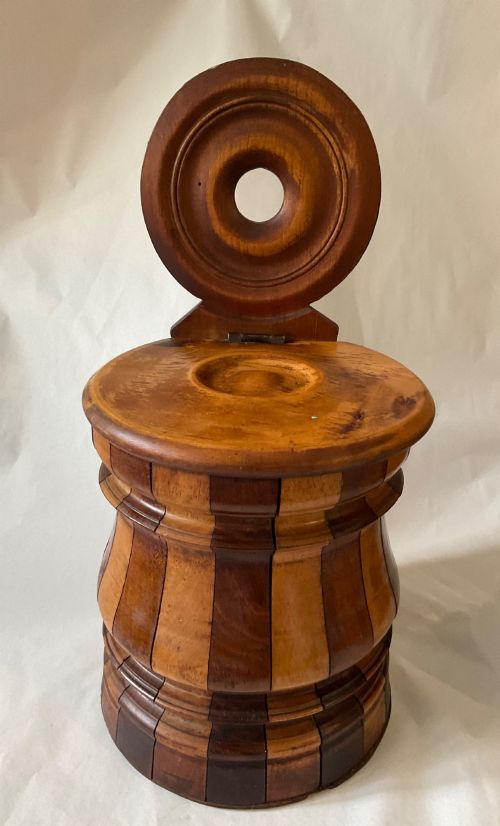
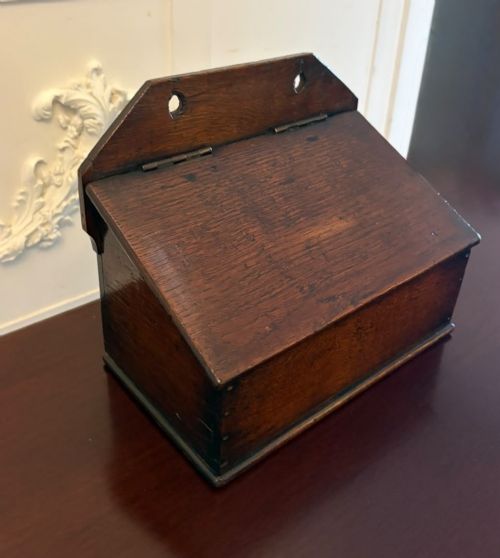
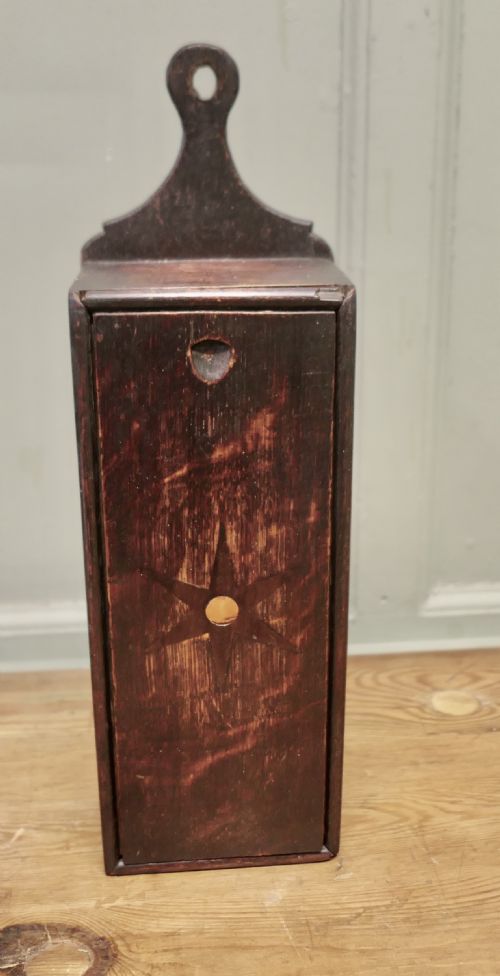
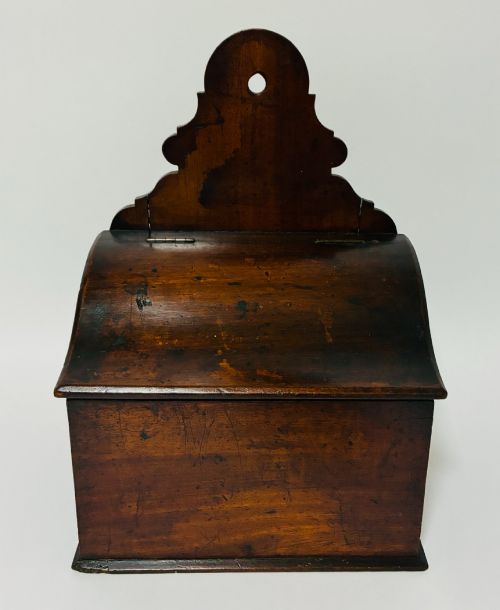
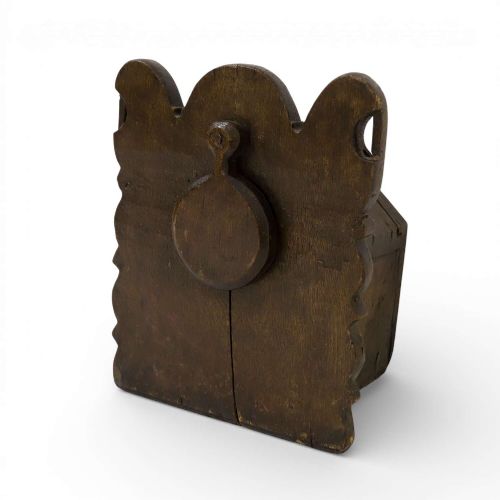
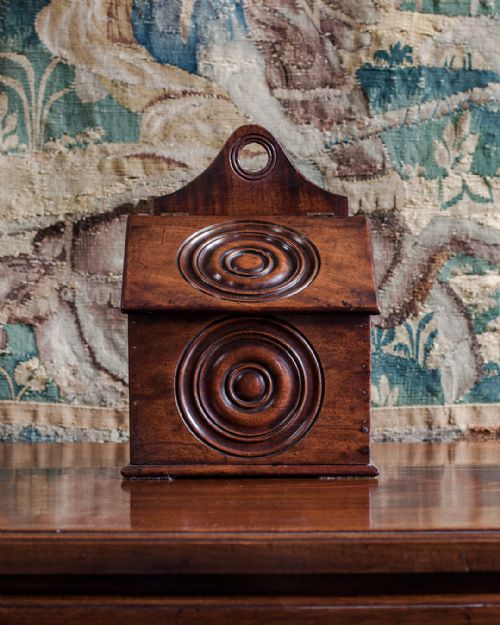
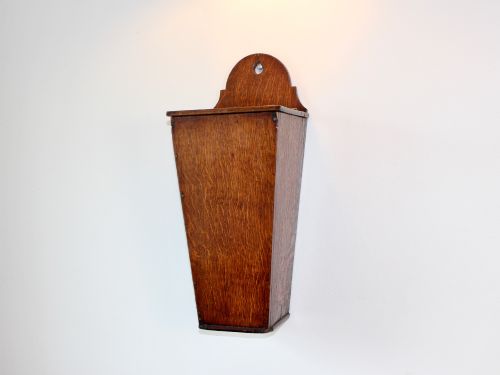


Hanging Wooden Salt Box
A hanging wooden salt box is a domestic wall-mounted container for dry salt, prized for its honest craft and tactile warmth in any room.
Hanging Wooden Salt Box
When you search for a hanging wooden salt box, you encounter domestic wall-mounted containers designed to keep dry salt safe from damp hearths and kitchen floors. These pieces share space in the records with candle boxes, spice cabinets, and wall organisers sharing the same utilitarian wall-hung form.
The versions most commonly met span the seventeenth, eighteenth, and nineteenth centuries, reflecting domestic life through Georgian and Victorian periods. Oak and pine dominate the forms, often shaped with a slanted lid and a high backboard pierced for hanging.
Rural examples show strong regional ties, from English country workshops to Welsh farmhouse kitchens. They survive as practical items that transitioned from kitchen essentials to decorative wall pieces.
How they were made
Cabinet makers built these domestic boxes using solid timbers including oak, mahogany, and pine, frequently selecting mixed woods for internal partitions or secondary panels. Boards were joined with simple pegged or nailed construction suited to daily farm and kitchen use.
Functional metal components completed the work, featuring original iron hinges, latches, and brass details that secured the sloped lids. Some surfaces retain traces of early red paint, while others display carved enrichment or subtle wood inlay.
Some surviving eighteenth-century oak boxes still retain faint traces of old red paint beneath layers of kitchen grease and ancient wax.
What varies in quality
The distinction between ordinary and exceptional pieces lies in the choice of timber and the crispness of the original construction. Thick oak boards with deep patination and honest wear stand apart from later utility work.
Original hardware elevates a piece significantly. Retaining the first iron hinges, locks, and wall loops preserves the integrity of the object far better than replaced fixings.
The Hanging Wooden Salt Box Glossary
- Treen
- Small handmade wooden household objects created for functional daily use. These utilitarian items include boxes, spoons, and kitchenware shaped by turners and joiners.
- Backboard
- The extended vertical rear section of a wall-hung box featuring a pierced hole for suspension. This structural element distributes the weight securely against a wall.
- Patina
- The surface sheen and colour developed by wood through decades of handling, polishing, and exposure to light. Age and wax create this characteristic depth.
- Hardware
- The metal latches, hinges, and fastenings attached to the wooden body. Original iron and brass elements indicate period authenticity.
Hanging Wooden Salt Box: Frequently Asked Questions
Where were these hung?
These containers hung near hearths or kitchen prep areas where dry salt was needed daily for cooking and food preservation. The elevated position kept contents away from damp stone floors.
They also appeared in hallways or utility spaces for general storage.
How do I date oak boxes?
Dating relies on construction methods, timber selection, and surface wear rather than strict hallmarks. Hand-cut nails, pegged joints, and original iron hardware point towards earlier periods.
Later Victorian pieces often display machine-sawn timber and different joining techniques.
Did they only hold salt?
While designated for salt, many wall-mounted receptacles accommodated candles, spices, or small kitchen knives. Makers designed similar lidded forms for multiple household uses.
Contents often shifted over generations of domestic life.
How do I hang them safely?
Use the original suspension hole in the backboard or secure brackets that match the weight of solid timber. Ensure the fixing engages firmly with a wall stud or appropriate anchor.
Avoid hanging pieces in areas subject to extreme temperature swings.