




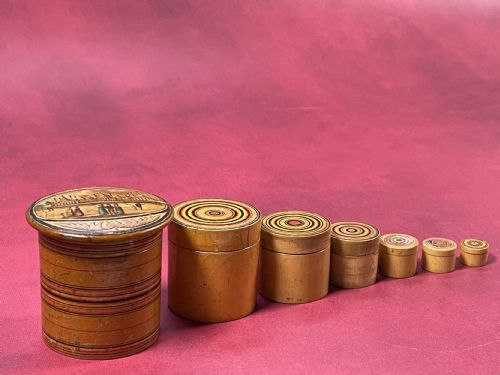
Vintage Wooden Spice Box
These vintage wooden spice box examples are practical treen containers that bring tactile warmth and historical kitchen craft straight into a modern interior.
Vintage Wooden Spice Box
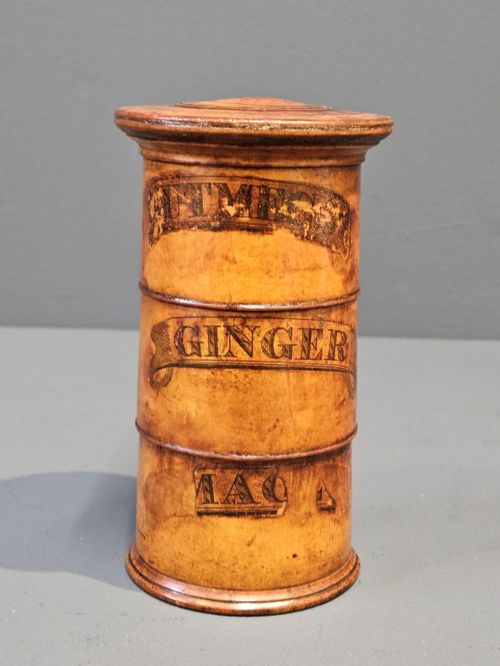
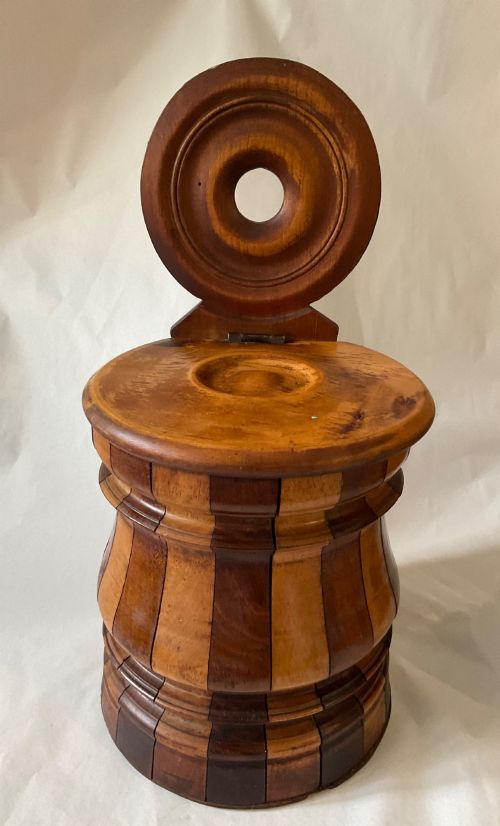
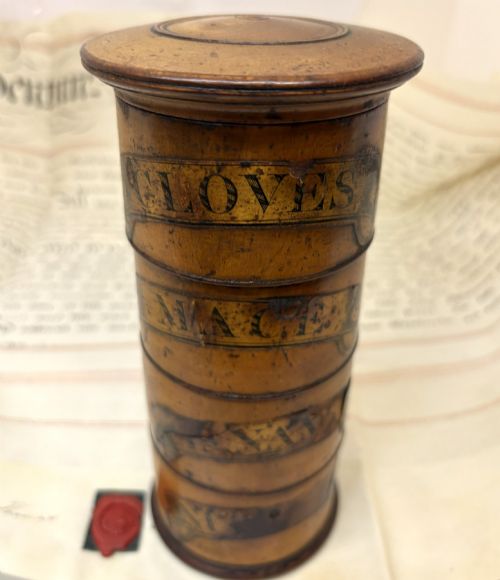
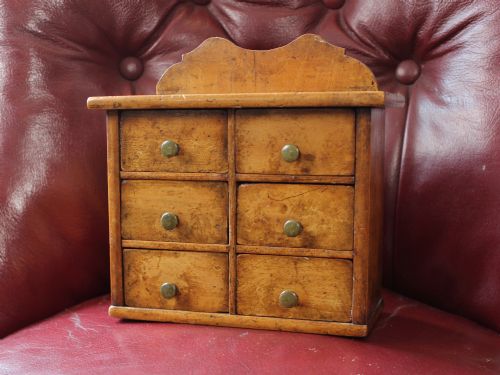
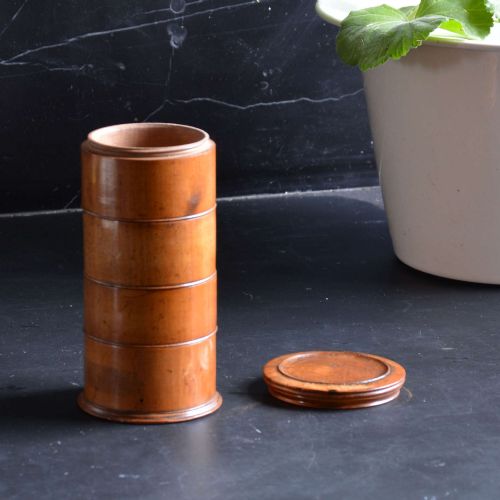
A vintage wooden spice box groups together utilitarian treen containers, spice towers, wall-hanging cabinets, and multi-tiered vessels designed to store aromatics. When you search for vintage wooden spice box, you encounter pieces spanning the Georgian, Victorian, and Edwardian eras alongside Indian vernacular pieces and Tunbridge Ware. These range from stacked multi-compartment towers and miniature chests to wall-mounted oak and pine cupboards.
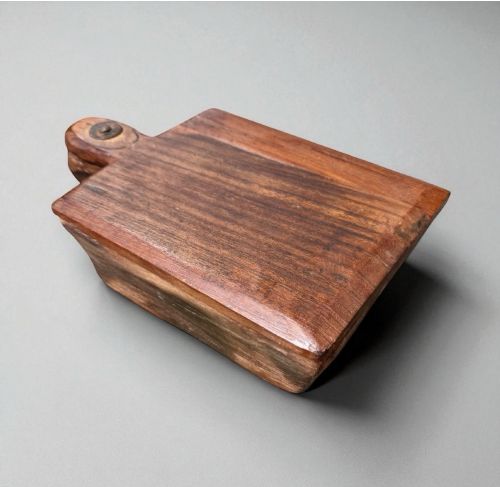
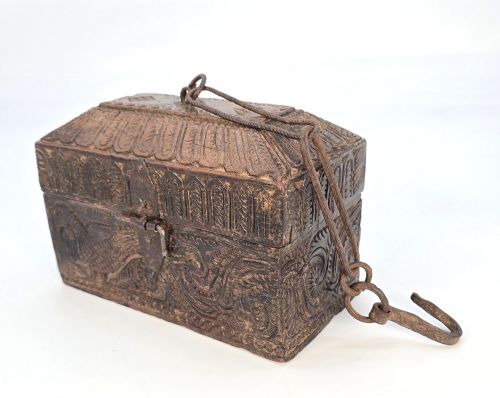
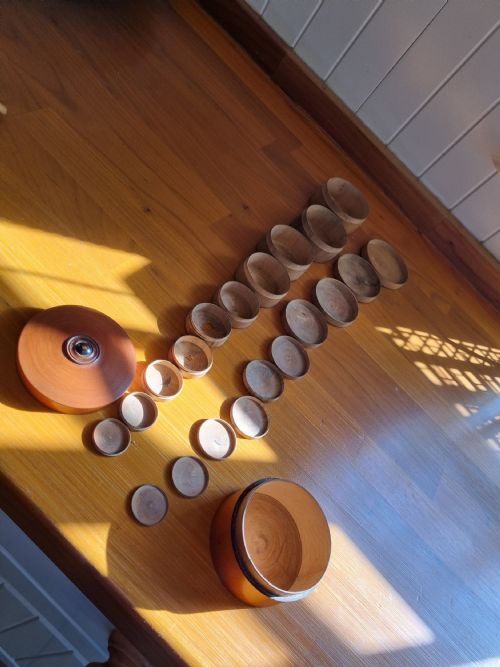
The domestic kitchen and pantry formed the original home for these treen containers, where cooks kept nutmeg, peppercorns, and ground spices dry and secure. Many feature ingenious turning and nesting designs, such as fruitwood towers holding smaller containers or nutmeg graters shaped like wine bottles. Others hail from overseas trading routes, manifesting as carved teak or painted Kashmiri boxes.
How they were made
Turners and cabinetmakers utilised dense timbers like boxwood, fruitwood, teak, and oak, often turning them on a lathe or joining them with fine dovetails. Grain patterns and natural patinas dictate the visual weight of each piece, whether it is a bright whitewood Tunbridge Ware stacking pot or a dark carved hardwood container.
Makers integrated brass hinges, hooks, and inlaid details to add structural longevity and decorative contrast to the softer wood bodies. Carving and hand-painting completed pieces like the Indian vernacular boxes, while multi-tiered towers relied on precise friction fits between stacked sections.
Listings feature 18th-century, Georgian, Victorian, and Edwardian periods alongside Indian vernacular pieces.
What varies in quality
The integrity of the turning and the snugness of fit in multi-tiered spice towers distinguish superior examples from ordinary ones. Well-turned sections close tightly and retain their original vertical alignment without warping or looseness in the joints.
Surface wear tells a story of domestic handling, but the presence of original hardware, untouched patination, and complete internal sets elevate a piece. Superior boxes retain their matching lids, internal containers, or integrated graters without modern replacements or intrusive restorations.
The Vintage Wooden Spice Box Glossary
- Treen
- Small wooden domestic objects made by turning, carving, or joining. These items acquired a rich polish through generations of daily household use.
- Spice Tower
- A vertical stacked container with multiple compartments held together by a central turning or friction fit. Each tier swings or lifts off to reveal a separate cavity for holding distinct powders.
- Tunbridge Ware
- Woodware decorated with minute mosaic patterns built from tiny tiles of naturally coloured timbers. Skilled makers arranged these geometric and floral veneers to cover the entire surface of small boxes and pots.
- Vernacular
- Objects made by local artisans to fulfill everyday regional needs rather than following academic metropolitan designs. These pieces often employ native timbers and traditional local carving methods.
Vintage Wooden Spice Box: Frequently Asked Questions
How were old spice towers used?
Cooks stacked multiple aromatic powders inside the turning tiers to save precious counter space in cramped kitchens.
Each section kept volatile culinary oils from escaping before the spice met the dish.
What woods appear most often?
Turners favoured dense hardwoods like boxwood and fruitwood for their ability to take sharp lathe details without splintering.
Utility boxes also incorporated sturdy oak, pine, and teak for structural durability.
How do I date a wooden spice container?
Construction marks, timber choices, and tool signatures help place a box within the Georgian, Victorian, or Edwardian periods.
Hand-cut dovetails and turned joints point to earlier craftsmanship than mass-produced hardware.
Where were wall hanging boxes placed?
Pantry walls and kitchen splashbacks held these small cupboards to keep ingredients within arm's reach of the hearth.
Wall mounting kept precious provisions safe from damp flagstone floors and pantry pests.