
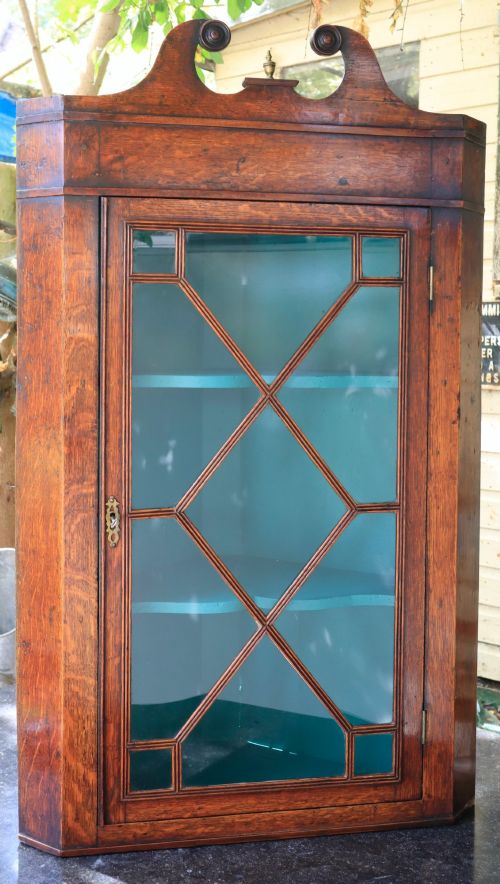
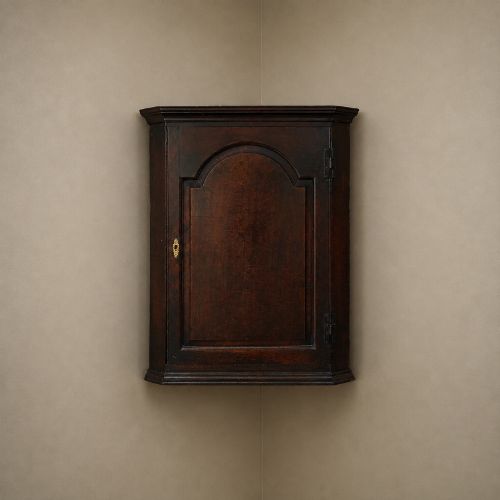
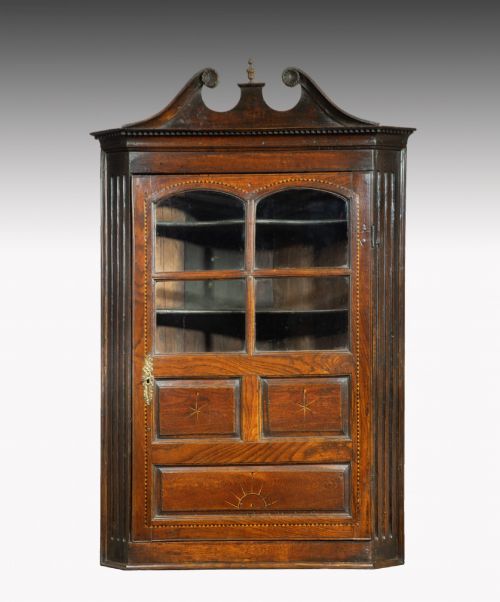
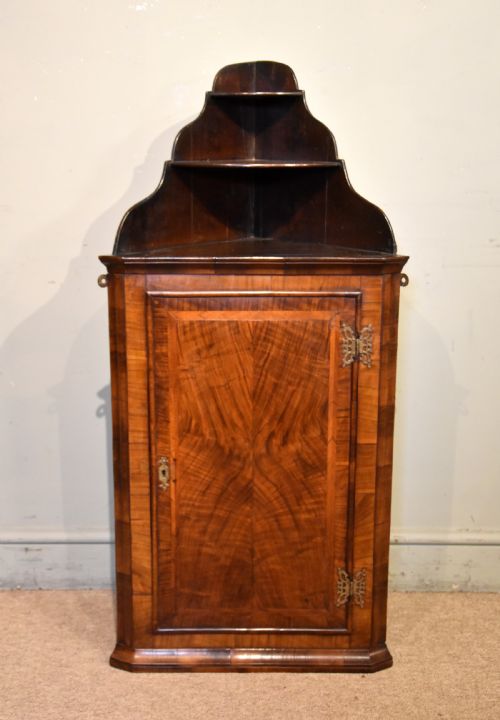

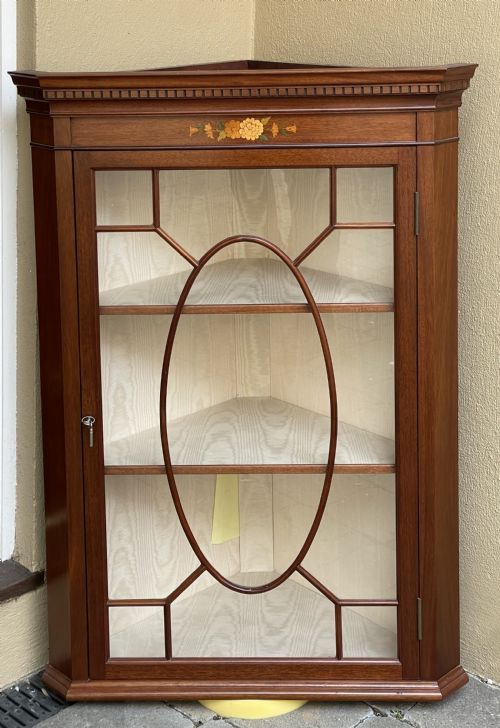


Hanging Corner Display Cabinet
A hanging corner display cabinet transforms dead space into a focal point, holding porcelain and glassware safely off the floor.
Hanging Corner Display Cabinet
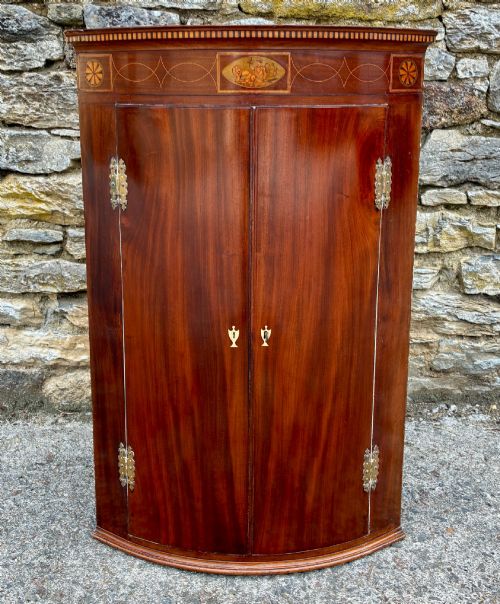
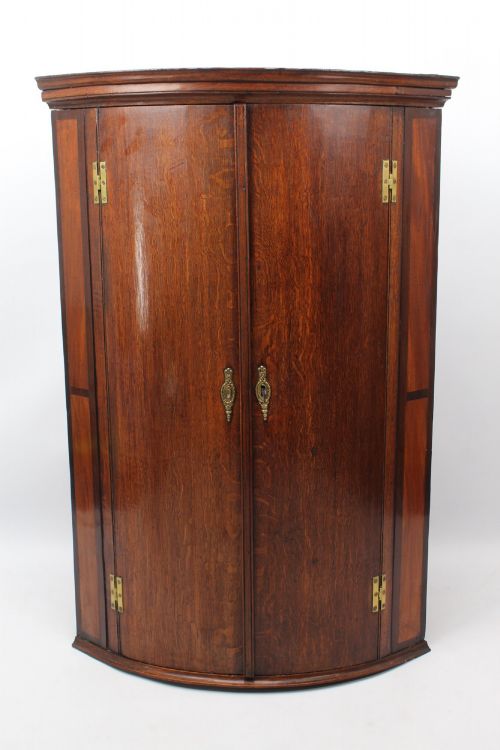
A hanging corner display cabinet is a wall-mounted storage piece designed to fit snugly into the ninety-degree angle of a room. These pieces provide vertical display space while leaving floor area entirely clear, making them practical for compact rooms.
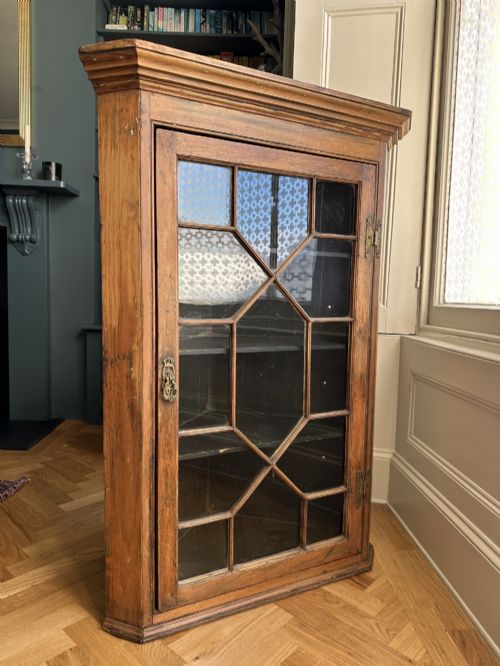
The versions most frequently met on this page date from the Georgian and Victorian eras, alongside Edwardian examples. They take the form of corner cabinets, corner cupboards, and wall-mounted shelves with single glazed or solid timber doors.
Makers constructed these units primarily to display prized household items such as ceramics, tea sets, or small ornaments. Many incorporate bow fronts or flat sides to suit the specific architectural proportions of period interiors.
How they were made
Cabinet makers built these frames using robust native and imported timbers including mahogany, oak, walnut, and pine. Sections of satinwood inlay, crossbanding, and brass hinges frequently provide structural reinforcement and visual contrast.
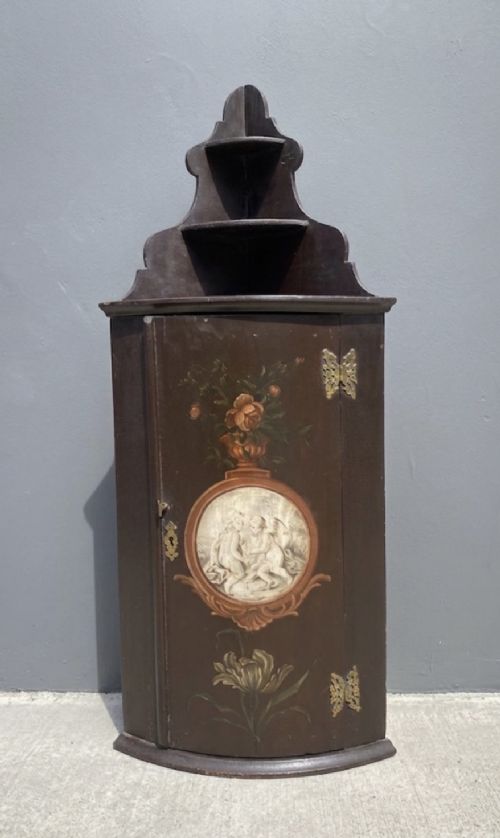
Glazing techniques range from single large glass panes to multi-pane lattice designs that secure the front aspect. Interior spaces often feature shaped wooden shelves, sometimes accompanied by small drawers or painted backdrops.
Listings feature woods spanning mahogany, oak, walnut, satinwood, and pine, alongside glazed and painted finishes.
What varies in quality
The refinement of the timber selection dictates the overall calibre of the piece. Fine examples utilise highly figured mahogany, burr walnut, or quarter-sawn oak with precise grain matching across the door and frame.
Joinery detail separates standard production from superior output. Hand-cut dovetailing in interior drawers, cleanly mitred cornice mouldings, and original brass hardware indicate high-grade workshop practice.
The Hanging Corner Display Cabinet Glossary
- Bow front
- A convex curved cabinet face that projects forward from the corner walls. This styling softens the angular geometry of the room.
- Crossbanding
- A narrow strip of veneer laid across the grain pattern of the primary wood border. It frames the cabinet door panel for decorative emphasis.
- Glazed door
- A timber frame fitted with glass panes to display the interior contents. Many period examples retain their original hand-blown glass.
- Broken arch pediment
- A triangular pediment with an open apex, sometimes centred with a finial or carved urn. It appears on taller Georgian architectural wall units.
- Cornice
- The decorative moulded projection running along the top edge of the cabinet. It crowns the structure where the piece meets the wall.
Hanging Corner Display Cabinet: Frequently Asked Questions
How do I hang a heavy antique corner cabinet?
These cabinets require secure attachment directly into wall studs or masonry using heavy-duty brackets. The internal mounting points must bear the combined weight of the timber structure and its contents.
Professional installation is recommended due to the leverage exerted by corner-mounted units. Distributing the load evenly across internal shelves prevents structural strain on the backboards.
What rooms suit a corner display cabinet?
Dining rooms and hallways benefit most from these wall units because they utilise awkward junctions without obstructing walkways. Kitchens also accommodate smaller pine or oak cupboards for everyday tableware.
Peculiar angles in older properties make these cabinets an effective solution for balanced interior symmetry. They draw the eye upward and utilise vertical wall areas efficiently.
How do I tell a Georgian corner cabinet from a Victorian copy?
Georgian pieces generally exhibit simpler internal construction using native oak secondary woods and hand-cut joinery marks. Their proportions often reflect strict architectural rules of symmetry and classical pediment design.
Victorian and Edwardian revivals frequently incorporate machine-cut elements, rosewood veneers, or heavier inlaid motifs. Examining the backboards and hinge fixings helps clarify the period of manufacture.
Can these cabinets hold heavy items?
Fixed wooden shelves inside these units easily support standard porcelain, glassware, and books. However, vintage fixings may require reinforcement before storing dense objects.
Overloading older shelving can warp thin timber inserts or stress the interior wall cleats. Distributing weight evenly preserves the structural integrity of the display area.