
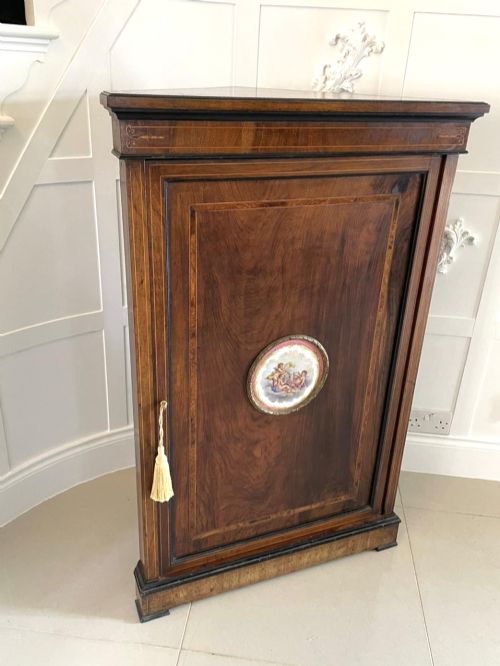
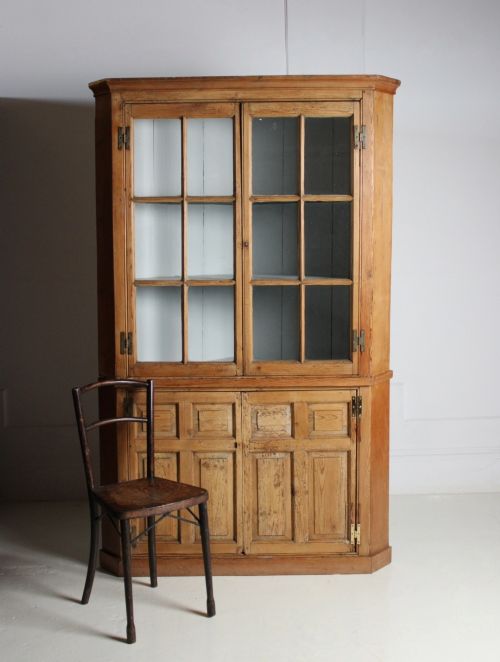

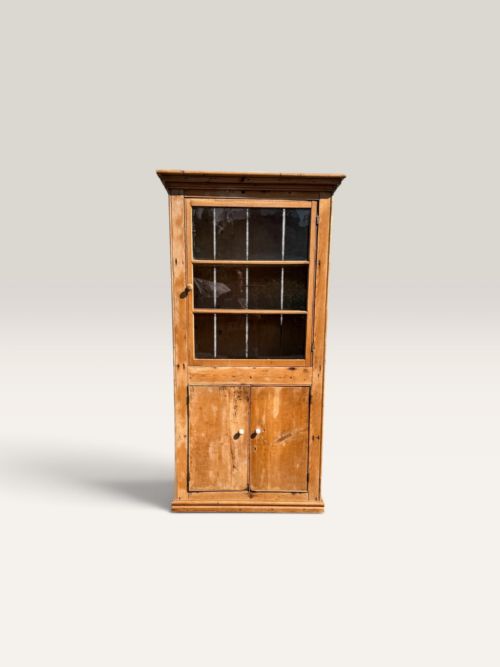
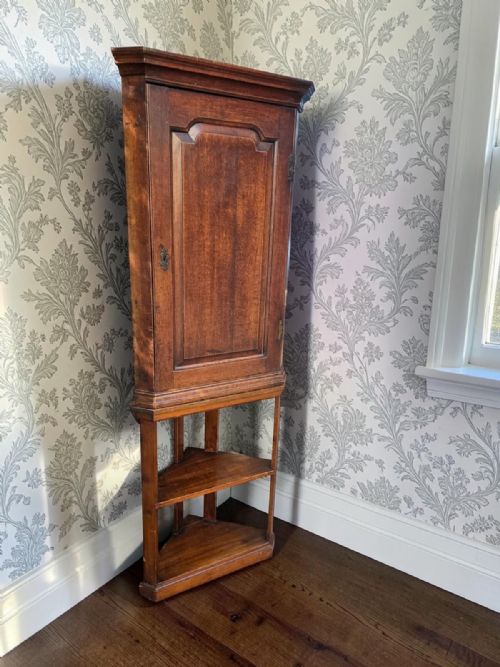
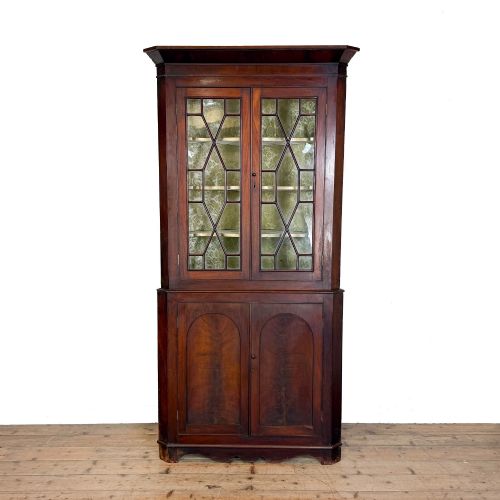
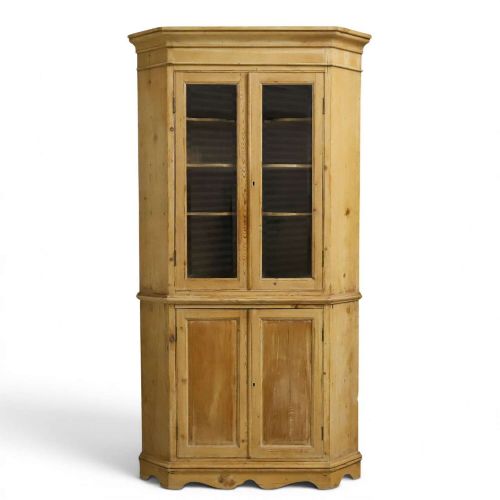
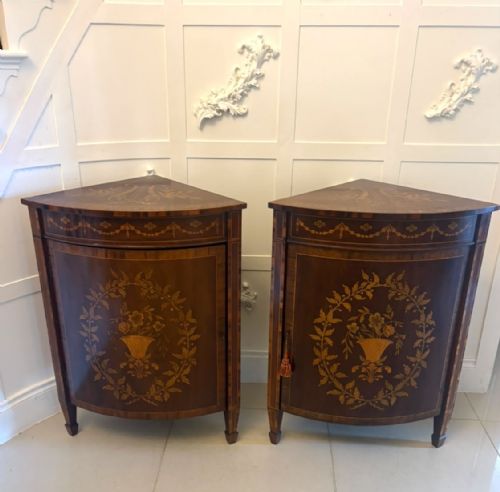
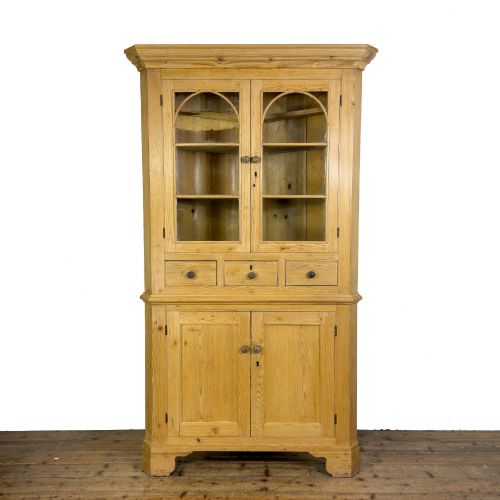
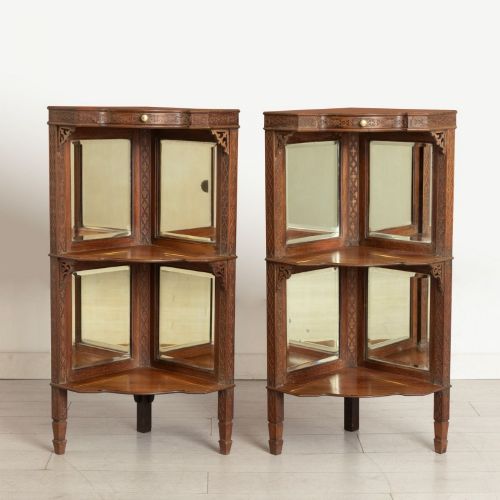
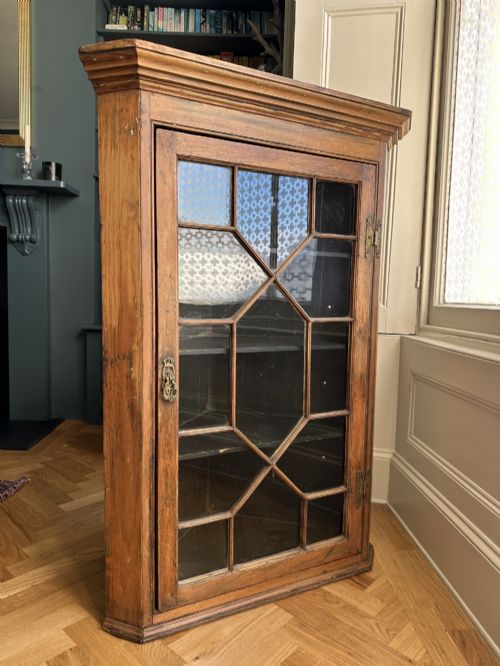


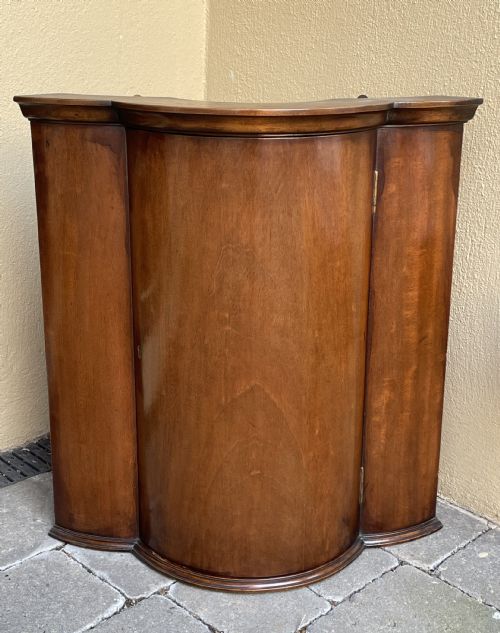

Victorian Corner Display Cabinet
When you search for a victorian corner display cabinet, you are looking for fitted timber furniture designed to turn unused angles into exhibition space.
Victorian Corner Display Cabinet
A victorian corner display cabinet is designed to fit snugly into the meeting point of two walls, making practical use of awkward angles in nineteenth-century rooms. These pieces appear in forms ranging from wall-hung single cupboards to tall floor-standing glazed units and multi-tiered open whatnots.
Most examples date from the Victorian period through the late nineteenth century, incorporating regional woods and revival styles. You will frequently encounter mahogany and walnut versions alongside stripped pine country pieces and inlaid decorative formats.
What varies in quality
Quality rests in the selection of timbers and the precision of the joinery, particularly where the cabinet angles meet the wall. Superior pieces display carefully matched wood grains, tight dovetail joints, and well-fitted doors that hang true without sagging.
The sophistication of decorative elements also separates standard items from finer works. Hand-cut marquetry, original brass hardware, and delicate interior painted finishes indicate higher workshop standards than plain structural joinery.
One cheerful pine cupboard arrives complete with its original painted interior, ready to brighten a dark corner.
Edwards & Roberts·Garnett & Sons·Goodhall, Lamb and Heighway·John Stow Ltd of Bradford
The Victorian Corner Display Cabinet Glossary
- Bow front
- A convex, outwardly curved front facade common on finer display cabinets. This shape required skilled steaming and veneer work.
- Astragal glazed
- Glass doors divided into smaller panes by narrow wooden bars. These frameworks often follow Georgian or classical revival patterns.
- Marquetry
- Decorative woodwork where pieces of contrasting veneer are fitted into a design. Makers utilised this technique to create floral or geometric surface patterns.
- Whatnot
- An open shelving unit designed for displaying ornaments and books. Victorian examples often feature multiple tiers supported by turned columns.
- Ebonised
- Timber treated with a dark stain or finish to imitate ebony. This dark surface finish gained popularity during the Aesthetic Movement.
Victorian Corner Display Cabinet: Frequently Asked Questions
How do I hang a wall cabinet?
Wall-hung corner cupboards require secure fixing points into solid masonry or substantial timber wall studs to support the weight of the timber and glass.
Most antique examples feature built-in hanging brackets or strong internal backboards designed for traditional screw fixings.
Were these cabinets meant for corners?
Yes, the ninety-degree angled back profile allows the unit to slide directly into room corners, saving floor space while displaying collections.
This specific geometry distinguishes them from standard flat-backed side cabinets and bookcases.
How do I clean the wood?
Maintain polished hardwood surfaces using a soft, lint-free cloth and traditional beeswax rather than modern silicone sprays.
Avoid placing timber furniture in direct sunlight or near heat sources to prevent veneer lifting and wood splitting.
What is an Aesthetic Movement cabinet?
Aesthetic Movement pieces reflect late nineteenth-century design reforms that prioritized artistic visual effect over heavy historical revival styles.
These cabinets often feature ebonised finishes, delicate bamboo structures, or painted panels inspired by Japanese art.