
French Style Inlaid Cabinet
A French style inlaid cabinet brings continental elegance to a room, combining rich timber surfaces with delicate marquetry and gilt mounts.
French Style Inlaid Cabinet
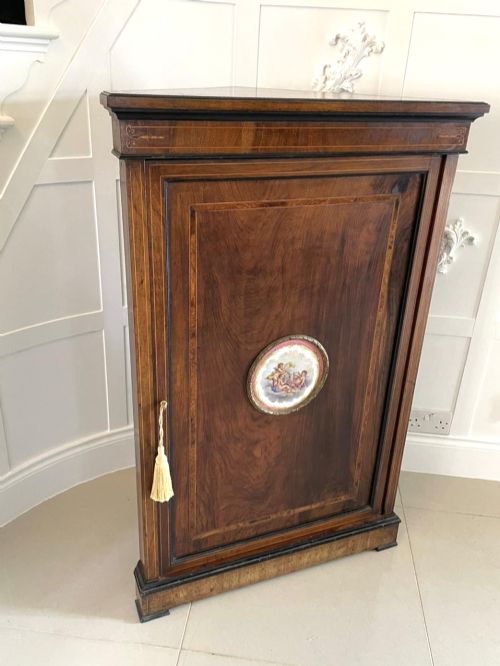
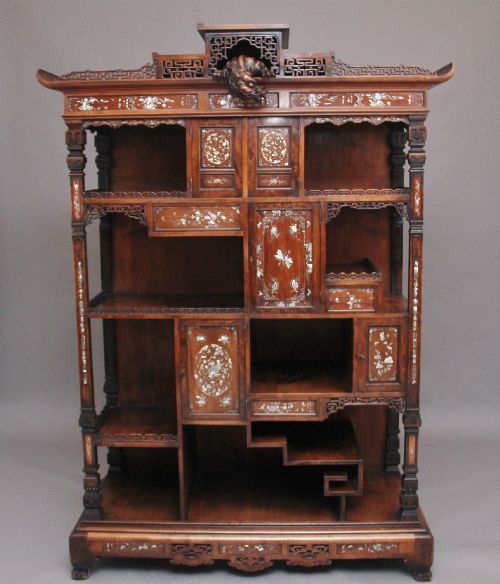
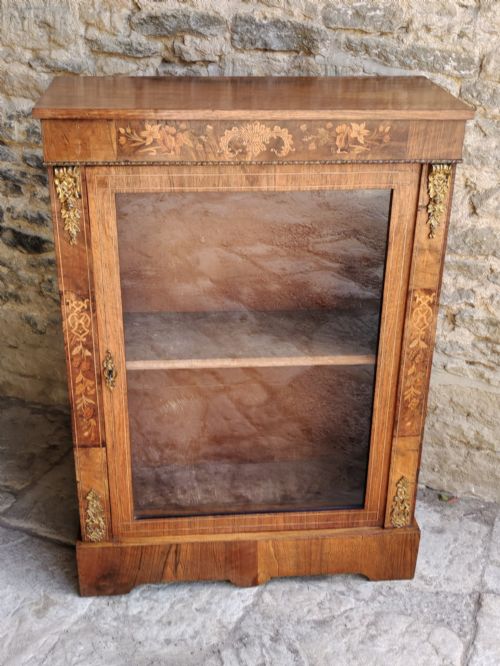
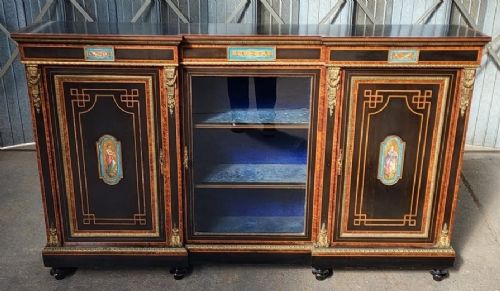
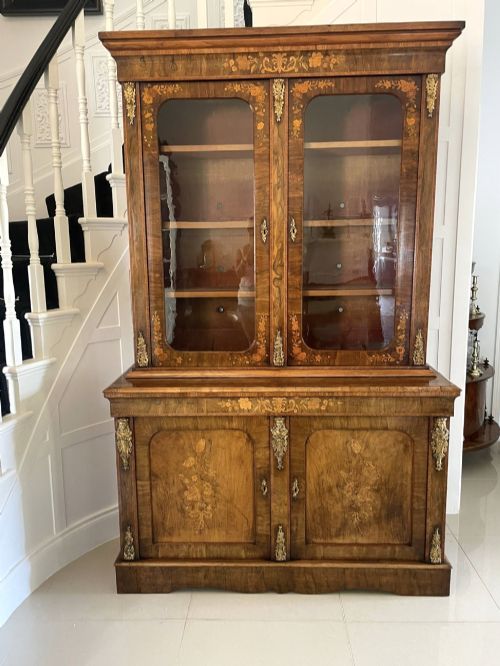
A french style inlaid cabinet encompasses side cabinets, credenzas, bookcases, and commodes produced across the nineteenth and early twentieth centuries. These pieces draw heavily on Louis XV and Louis XVI design vocabularies, reinterpreting eighteenth-century continental aesthetics for Victorian and Edwardian interiors.
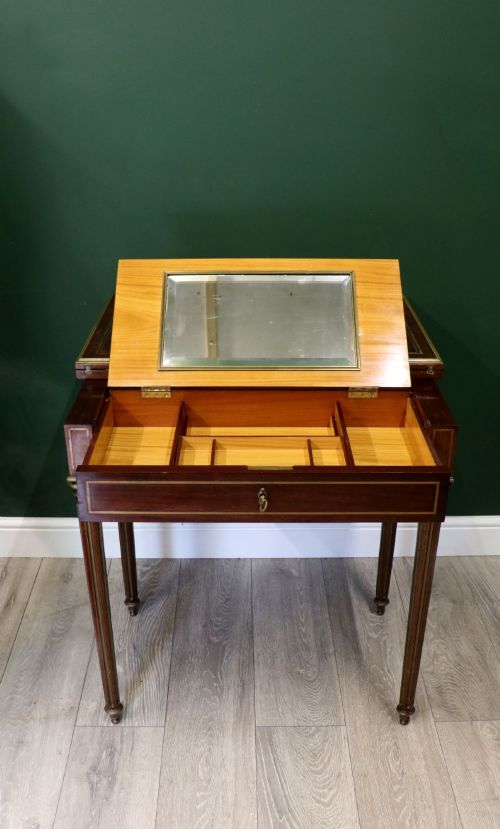
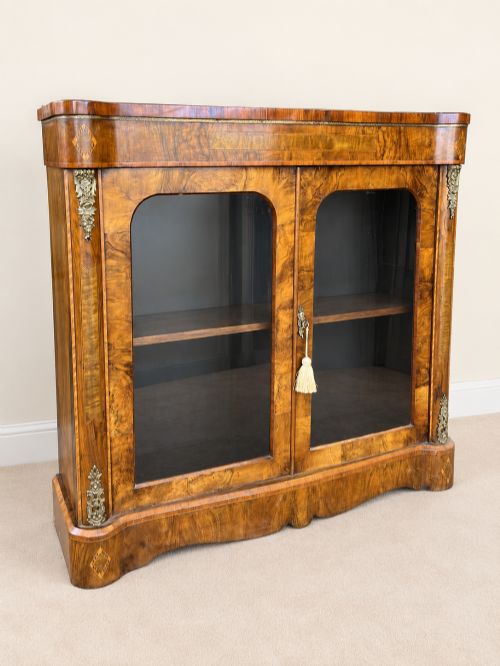
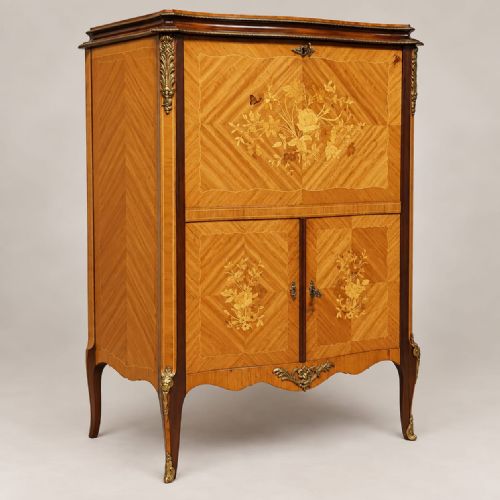
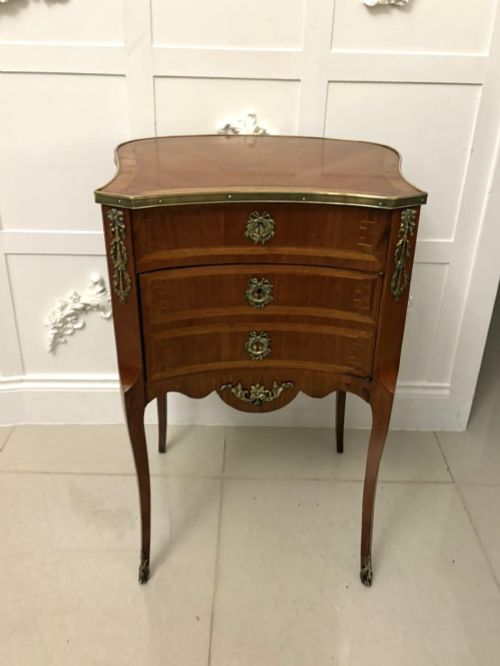
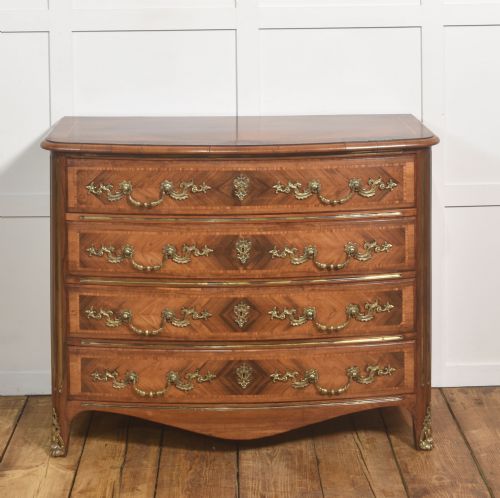
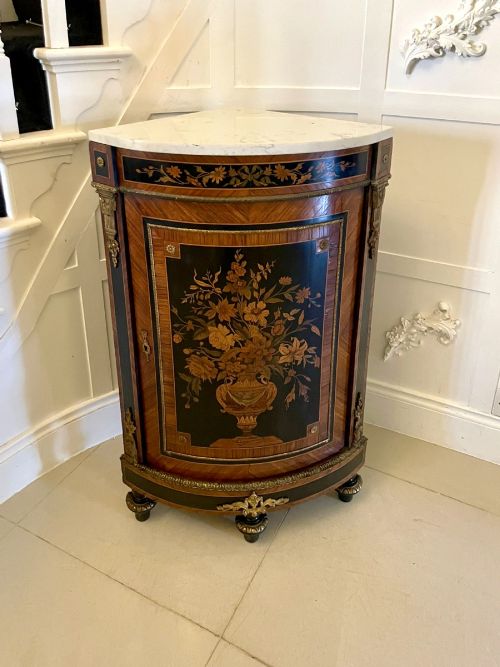
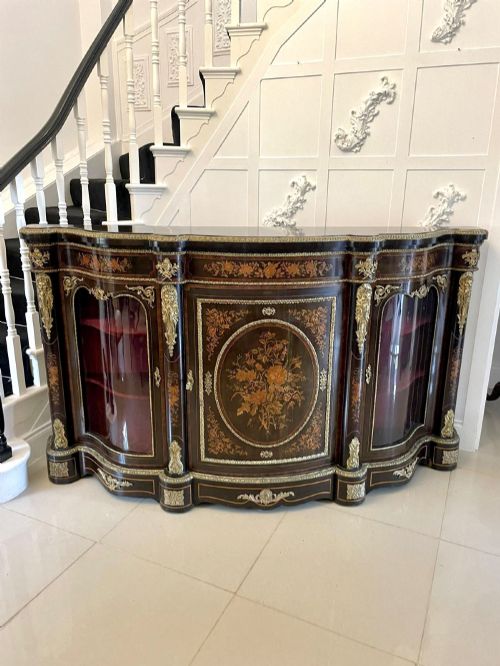
The selection ranges from serpentine-fronted display furniture and bureau de dames to compact bedside chests and corner cabinets. Walnut and burr walnut dominate the forms, frequently enriched by elaborate floral marquetry and contrasting timber veneers.
Materials and Technique
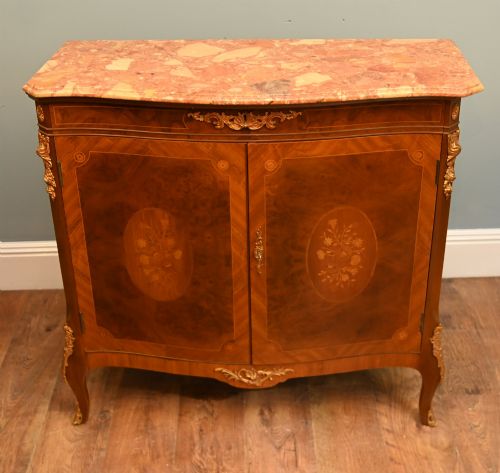
Cabinet makers utilised dense hardwood carcasses of walnut, mahogany, and ebonised timber, veneered with burr walnut, satinwood, and exotic woods to create patterned surfaces. Marquetry panels incorporate precision-cut botanical and geometric motifs set directly into the primary ground.
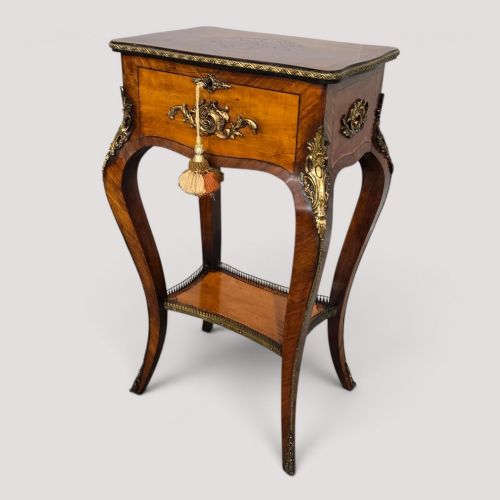
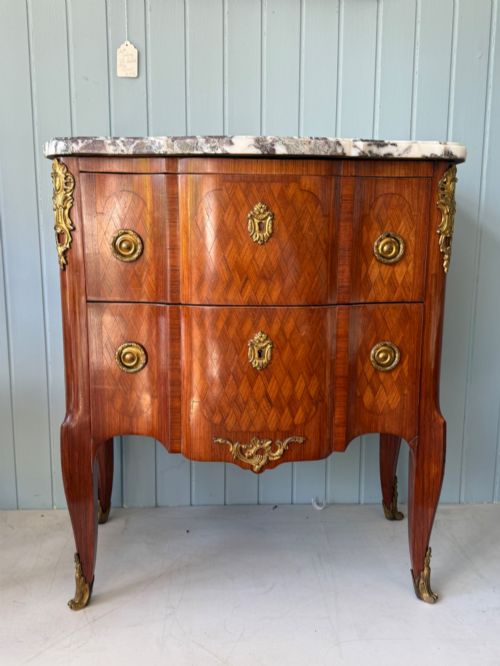
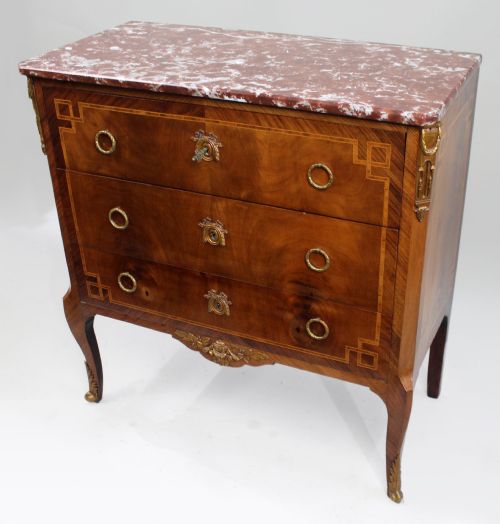
Cast ormolu mounts and brass stringing edge the contours, while select pieces incorporate marble tops in shades such as rouge. Porcelain plaques and glass panels appear on display-focused variants to punctuate the wooden structure.
Several pieces include hidden drawers designed for clandestine notes.
Judging Quality
Quality rests upon the precision of the timber matching and the crispness of the marquetry cutting. Superior examples integrate cast ormolu mounts that fit the cabinet contours exactly, rather than generic metalwork applied as an afterthought.
The underlying structural joinery and the selection of figured burr veneers dictate the overall integrity and visual depth of the piece. Master workshops invested significantly more labour in internal secondary timbers and hand-chased bronze details.
Epstein·Maison Gagneau·Sormani·Gabriel-Frederic Viardot·Galle
The French Style Inlaid Cabinet Glossary
- Marquetry
- Decorative patterns formed by fitting together thin slices of wood veneer onto a structural surface. This technique allows intricate pictorial or floral designs to wrap around curved serpentine forms.
- Ormolu
- Gilded bronze used for decorative mounts and edgings on cabinet corners and feet. It provides a bright metallic contrast against dark walnut and ebonised finishes.
- Credenza
- A low side cabinet, frequently fitted with doors and central display space. These pieces often feature extensive porcelain plaques and gilt bronze framing.
- Serpentine
- A curved furniture front characterised by a concave central section flanked by two convex ends. This shape requires advanced cabinet-making skill to veneer accurately.
- Commode
- A decorative chest of drawers standing on relatively tall legs. Continental variations often incorporate marble slabs fitted directly to the timber top.
French Style Inlaid Cabinet: Frequently Asked Questions
Where do I place a credenza?
A credenza suits principal reception rooms or dining spaces where its low profile allows surface display without obstructing sightlines.
Position it against a solid wall to anchor the room and use the interior shelving for glassware or tableware.
How do I clean marble tops?
Wipe marble surfaces with a soft, damp cloth using neutral soap, avoiding acidic cleaning agents that etch the stone.
Dry the surface immediately with a clean microfiber cloth to prevent water spotting.
Can I use a bedside chest as a lamp table?
Bedside chests and lamp tables share compact proportions that accommodate lighting and small decorative objects.
Ensure the surface area matches the base of your lamp safely before placing it in position.