


19th Century Inlaid Corner Cabinet
These 19th century inlaid corner cabinet examples transform awkward domestic angles into displays of polished wood and fine marquetry.
19th Century Inlaid Corner Cabinet
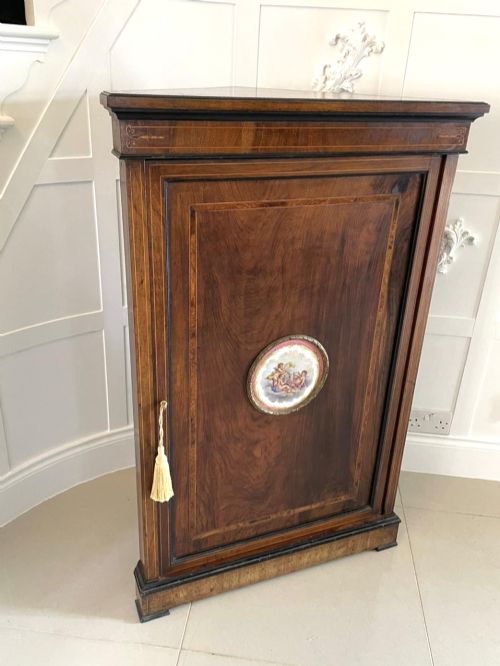
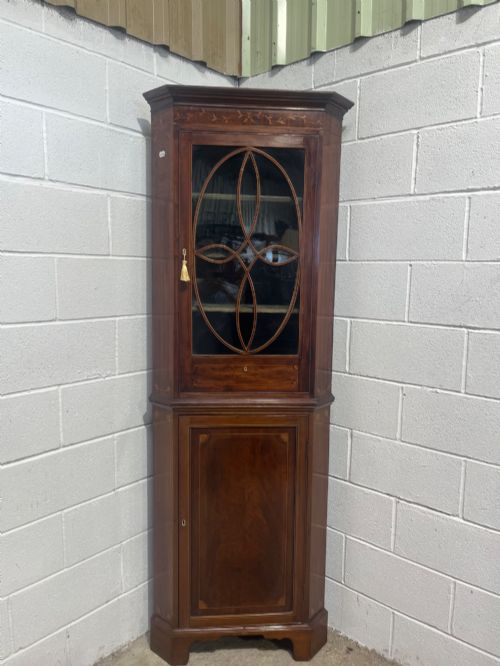
A 19th century inlaid corner cabinet utilises domestic space efficiently by slotting into room corners while displaying treasured objects behind glass or storing items securely behind wooden doors. The pieces gathered here span floor-standing cupboards, tall full-height variations, and compact display cases designed to fit domestic layouts.
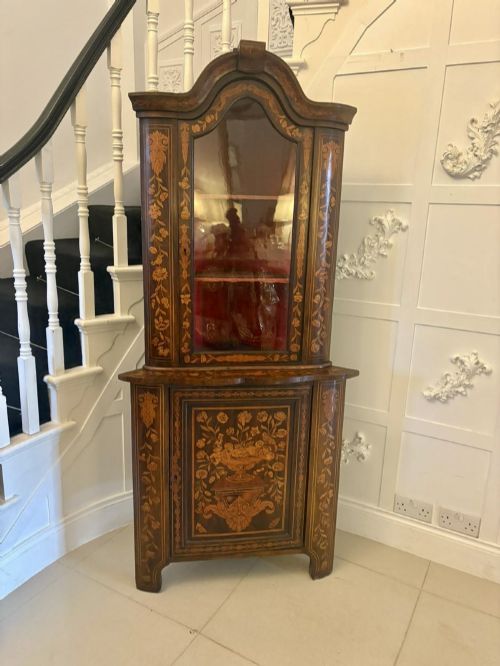
The selections range across Georgian, Regency, and Victorian periods, alongside Dutch Baroque Revival and continental pieces. Buyers encounter rich timber constructions enriched with contrasting stringing and decorative marquetry panels.
How they were made
Cabinet makers constructed these carcases using solid timbers such as mahogany and walnut, applying delicate veneers of satinwood, fruitwood, and exotic woods to principal surfaces. These wooden foundations provided stable structures capable of supporting heavy glass doors and internal shelving.
Inlay work involved precision cutting of contrasting materials to create floral motifs, scrolling foliage, and geometric stringing lines set flush into the timber ground. Brass hardware, including hinges, escutcheons, and locks, secured the doors while adding metallic contrast to the polished wood surfaces.
Some Dutch cupboards hide secret compartments behind floral marquetry where owners once stored their most prized porcelain miniatures.
What varies in quality
The standard of a 19th century inlaid corner cabinet rests upon the intricacy of its marquetry and the selection of its timber veneers. Finely figured mahogany and walnut displays lively grain patterns that elevate simpler carcase designs.
Construction details such as dovetailed drawer joints, original glass panes, and well-fitted doors distinguish superior examples from standard utility pieces. The precision of the inlay work and the preservation of original polished finishes indicate the skill of the original workshop.
The 19th Century Inlaid Corner Cabinet Glossary
- Marquetry
- Decorative veneer work formed by fitting together small pieces of different coloured wood, shell, or ivory to create pictorial or ornamental designs. This technique appeared frequently on Dutch continental pieces.
- Bow front
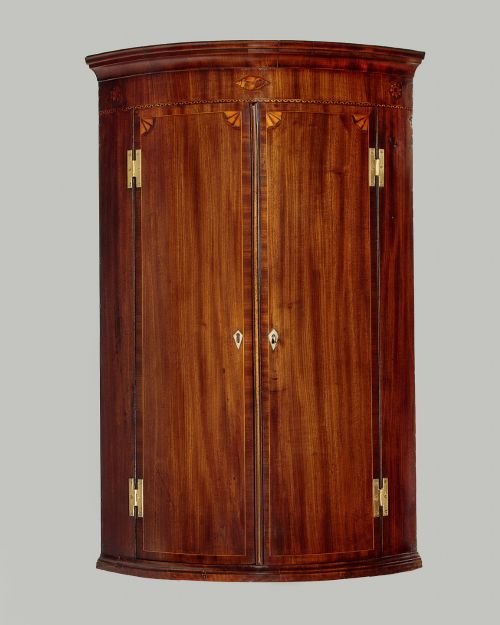
- A convex, curved front facade that softens the corner angles of a cabinet and provides extra internal depth. This shape featured strongly in Georgian designs.
- Stringing
- Thin inlaid lines of contrasting wood or light-coloured material used to outline panels, drawers, and cabinet doors. It created geometric borders on mahogany and walnut surfaces.
- Veneer
- A thin layer of choice wood applied over a secondary timber base to provide a decorative exterior surface. Cabinet makers utilised rich woods like satinwood and rosewood in this manner.
- Escutcheon
- A protective plate surrounding a keyhole, frequently cast in brass to complement the darker wood tones of nineteenth-century cabinetry.
19th Century Inlaid Corner Cabinet: Frequently Asked Questions
How do I fit a corner cabinet into a modern room?
These cabinets utilise neglected wall junctions, turning dead space into a focal point for display or storage. They anchor room layouts effectively without protruding into main walking paths.
Ensure you measure the depth and wall span accurately, as nineteenth-century dimensions and right angles can vary from modern construction tolerances.
What is the difference between a cupboard and a cabinet?
Cupboards generally feature solid wooden doors intended for concealed storage of household goods. Cabinets often incorporate glass panes or display sections designed for viewing porcelain and curiosities.
Both forms served domestic storage roles in nineteenth-century interiors, adapting to dining rooms, drawing rooms, and parlours.
How do I identify a Dutch marquetry piece?
Dutch examples typically display elaborate floral and urn marquetry executed in contrasting fruitwoods and light veneers across the entire exterior surface. These pieces often exhibit bombé or swelling contours.
They reflect continental taste from the nineteenth century, drawing on earlier Baroque and Rococo decorative traditions.
Are these cabinets stable on modern floors?
Most floor-standing examples rest securely on shaped plinths or bracket feet designed to distribute weight evenly. Taller full-height variations may require wall attachment for absolute stability in homes with children or pets.
Adjustable glides are rarely original, so careful leveling on older uneven floors may require traditional shims beneath the base.