


Handwoven Turkish Rug
A handwoven turkish rug brings centuries of Anatolian village craftsmanship directly to your floor through wool, dye, and nomadic design.
Handwoven Turkish Rug
When you search for a handwoven turkish rug, you encounter floor coverings and textiles originating from Anatolia, spanning from the nineteenth century into the twentieth. These pieces encompass various regional formats, from large carpets and long runners down to smaller village rugs and utility items.
The selections on this page lean heavily into specific Anatolian traditions, featuring tribal and nomadic designs alongside village and town centrepieces. Forms range from full prayer rugs and carpets to utilitarian flatweaves and repurposed saddle bags.
Older examples date back to the early eighteen hundreds, while many representative pieces emerge from the decades around nineteen hundred. Buyers frequently encounter formats such as kelims, runners, and cushion covers alongside standard area rugs.
What varies in quality
Quality in these textiles rests upon the fineness of the weave, the integrity of the structural materials, and the stability of the natural dyes. Superior examples demonstrate tight knotting or precise flatweaving that maintains structural cohesion across the entire piece.
The handling of traditional regional motifs and the balance of the composition further distinguish finer items from standard village production. Preserved edges and intact original dimensions indicate higher levels of original craftsmanship and subsequent survival.
The listings on this page span the nineteenth and early twentieth centuries, featuring wool, cotton, and hand-spun wool across Anatolian styles.
The Handwoven Turkish Rug Glossary
- Kelim
- A flatwoven carpet or rug produced without a pile by tightly interweaving warp and weft threads. These textiles often feature sharp geometric patterns.
- Prayer rug
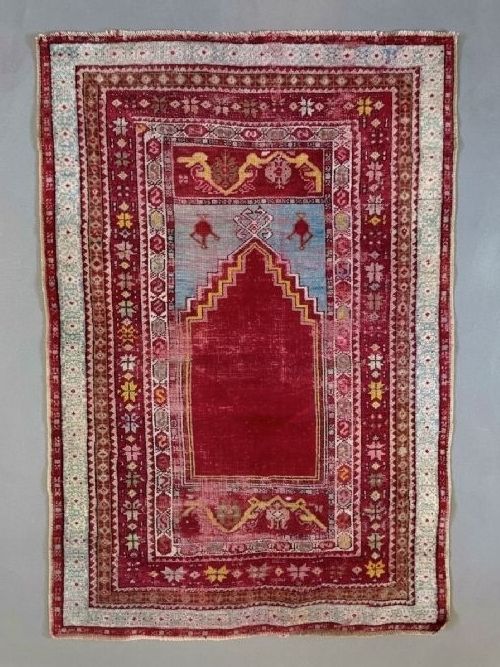
- A small carpet featuring a mihrab design used traditionally for daily Islamic prayers. These pieces typically display specific architectural or directional motifs.
- Yastic
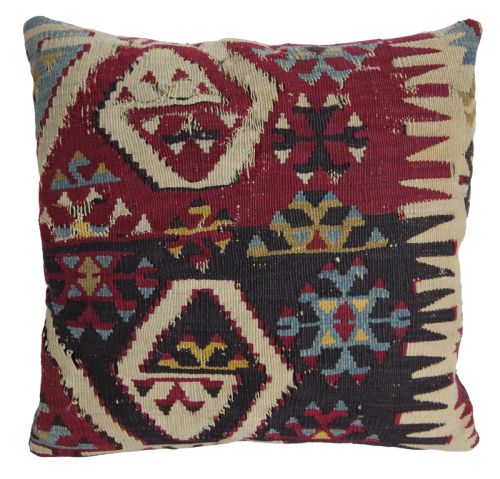
- A traditional small Turkish cushion or pillow face originating from Anatolian households. Collectors prize these compact fragments for their concentrated tribal designs.
- Runner
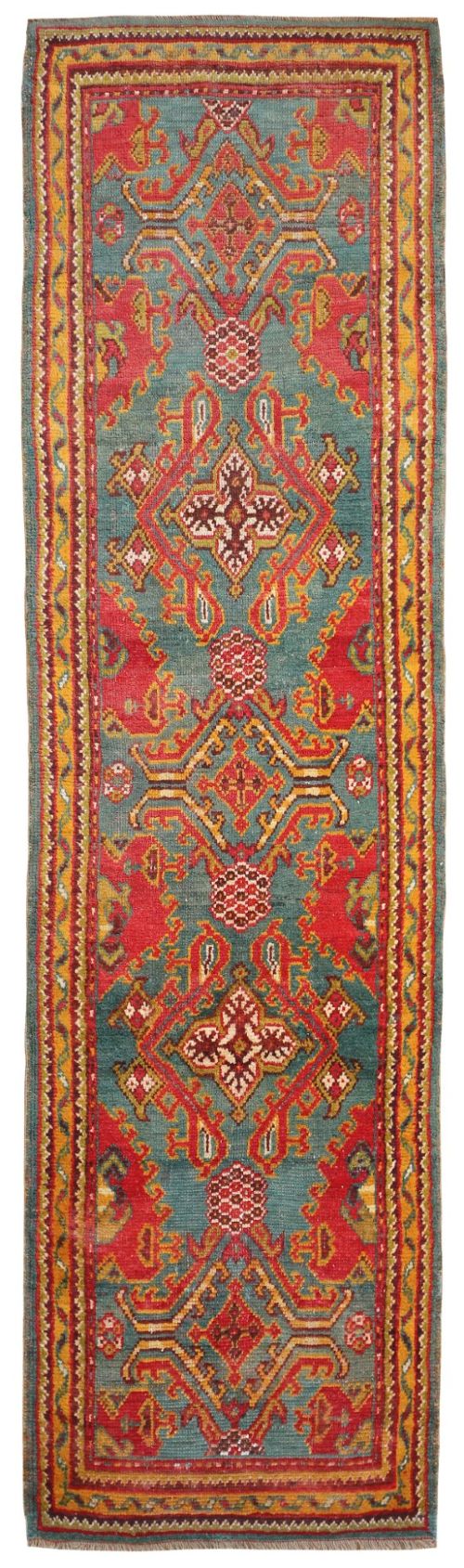
- A long, narrow carpet format designed primarily for hallways, corridors, or alongside furniture. These pieces scale appropriately for linear interior spaces.
- Warp
- The vertical foundation threads stretched lengthwise on a loom before weaving begins. Wefts and knots are subsequently built around these stable structural elements.
Handwoven Turkish Rug: Frequently Asked Questions
How do I clean an antique rug?
Surface dirt is best managed through gentle suction vacuuming without a beating brush bar.
Professional specialist washing remains essential for deep cleaning to protect aged natural wool fibres.
Where were these textiles made?
Originating across Anatolia, these pieces stem from specific weaving centres and nomadic tribal regions throughout Turkey.
Towns such as Ushak, Konya, Milas, and Bergama each developed distinct stylistic traditions and colour palettes.
Are flatweaves durable for floors?
Kelims and flatweaves provide a sturdy, low-profile surface suitable for areas with moderate daily foot traffic.
Utilising a quality underlay helps prevent slipping and reduces friction between the weave and hard flooring.
How do I identify regional patterns?
Design elements like star medallions, prayer niches, and specific border guards point directly to regional Anatolian aesthetics.
Comparing structural weave counts and local wool characteristics helps pinpoint the likely village or district of origin.