



Handwoven Baluch Rug
When you handle a handwoven baluch rug, you touch the nomadic heritage of the borderlands between Persia and Afghanistan.
Handwoven Baluch Rug
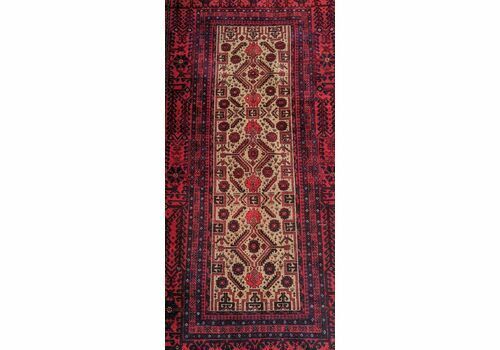
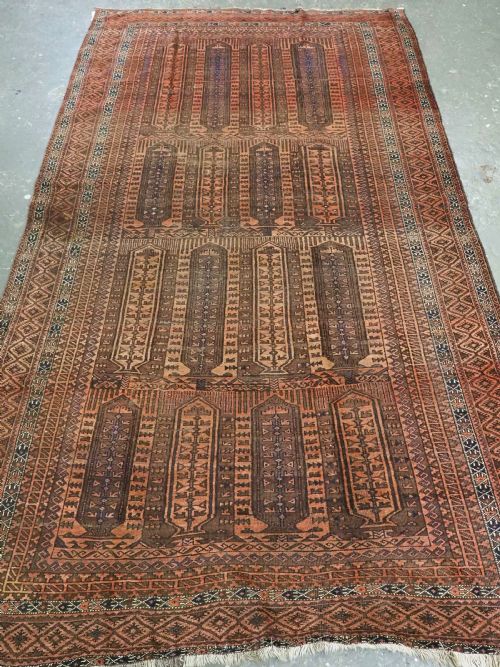
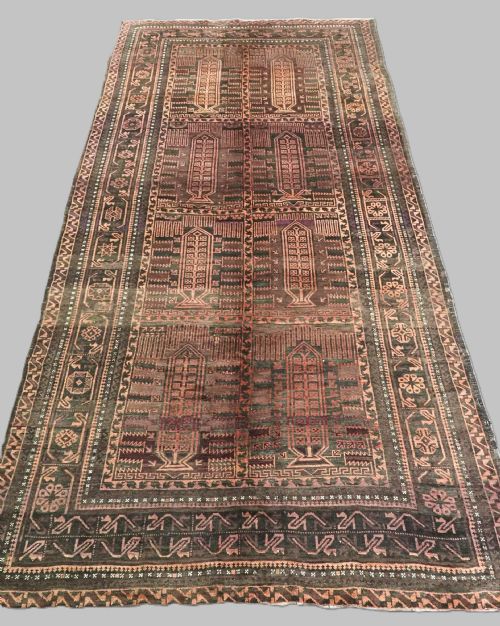
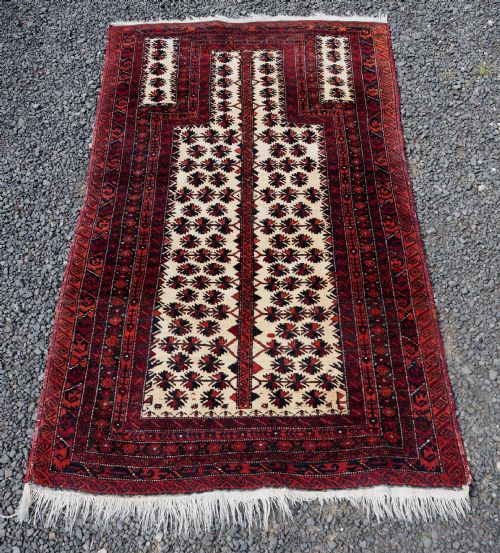
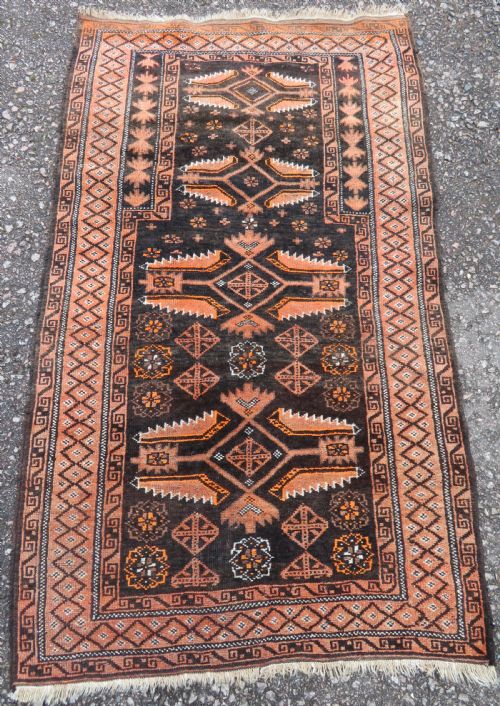
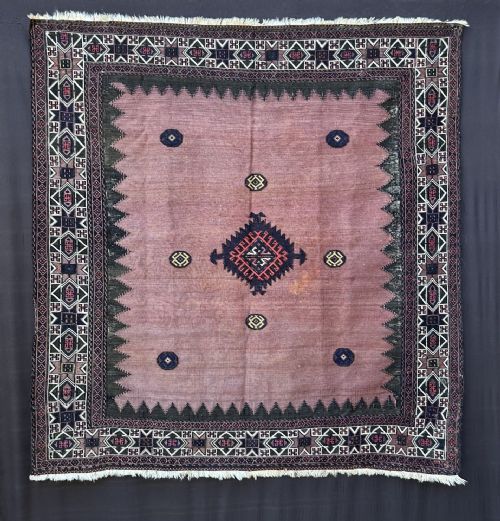
A handwoven baluch rug is a tribal textile created by nomadic and village weavers across the borderlands of Persia and Afghanistan. These pieces range from small prayer rugs and floor carpets to utilitarian storage bags, grain sacks, and flatwoven kilims. The most common versions on this page are floor rugs and prayer rugs featuring geometric motifs and rich, dark palettes produced by tribal groups.
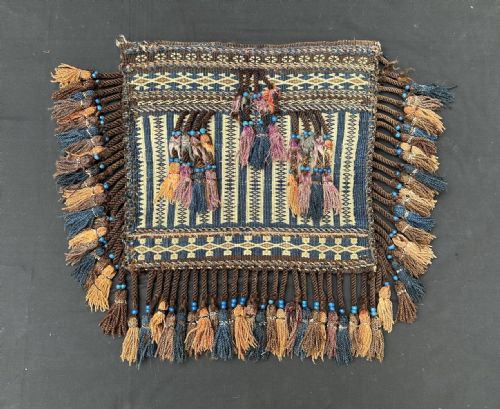
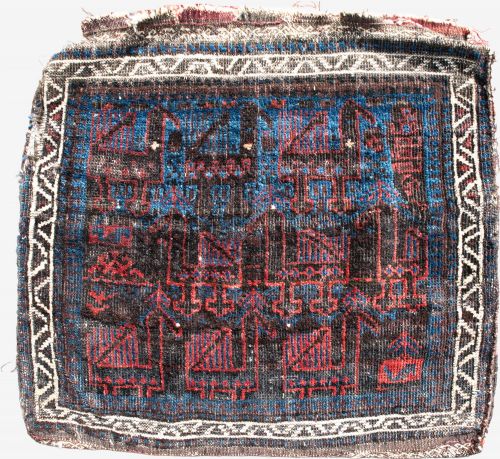
The format extends beyond standard rectangular carpets into utilitarian items such as bird bags, salt bags, vanity bags, and ru korssi covers made for hearth use. Regional subgroups like the Timuri, Taimani, Sistan, and Mushwani contribute distinct patterns and weaving structures to the wider group. Dating typically spans from the late nineteenth century through the early decades of the twentieth century.
How they were made
Weavers constructed these textiles primarily using wool foundations and pile, occasionally incorporating camel wool, goat hair, and cotton details for structural contrast. Natural dyes provided the deep reds, browns, and blues characteristic of the tribal palette. Certain utilitarian bags and storage pieces also integrated embellishments such as cowrie shells, glass beads, and plain weave backs.
Techniques varied from knotted pile construction to flatwoven kilim structures and mixed-technique formats where sections were woven separately and joined together. Rugs often featured specific design motifs like the kalem donneh, pencil box, shrub, and seh mihrab patterns woven into the field. The resulting textiles combined durability with portable utility suited to nomadic life.
Handwoven Baluch Rug Retail Price Guide 2026
Typical asking prices for handwoven baluch rug among the pieces listed under this phrase on Sellingantiques today, from the lower quarter to the upper quarter. They describe what is for sale here now, not the wider market.
Listings span from the late nineteenth century to the 1930s, featuring wool, cotton, camel wool, and natural dyes.
What varies in quality
Quality in these tribal textiles rests upon the fineness of the weave, the handling of the wool, and the depth achieved with natural dyes. Tighter knotting and well-balanced proportions separate finer main carpets and prayer rugs from simpler village work. The precision of geometric designs, such as chevron bands or shrub motifs, reflects the skill of the individual weaver.
Materials also influence the character of the piece, with soft camel wool or pure wool yielding a more tactile surface than coarser mixtures. Preserved edge finishes, intact flatweave ends, and uncommon design variants elevate certain storage bags and runners above standard production.
The Handwoven Baluch Rug Glossary
- Prayer rug
- A small textile featuring a mihrab arch design used for daily devotional kneeling. These rugs often display single or multiple arches directing the prayer.
- Kilim
- A flatwoven textile produced without a raised pile surface. Tribal examples often feature bands of geometric weftwork and chevron patterns.
- Sofreh
- An eating cloth or spread used by nomadic families for communal meals. These rectangular flatweaves display symbolic field designs.
- Namakdan
- A traditional salt bag woven by nomadic tribes with a narrow neck for storage. These functional pieces exhibit careful geometric patterning.
- Seh mihrab
- A design layout incorporating three prayer arches across the upper field. This motif appears frequently in regional prayer rugs.
- Kalem donneh
- A traditional motif resembling a cone or boteh shape found in classic carpet designs. It forms a repeating pattern across the field.
Handwoven Baluch Rug: Frequently Asked Questions
How do I care for an old rug?
Vacuum gently without a rotating brush roll to protect the wool pile and edges. Keep the textile out of direct sunlight to prevent natural dye fading.
Professionally clean the piece only when necessary using specialists familiar with tribal wool textiles. Avoid excessive moisture on natural dye foundations.
What is a balist storage bag?
A balist is a traditional tribal bag utilised for storing household goods, grain, or bedding within the nomadic tent. These items feature sturdy flatweave backs and decorated pile fronts.
Collectors appreciate them for their portable scale and concentrated tribal design work.
How do I identify a prayer rug?
Prayer rugs feature a distinctive pointed arch, known as a mihrab, at one end of the field. This architectural motif directed the weaver and the user during prayer.
Formats are typically compact enough to be rolled and carried easily during travel.