
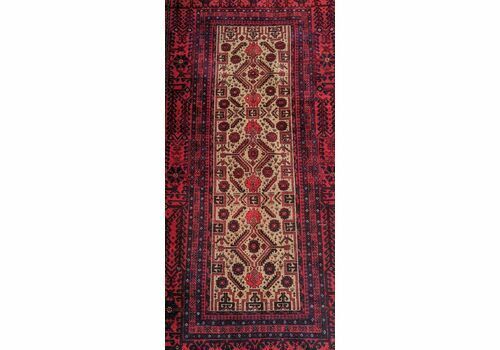
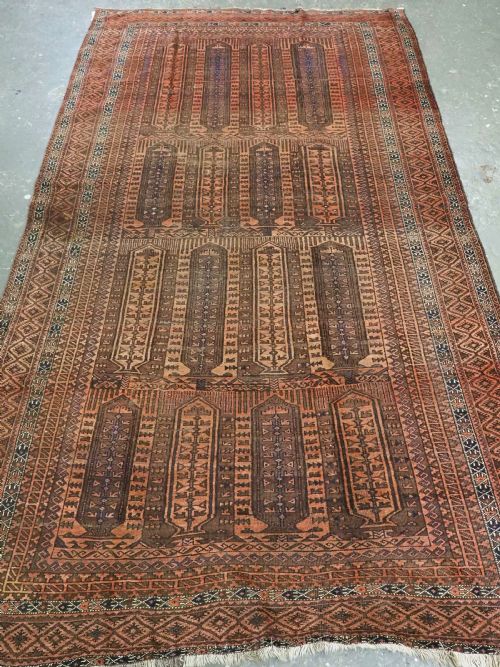
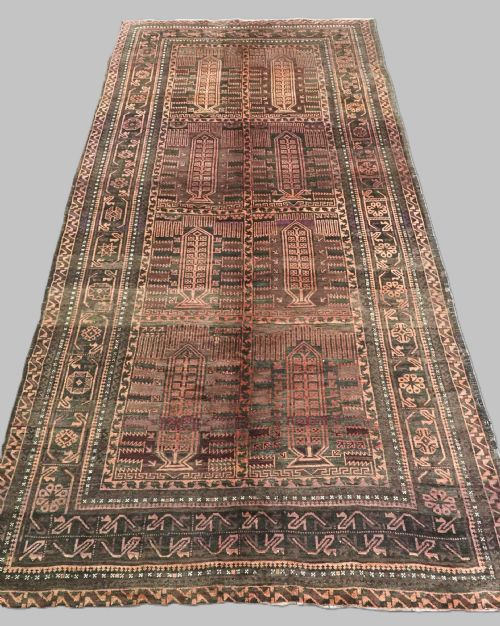
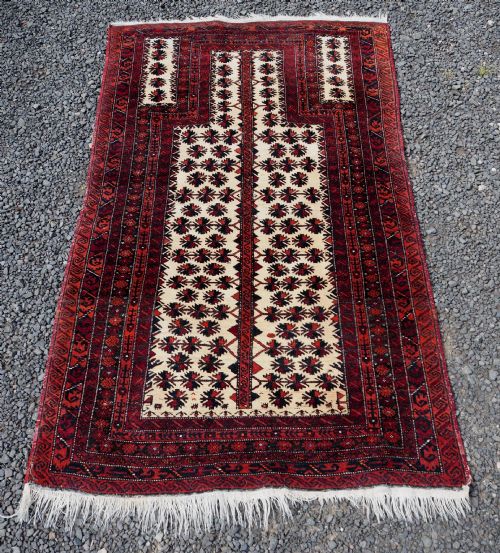
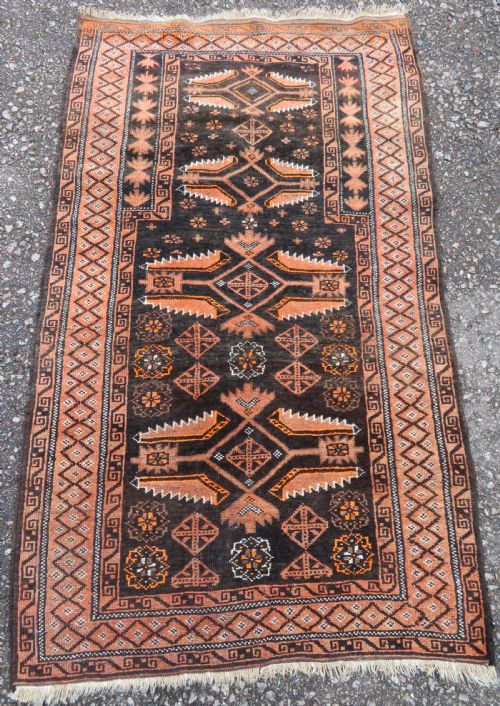


Handwoven Baluch Carpet
When you examine a handwoven baluch carpet, you encounter the resilient nomadic and village textile traditions of the borderlands between Persia and Afghanistan.
Handwoven Baluch Carpet
A handwoven baluch carpet encompasses various forms created by nomadic and village weavers across the borderlands of Persia and Afghanistan. These textiles emerge in formats ranging from small prayer rugs and floor coverings to eating cloths and two-part kilims.
The pieces listed on this page predominantly date from the late nineteenth century through the early decades of the twentieth century. They reflect distinct tribal naming conventions such as Timuri, Taimani Sistan, Mushwani, and Mahdad Khani.
Makers utilised traditional layouts, incorporating prayer mihrabs, shrub motifs, and geometric bands of weftwork. Each piece serves as a functional textile created for nomadic life or village use.
How they were made
Weavers constructed these carpets primarily from wool, pure wool, and camel wool, often incorporating goat hair and cotton for structural integrity. Natural dyes provided the palette, yielding deep rich colours across the fields and borders.
Techniques varied between pile weaving and flatweave construction, occasionally combining mixed techniques or dividing larger kilims into two joined parts. The structures relied on traditional tribal looms set up in camps or permanent village dwellings.
Certain early rugs incorporate a tiny human figure woven directly into the field among the traditional geometric motifs.
What varies in quality
The standard of a piece depends on the fineness of the weave and the clarity of the design motifs, such as pencil box patterns or kalam donneh layouts. Greater precision in knotting and balanced proportions elevate the execution.
Material selection also dictates the grade, particularly the use of soft camel hair or high-grade wool combined with stable natural dyes. Preserved edge finishes and intact formats contribute to the standing of individual carpets.
The Handwoven Baluch Carpet Glossary
- Mihrab
- A niche design on a prayer rug that mimics the direction of Mecca. This architectural motif indicates the primary orientation of the textile during use.
- Sofreh
- A flatwoven or piled eating cloth used by nomadic groups for sharing meals. These textiles feature specific utilitarian formats distinct from standard floor rugs.
- Kilim
- A tapestry-woven carpet produced without a pile by interlocking horizontal and vertical threads. These pieces often display bands of geometric weftwork decoration.
- Timuri
- A tribal group associated with the borderlands of north-eastern Persia and north-western Afghanistan. Their woven works share technical traits with broader baluch output.
- Camel Hair
- Undyed fibre gathered from camels, utilised in the foundation or pile for its natural warmth and durable texture. It imparts a soft handle to the wool ground.
Handwoven Baluch Carpet: Frequently Asked Questions
What is a baluch carpet?
A baluch carpet is a handwoven textile produced by nomadic and village tribes originating from the border regions of Persia and Afghanistan. These pieces typically display geometric motifs and tribal designs.
Historically utilised for daily domestic functions, floor covering, or prayer, they represent a distinct regional weaving heritage.
How do I identify a prayer rug?
Prayer rugs feature a prominent architectural arch or niche known as a mihrab at one end of the field. This design guided the user during daily devotions.
Many examples also incorporate multiple mihrabs or small shrub designs within the central field.
Where were these carpets woven?
They were woven across the borderlands of north-eastern Persia, western Afghanistan, and surrounding regions by specific tribal groups. These include the Timuri, Taimani Sistan, and Mushwani.
Local access to pasture animals dictated the predominant use of sheep wool, goat hair, and camel hair.
How should I care for an antique rug?
Protect the textile by placing it in low-traffic areas away from direct sunlight to preserve the natural dyes and wool fibres. Regular gentle vacuuming without a beater bar prevents dust accumulation.
Consult a specialist textile conservator for any professional cleaning or structural stabilization.