
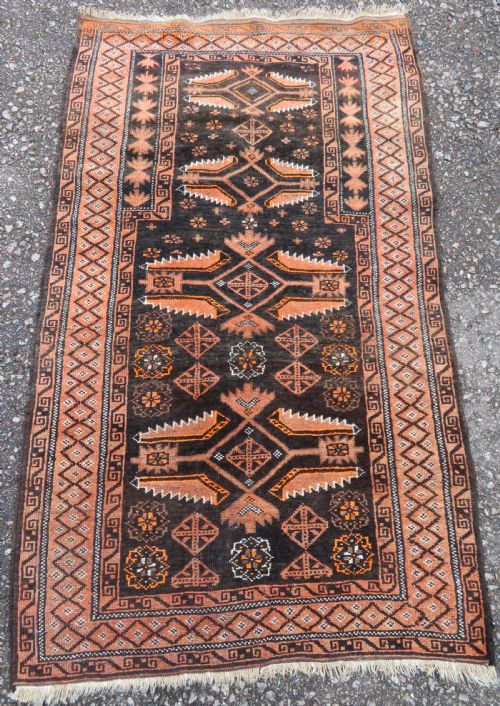
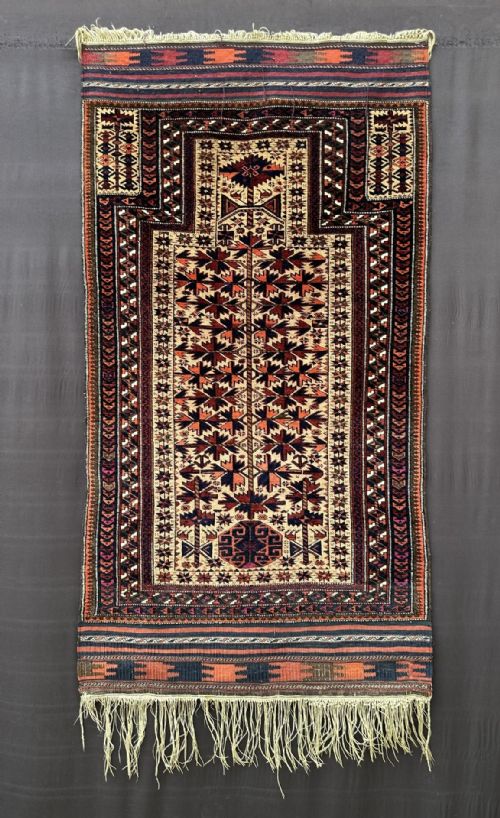


Brown Wool Baluch Rug
A brown wool baluch rug brings tactile tribal weave into a room, offering rich earthy tones and traditional nomadic artistry from the borderlands of Persia and Afghanistan.
Brown Wool Baluch Rug
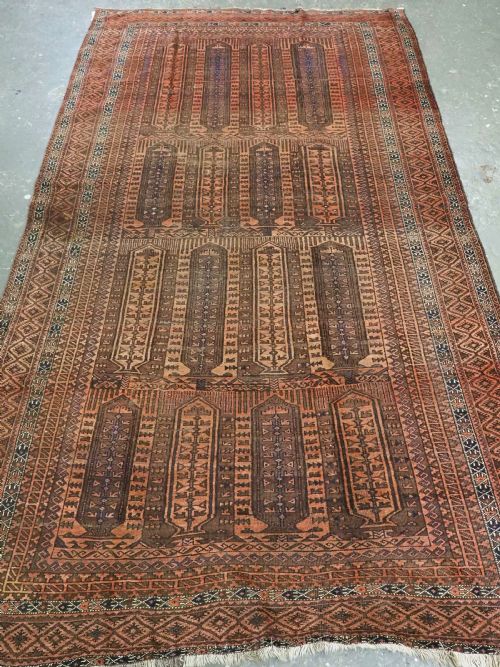
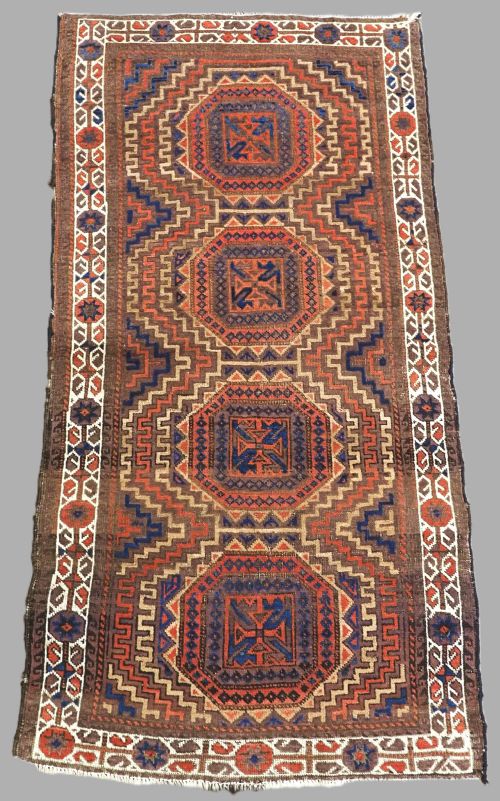
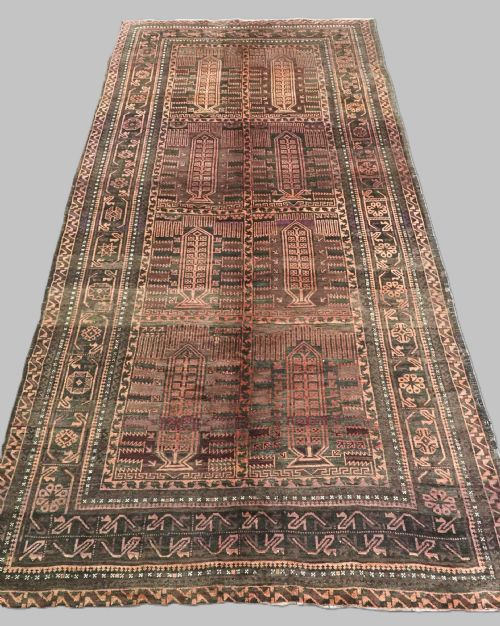
A brown wool baluch rug represents the woven output of nomadic and village weavers across the borderlands of Persia and Afghanistan, encompassing formats from small floor coverings to prayer rugs and storage bags. When exploring this category, buyers encounter pieces originating from the nineteenth and early twentieth centuries, spanning periods from eighteen seventy to nineteen thirty. The typical composition centres on dark, moody palettes dominated by deep browns, dark reds, and indigo, often incorporating specific tribal motifs such as guls, tree of life patterns, and mihrabs.
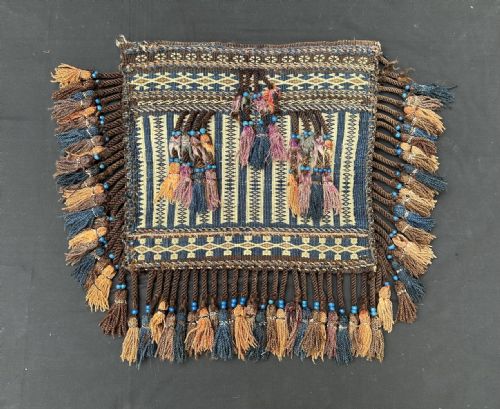
The regional sub-groups appear frequently in these listings, including Timuri, Taimani, Salar Khani, and Mahdad Khani pieces, each displaying distinct structural traits and design vocabularies. Formats range from standard area rugs and runners to flatwoven kilims and functional tribal bags complete with original backing. These textiles reflect the utilitarian needs of nomadic groups who utilised available local resources to produce durable, portable furnishings for daily life.
Assessing quality and execution
Quality in these nomadic textiles depends on the fineness of the knotting, the handling of the wool, and the depth achieved in the natural dye palette. Superior examples display tightly packed piles, precise geometric drawing, and intact original side cords and end finishes that preserve the structural integrity of the piece.
The sophistication of the design layout, whether featuring complex calyx lattice patterns, multiple mihrabs, or well-proportioned guls, distinguishes finer tribal weaving from simpler utilitarian work. Variations in wool preparation, such as the use of finely hand-spun fleece, contribute to a softer handle and greater resilience in the finished textile.
Materials documented across the inventory include wool, cotton, goat hair, camel wool, natural dyes, and glass beads.
The Brown Wool Baluch Rug Glossary
- Gul
- A medallion motif frequently utilised in central Asian and tribal weaving. These repeated octagonal or gabled designs often identify specific tribal groups.
- Mihrab
- An arched niche design characteristic of prayer rugs, symbolising the direction of prayer. This architectural form often appears in single, double, or triple iterations on tribal pieces.
- Kilim
- A flatwoven textile produced without a knotted pile. These pieces utilise interlocking weft techniques to create crisp geometric patterns.
- Pushti
- A small mat or rug format traditionally used for sitting or kneeling. These compact textiles offer accessible entry points into antique tribal weaving.
Brown Wool Baluch Rug: Frequently Asked Questions
How do I care for an antique rug?
Vacuum gently without a rotating brush bar to remove embedded grit, and keep the textile away from direct, prolonged sunlight to protect the natural dyes.
Professional specialist cleaning is recommended every few years to preserve the wool pile and prevent structural degradation.
Where were these pieces made?
These textiles originate from the historical borderlands and nomadic territories spanning eastern Persia and western Afghanistan.
Specific tribes such as the Timuri, Taimani, and Salar Khani produced these works in regional pockets influenced by local material availability and cultural traditions.
What is a prayer rug?
A prayer rug is a smaller format textile featuring a mihrab or arch design that indicates the orientation during daily devotions.
Nomadic weavers incorporated these architectural motifs to create portable spaces for personal ritual.
How old are these antique textiles?
The pieces available in this category predominantly date from the late nineteenth century through to the early decades of the twentieth century.
Datings are generally attributed based on structural characteristics, dye types, and traditional design evolution within the specific tribal groups.