

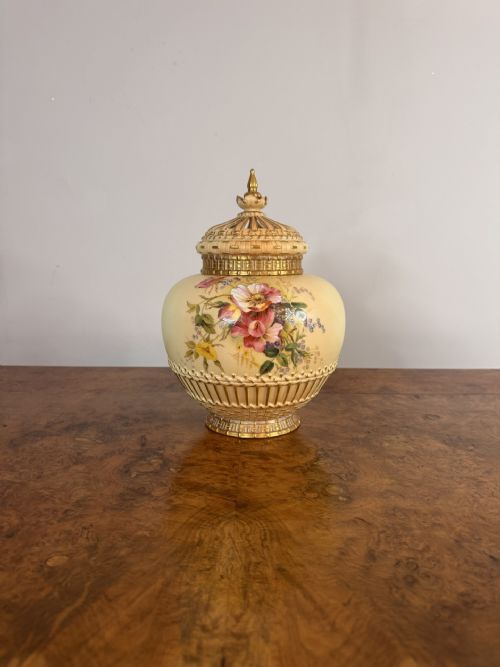


Hand Pierced Vase
These hand pierced vase examples combine delicate pierced ceramic work with painted detail, offering collectors intricate British craftsmanship from the nineteenth and twentieth centuries.
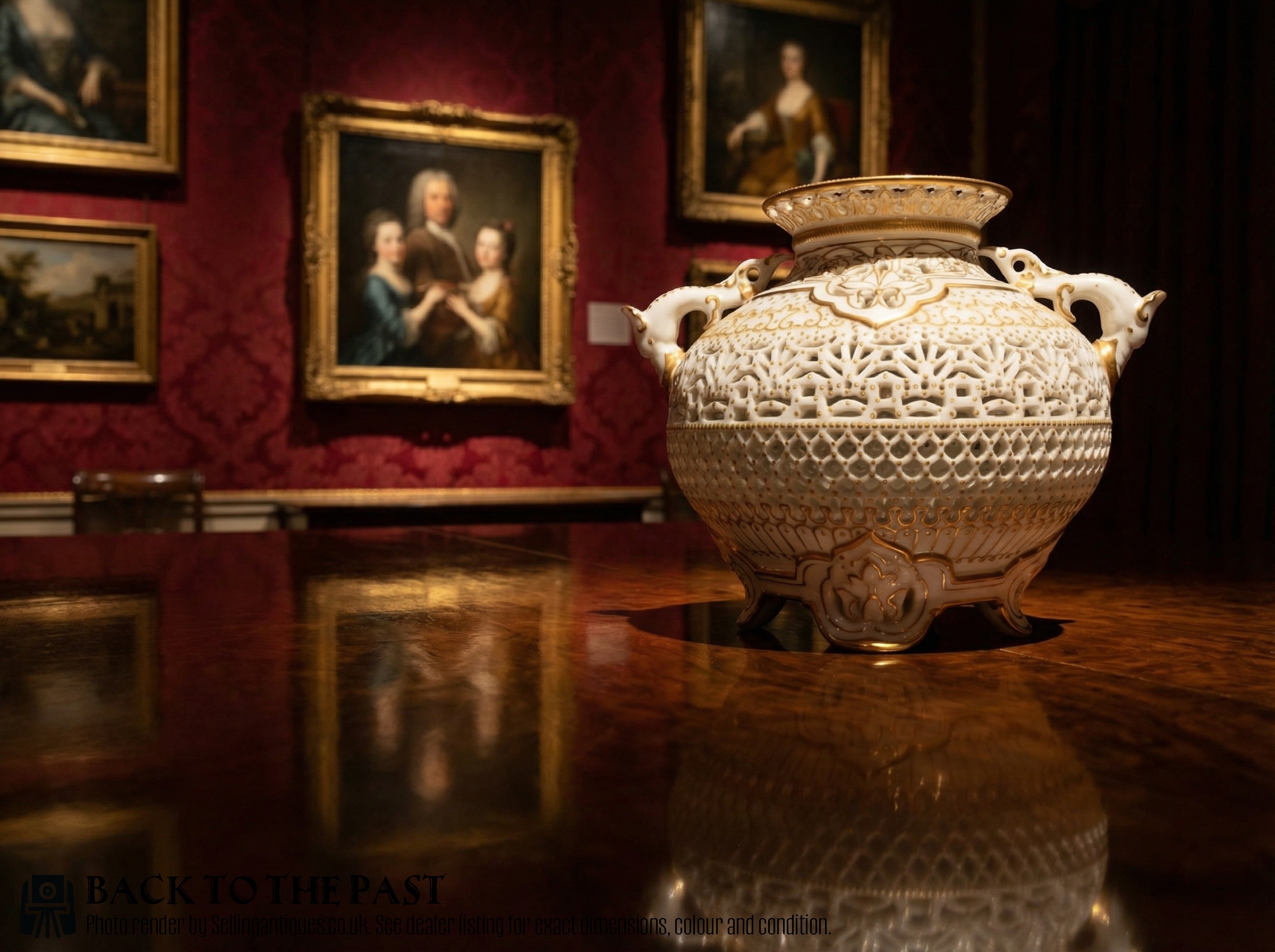
Hand Pierced Vase
When you search for a hand pierced vase, you are looking at ornamental ceramic vessels featuring cut-through openwork designs alongside painted decoration. The examples found here span from Victorian Rococo Revival and Regency styles up to mid-century modern production.
Most pieces you are likely to encounter on this page take the form of pot pourri jars, ewers, and pedestal vases. These decorative items frequently combine pierced shoulders or handles with hand-painted motifs such as fruit, flowers, and animals.
How they were made
The makers formed these vessels using porcelain, bone china, and ironstone, shaping them into ovoid jars, spill vases, and urns. Artisans applied gold leaf, gilding, and gilt highlights to accentuate the contours and rims of the ceramic bodies.
The defining openwork, often described as reticulated or pierced, required skilled cutting through the wet clay before firing. Painters then added intricate scenes by hand, ranging from botanical studies to landscapes and wildlife.
Hand Pierced Vase Retail Price Guide 2026
Typical asking prices for hand pierced vase among the pieces listed under this phrase on Sellingantiques today, from the lower quarter to the upper quarter. They describe what is for sale here now, not the wider market.
Several pieces feature painted cattle standing patiently on porcelain, as if pausing their day to be admired.
What varies in quality
Quality rests primarily on the precision of the piercing and the hand of the artist. Master decorators executed detailed fruit, pheasant, and cattle scenes that command attention, while standard factory output relied on simpler floral patterns.
The crispness of the reticulated lattice work and the preservation of the gilt leaf determine the standing of an individual piece. Fully signed works by known artists hold greater distinction than unsigned factory production.
Samuel Alcock·Royal Worcester·George Owen·Jas Stinton·Jack Southall·Mason's
The Hand Pierced Vase Glossary
- Reticulated
- Pierced or net-like openwork cut into the ceramic body before firing. This technique demands steady hands to prevent warping in the kiln.
- Pot Pourri
- A vessel designed with a pierced cover to release the scent of dried aromatic plant materials placed inside. These often feature inner lids alongside decorative outer covers.
- Blush Ivory
- A tinted, matt cream porcelain body developed by Royal Worcester in the late nineteenth century. It provides a soft background for gilt and floral enamel painting.
- Ironstone
- A heavy, durable type of earthenware patented in the nineteenth century. It offers a robust alternative to porcelain for large decorative jars and vases.
- Ewer
- A large jug with a flared spout and a decorative handle, historically used for water but produced in these periods as purely ornamental display pieces.
Hand Pierced Vase: Frequently Asked Questions
What is a hand pierced vase?
A hand pierced vase is a ceramic vessel featuring intricate openwork patterns cut by hand into the clay before firing. These pieces often incorporate painted floral or animal motifs and gilded highlights.
They emerged strongly during the Victorian period and continued through the twentieth century, serving primarily as decorative mantel or table pieces.
How are pot pourri vases used?
Pot pourri vases were traditionally filled with dried scented petals and spices to freshen Victorian and Edwardian rooms. The pierced covers allowed the fragrance to diffuse gently into the surrounding space.
Today, they are displayed as decorative art objects, often with their crown covers kept in place to showcase the complete design.
How do I identify Royal Worcester blush ivory?
Royal Worcester blush ivory is characterised by a warm, matt cream-coloured glaze that mimics the tone of natural ivory. It is frequently decorated with gilt details and soft floral painting.
This finish appears extensively on pieces dating from the late nineteenth and early twentieth centuries, often paired with reticulated shoulders.
What is the difference between porcelain and ironstone?
Porcelain is a fine, vitrified ceramic that can be fired to a translucent finish, often used for delicate painted cabinet pieces. Ironstone is a dense, opaque earthenware designed for greater strength and durability.
Both materials formed the base for decorated vases and jars across the Victorian and later eras.