
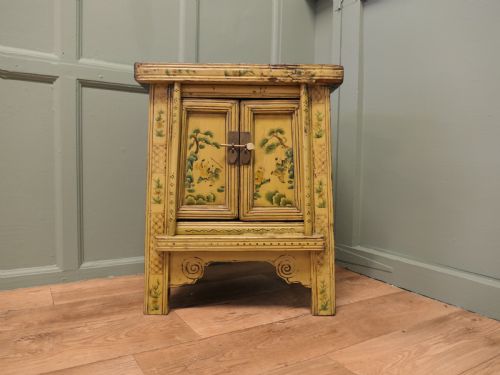
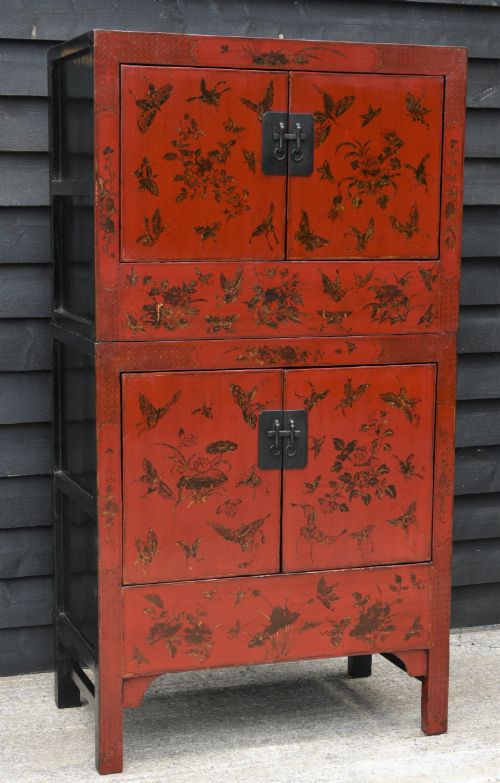
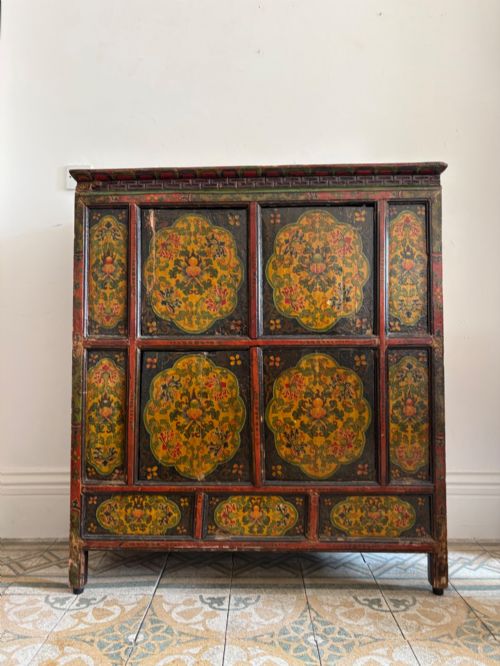

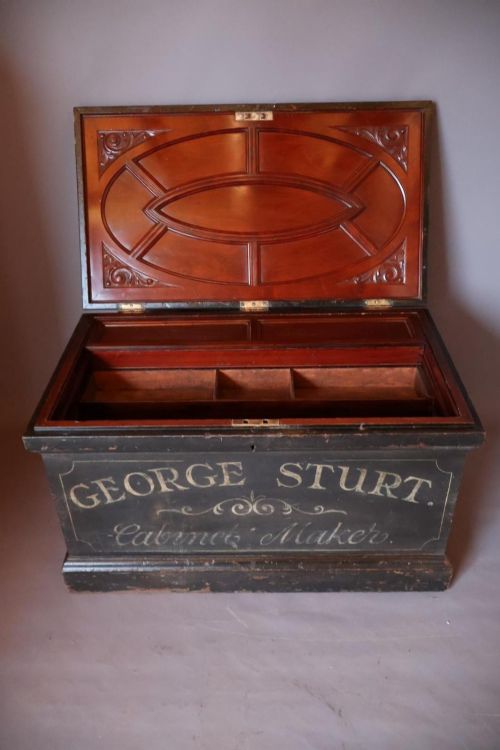


Hand Painted Wooden Cabinet
A hand painted wooden cabinet brings functional storage together with decorative artistry, spanning vernacular folk traditions and formal Chinoiserie.
Hand Painted Wooden Cabinet
A hand painted wooden cabinet satisfies the demand for practical storage infused with distinctive visual character. These functional pieces range from corner cupboards and chests of drawers to large armoires and larder cupboards.
The version most commonly encountered on this page originates in the nineteenth century, executed in pine or various hardwoods. Examples draw on diverse traditions, encompassing Swedish folk art, Chinese lacquer, and European country styles.
How they were made
Makers utilised solid timbers such as pine, ash, and mahogany, often constructing carcases with traditional joinery before applying protective and decorative layers. Surfaces received paint, lacquer, or brass fittings to complete the piece.
Decorative finishes vary from intricate Chinoiserie and Pre-Raphaelite motifs to robust European folk art painting. Pigments were applied directly to prepared wooden panels, occasionally incorporating carved elements or metal hardware.
Listings feature pieces spanning the eighteenth, nineteenth, and early twentieth centuries, constructed from pine, mahogany, and ash.
What varies in quality
The distinction between tiers rests upon the execution of the surface artwork and the integrity of the underlying timber. Superior examples display confident, articulate brushwork and stable wood construction that has survived decades of daily domestic use.
Workmanship in the joinery and the survival of original decorative surfaces dictate overall standing. Pieces retaining genuine early paint layers hold greater interest than later decorative overhauls.
Melissa White
The Hand Painted Wooden Cabinet Glossary
- Chinoiserie
- European interpretation and imitation of Chinese and East Asian artistic traditions, frequently featuring figures, landscapes, and pavilions in gold or colour upon a dark or red lacquer background.
- Folk art
- Utilitarian objects and decorative items created within a community tradition, typically characterised by a naive perspective and direct application of local materials.
- Pine
- Softwood commonly utilised for vernacular furniture and country cupboards across Europe, providing a pale and stable ground for painted decoration.
- Lacquer
- Durable resin finish applied in multiple layers and polished, prominent in Asian export pieces and marriage cabinets.
- Bowfront
- A convex curved cabinet front that projects outward in a smooth arc, frequently seen on Georgian cupboards and chests.
Hand Painted Wooden Cabinet: Frequently Asked Questions
What is a hand painted wooden cabinet?
A hand painted wooden cabinet is a storage piece embellished with brushwork, lacquer, or folk art motifs. These items combine utility with applied surface decoration.
They serve as focal points in domestic interiors, offering enclosed shelving or drawer space while displaying regional artistic styles from the eighteenth century onward.
How do I identify Swedish folk art cupboards?
Swedish folk art cupboards typically feature pale painted pine surfaces decorated with floral motifs, scrollwork, or traditional inscriptions. They reflect rural Scandinavian aesthetic values.
Construction is straightforward and robust, designed for practical storage in domestic farmhouses and provincial homes.
Where were Chinoiserie cabinets made?
Chinoiserie cabinets originate from both European workshops imitating Asian styles and direct imports from China. They showcase decorative scenes of figures and landscapes.
European cabinet makers adapted these motifs onto corner cupboards, side cabinets, and chests using lacquer or painted finishes.
How should I care for a painted wooden cabinet?
Care involves keeping the piece away from direct sunlight and maintaining stable room humidity to protect the timber and pigment layers. Avoid harsh chemical cleaners.
Dust gently with a dry cloth to preserve the original surface integrity and any historic patina on the painted woodwork.