



Painted Satinwood Side Cabinet
A painted satinwood side cabinet brings refined neoclassical elegance to a room through delicate hand-painted detailing and lustrous timber.
Painted Satinwood Side Cabinet
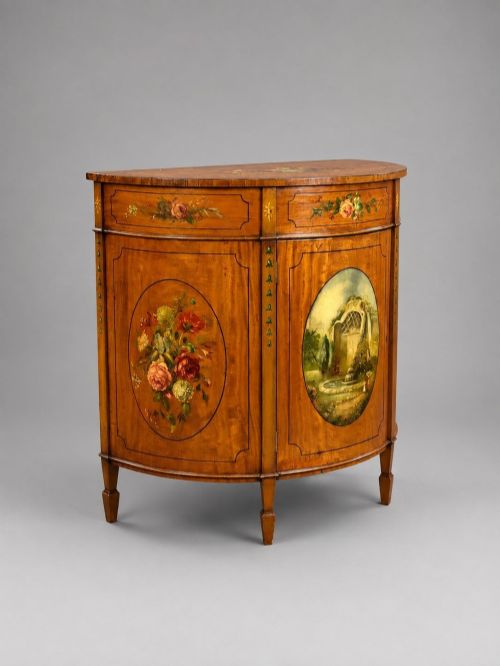
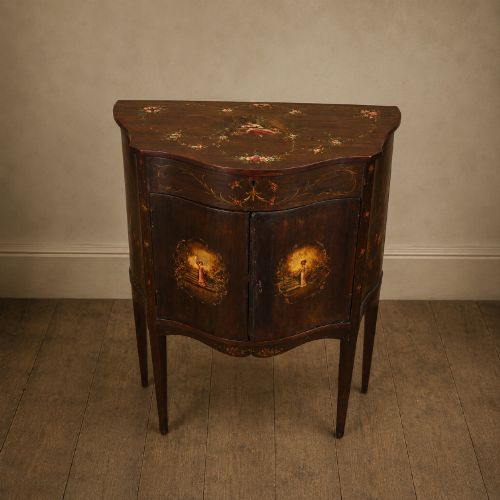
A painted satinwood side cabinet is a sophisticated storage piece that emerged strongly during the nineteenth and early twentieth centuries. These items draw heavily on Sheraton Revival, Adam Revival, and Edwardian neoclassical design motifs. Buyers searching this phrase will find a variety of forms ranging from compact bedside cupboards to serpentine and demi-lune commodes.
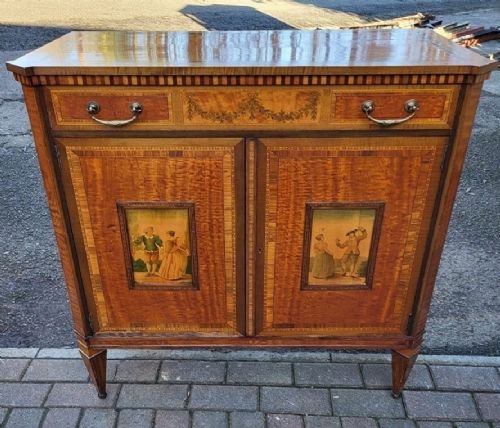
The pieces appearing on this page span the Victorian, Edwardian, and later periods up to nineteen thirty. Demi-lune and bow-front shapes feature prominently alongside pairs of bedside cabinets. The combination of figured timber and pictorial painted panels defines the visual appeal of these cabinets.
How They Were Made
Cabinet makers utilised fine satinwood veneers laid over secondary timbers like mahogany and maple, often incorporating contrasting stringing and inlay. The structural carcasses support curved fronts, including serpentine and demi-lune shapes, requiring skilled timber bending and joinery techniques.
Surface ornamentation relies on hand-painted detailing, classical panels, and decorative motifs executed directly onto the satinwood ground. Brass hardware such as handles and escutcheons completes the construction of these decorative storage items.
Materials recorded across these pieces include satinwood, brass, mahogany, and timber with hand-painted detailing.
What Varies in Quality
The standard of execution in the hand-painted detailing separates basic examples from exceptional works. Crispness in the classical panels and naturalistic floral motifs demonstrates superior artistic skill during the revival periods.
Timber selection and the management of satinwood grain figure dictate the underlying distinction of the piece. Superior construction involves precise matching of veneers across curved surfaces like bow fronts and demi-lune doors.
Maple & Co.·Kaufman
The Painted Satinwood Side Cabinet Glossary
- Satinwood
- A dense, lustrous tropical timber with a golden sheen used extensively for fine cabinetmaking during the eighteenth and nineteenth centuries. Its reflective surface provides an ideal ground for painted decoration.
- Demi-Lune
- A half-moon shape characteristic of commodes and side cabinets designed to sit flush against a wall. This profile allows for graceful curves in compact spaces.
- Serpentine
- A furniture front characterised by a concave central section flanked by two convex curves, or the reverse. This flowing contour demands advanced carpentry.
- Sheraton Revival
- A late nineteenth and early twentieth-century design movement inspired by the neoclassical furniture of George Sheraton. Pieces from this style frequently feature painted satinwood and classical urn motifs.
- Commode
- A low decorative cabinet or chest with doors or drawers, originating in France. In British usage, the term often overlaps with side cabinets of similar proportions.
Painted Satinwood Side Cabinet: Frequently Asked Questions
Where should I place a painted satinwood side cabinet?
These cabinets suit drawing rooms, hallways, or bedrooms where their decorative surfaces can be appreciated without heavy daily wear.
Because satinwood is sensitive to strong light, placing the piece away from direct sun protects the painted details and timber colour.
How do I tell a Victorian piece from an Edwardian one?
Victorian examples often tie into the heavy revival of the late nineteenth century, sometimes incorporating bolder mahogany accents alongside the satinwood.
Edwardian pieces tend to lean towards lighter neoclassical interpretations with refined proportions and delicate floral swags.
What is the difference between a commode and a side cabinet?
A commode traditionally refers to a low, ornate cabinet with cupboard doors or drawers designed for formal reception rooms. Side cabinets encompass a broader category that includes bedside cupboards and taller storage forms.
In many nineteenth-century listings, the terms are used interchangeably for demi-lune and serpentine shapes.
How do I care for hand-painted satinwood surfaces?
Maintain the finish by dusting gently with a soft, dry cloth and avoiding all chemical polishes or abrasive cleaners.
Keep the cabinet in a stable environment with moderate humidity to prevent timber movement and cracking in the painted panels.