




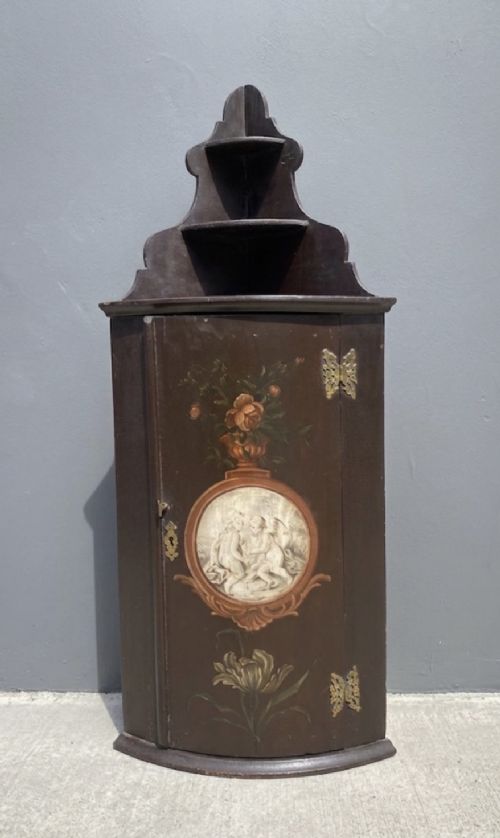
Brown Pine Cupboard
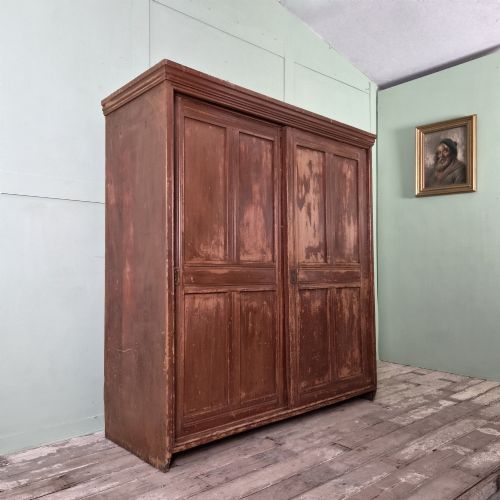
A brown pine cupboard brings practical storage and honest country character to a room, spanning simple bedside units to tall kitchen dressers.
Brown Pine Cupboard
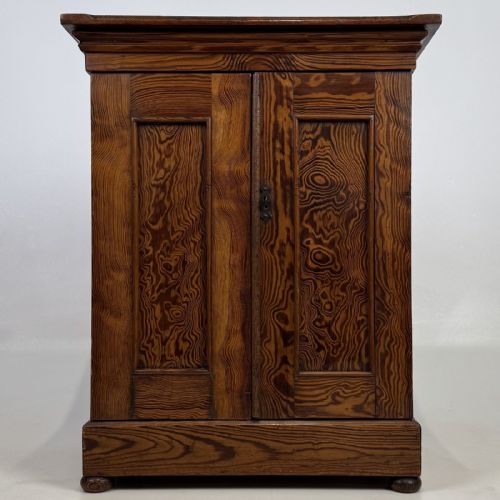
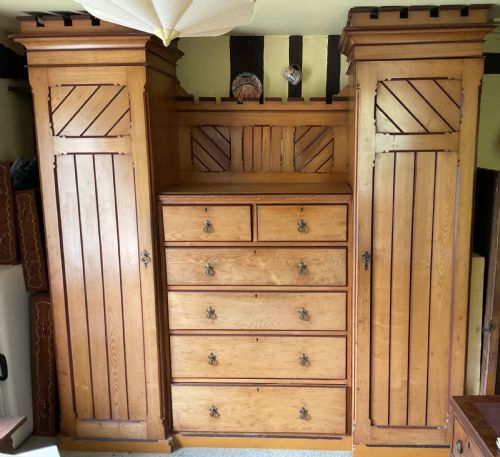
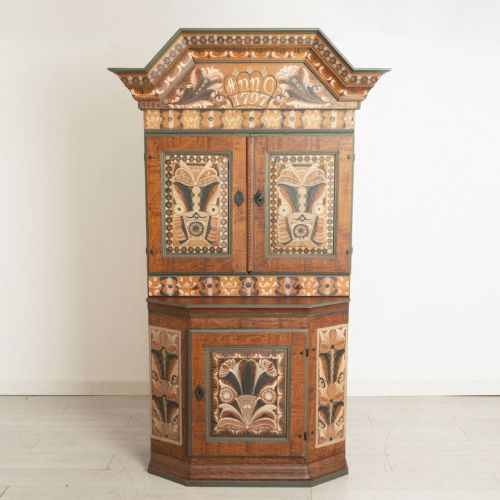
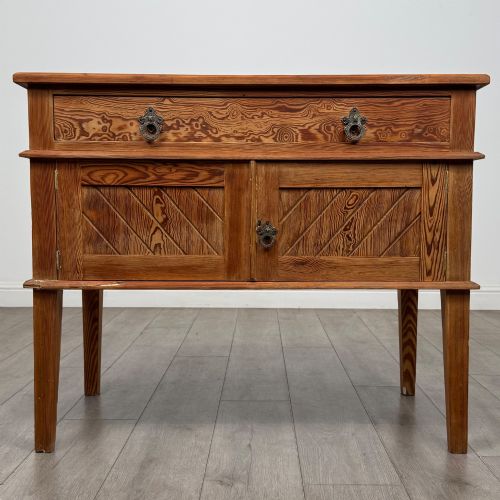
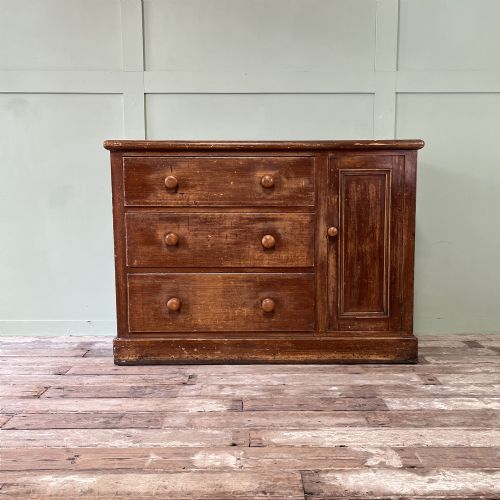
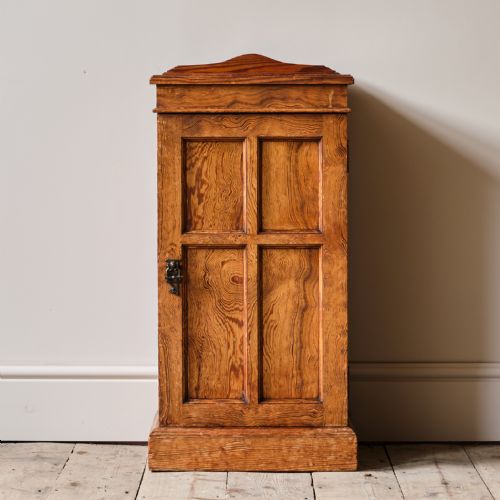
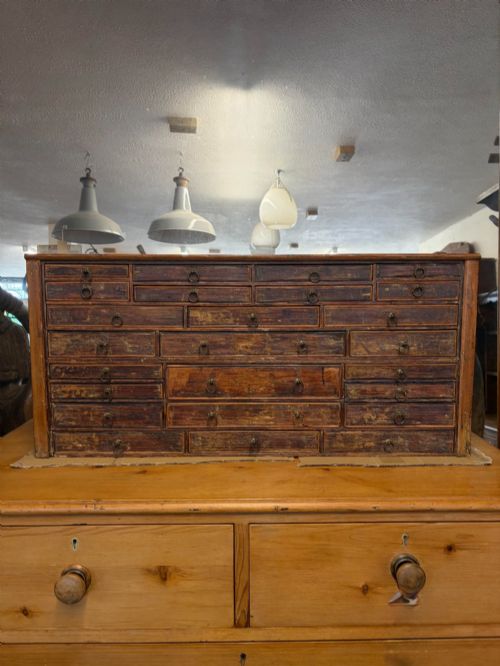
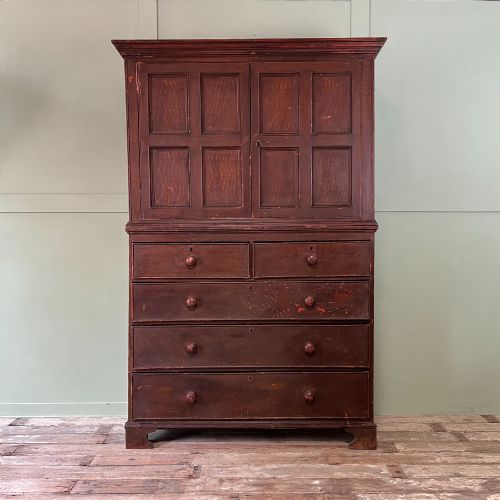
When you search for a brown pine cupboard, you encounter utilitarian storage pieces ranging from compact bedside cabinets and corner units to large housekeepers cupboards, kitchen dressers, and multi-drawer banks. These items emerge primarily from the eighteenth and nineteenth centuries, carrying the functional hallmarks of rural and domestic life.
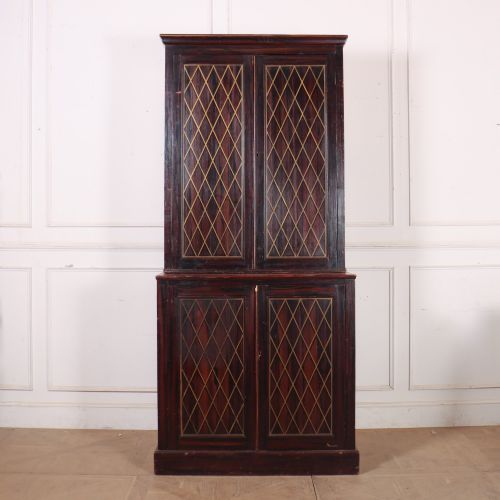
The pieces on this page lean heavily towards nineteenth-century examples alongside eighteenth-century origins, often displaying regional vernacular traits from English, Irish, French, Scandinavian, and Italian traditions. You find single-door bedside models, two-part corner cabinets, and substantial school or food cupboards shaped by their original domestic or institutional purpose.
What varies in quality
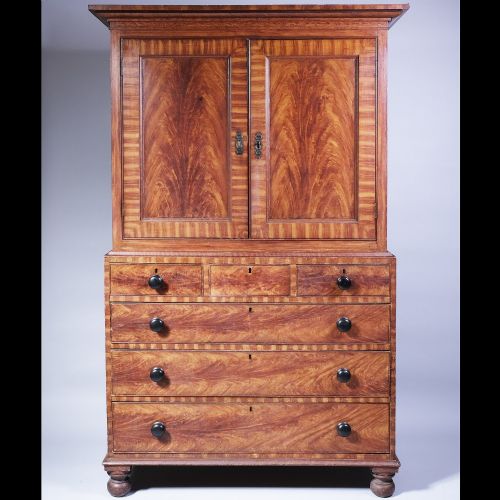
Quality rests significantly on the survival of original surface treatments, such as early paintwork, scumble glazes, and simulated wood graining that add distinct visual depth. Pieces retaining their uncompromised structural integrity and original period hardware hold a stronger position in the range.
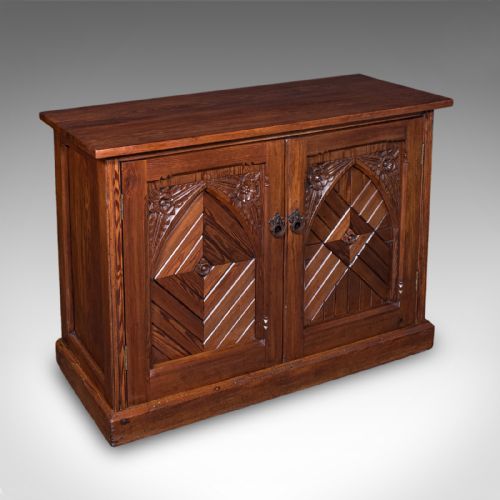
Proportion and regional character also dictate distinction, where vernacular details like raised panels, hand-carved elements, or untouched country workshop traits elevate a piece above standard utilitarian production.
Brown Pine Cupboard Retail Price Guide 2026
Typical asking prices for brown pine cupboard among the pieces listed under this phrase on Sellingantiques today, from the lower quarter to the upper quarter. They describe what is for sale here now, not the wider market.
Listings feature regional variations from England, Ireland, France, Sweden, and Italy, spanning the eighteenth and nineteenth centuries.
The Brown Pine Cupboard Glossary
- Scumble
- A decorative painting technique involving a translucent glaze dragged over a lighter base colour to imitate the grain of more expensive woods. This method was widely used on pine furniture to create simulated oak or rosewood effects.
- Housekeepers cupboard
- A large storage piece traditionally used in substantial homes for linens, dry goods, and household provisions. These units typically combine upper shelving with lower drawers or cupboards.
- Vernacular
- Architecture or furniture built by local craftsmen using traditional regional methods and locally available materials rather than following high-style academic designs. These pieces reveal strong local character.
- Pot cupboard
- A small bedside cabinet originally designed to house a chamber pot behind a single door or small cupboard enclosure. They frequently feature a compact footprint suitable for tight spaces.
- Pitch pine
- A durable, resinous North American pine species noted for its prominent grain patterns and robust strength. Furniture makers utilised it for pieces requiring extra structural resilience during the nineteenth century.
Brown Pine Cupboard: Frequently Asked Questions
How do I date an old pine cupboard?
Dating relies on observing construction methods, timber selection, fastener types, and surface finishes across the piece. Eighteenth-century examples often display hand-planed surfaces and pegged joinery, while later nineteenth-century pieces may incorporate machine-sawn elements and factory-made hardware.
Paint analysis and style markers such as Georgian proportions or Victorian Gothic influences also help narrow down the decade of creation.
Were these cupboards always painted?
Many pine cupboards received paint coatings originally for protection, hygiene, or aesthetic enhancement to match contemporary room schemes. Finishes ranged from simple lead paints to intricate folk art and simulated wood graining.
Some pieces were stripped down to bare wood in later decades, while others retain their historical painted layers.
Where were housekeepers cupboards used?
Housekeepers cupboards originated in large country houses and farmhouses where they served as the central storage hub for domestic provisions, table linens, and dry stores. They typically stood in corridors, sculleries, or dedicated linen rooms.
Today, their generous proportions make them adaptable for modern kitchens, hallways, or living spaces requiring substantial concealed storage.
What is the difference between deal and pine?
Deal refers broadly to timber cut from fir or pine trees, historically used as an accessible material for straightforward cabinet making. In antique listings, deal often denotes softer coniferous woods utilised for carcases, drawer linings, or secondary framing.
Pine encompasses specific coniferous timbers like Scots pine or pitch pine, valued for distinct grain patterns and structural reliability.