
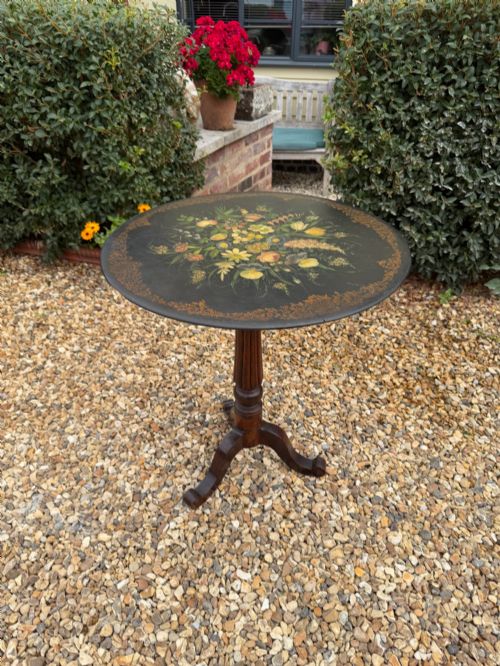
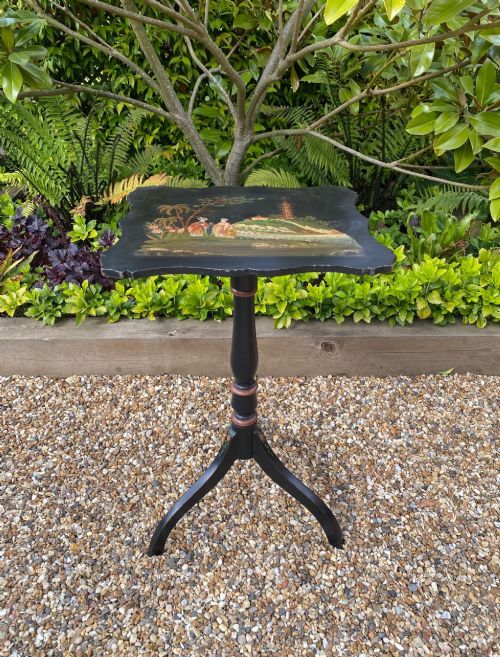
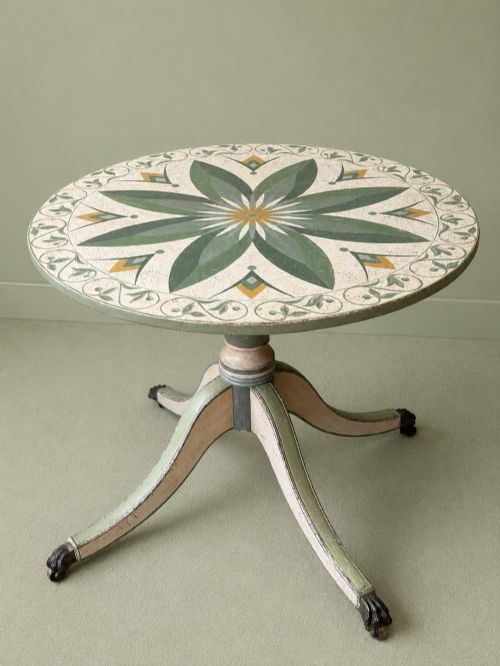
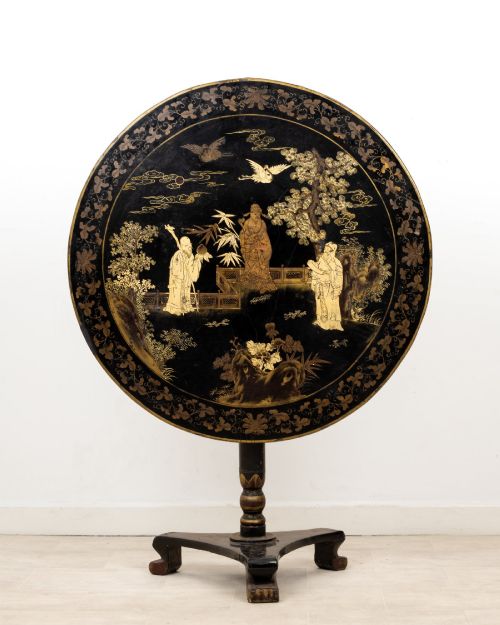


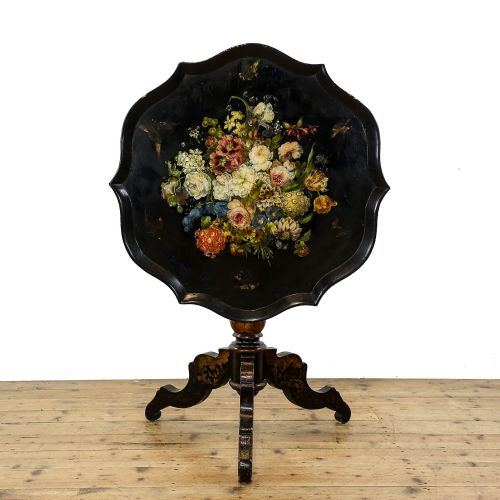


Hand Painted Tripod Table
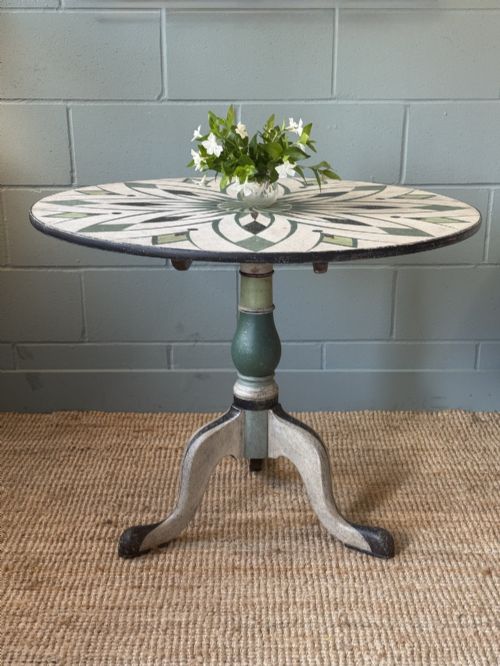
These hand painted tripod table pieces bring vibrant colour and decorative charm to any corner, offering versatile surfaces for display.
Hand Painted Tripod Table
A hand painted tripod table is a small occasional piece supported by three legs, frequently seen in Victorian and nineteenth-century forms. These tables appear as side tables, tilt-top tables, and occasional tables designed for compact spaces.
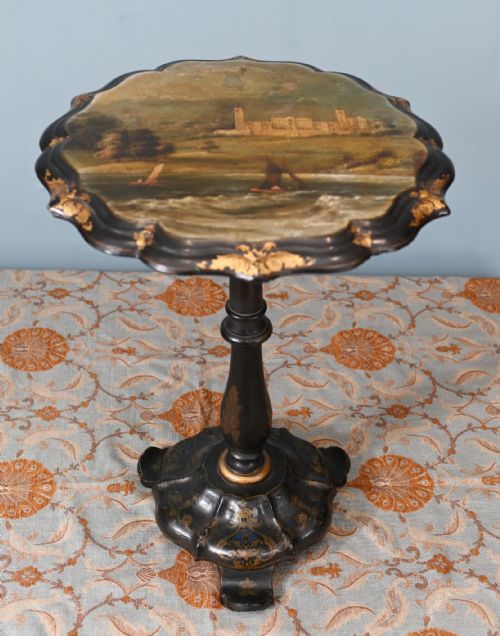
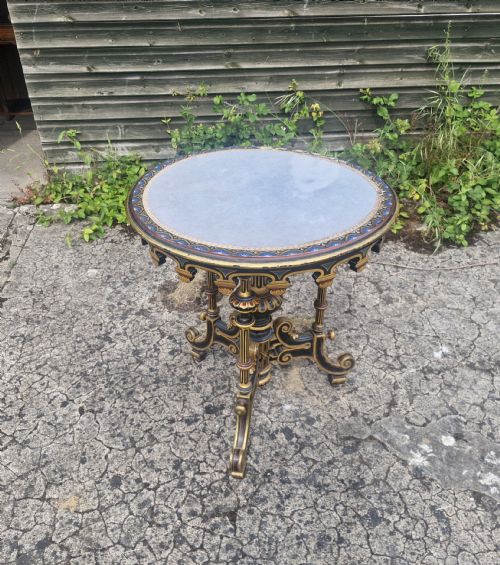
The versions most commonly met on this page include Victorian tilt-top examples and nineteenth-century lacquered occasional tables. Makers often utilised timber and ebonised wood as the foundation for intricate surface decoration.
Originating across various periods such as eighteen-eighty and nineteen-hundred, these tables reflect diverse decorative influences including Chinoiserie, folk art, and Adam style. Buyers select them to introduce patterned surfaces and historical character into domestic interiors.
How they were made
Makers constructed these tables from solid timber, satinwood, satin birch, and ebonised wood, forming stable platforms for subsequent decoration. Woodworkers shaped pedestals and three-legged bases to support functional tops, including tilting mechanisms.
Artisans applied paint, lacquer, and gold leaf to the wooden surfaces, often creating detailed floral, petal, or oriental Chinoiserie designs. Brass fittings sometimes secured the tilt-top mechanisms and structural joints.
Listings feature Victorian, nineteenth-century, and nineteen-hundred periods, incorporating materials such as paint, lacquer, gilt, brass, and ebonised wood.
What varies in quality
The refinement of the painted and decorated surface distinguishes one piece from another, separating simpler folk art applications from detailed Kashmir or Chinoiserie artistry. The precision of the brushwork and the preservation of original gold leaf or lacquer heavily influence the overall character.
Structural integrity of the tripod base and the smooth operation of tilt-top mechanisms indicate the standard of original carpentry. Choice of materials, such as satinwood versus basic timber, also determines the standing of the table.
The Hand Painted Tripod Table Glossary
- Tripod table
- A small standalone table supported by a central pillar resting on three legs. This form became popular during the eighteenth century and continued through the Victorian era.
- Tilt-top table
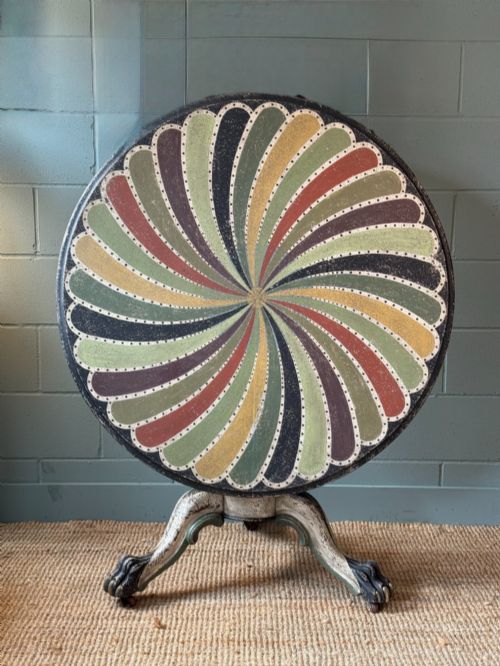
- A table featuring a mechanism that allows the top to pivot to a vertical position when not in use. This design enabled easy storage against walls.
- Chinoiserie
- European decorative style reflecting Chinese artistic traditions, characterised by painted landscapes, figures, and motifs on lacquered surfaces.
- Ebonised wood
- Timber treated with a dark finish to imitate expensive ebony. This technique gained widespread use in nineteenth-century furniture.
- Japanned
- European imitation of Japanese and East Asian lacquerwork. Craftsmen applied layered varnishes and paints to achieve a glossy, decorated finish.
Hand Painted Tripod Table: Frequently Asked Questions
How do I care for a painted table?
Keep painted and lacquered surfaces away from direct sunlight to prevent the colours and gold leaf from fading over time. Dust gently with a dry, soft cloth and avoid chemical polishes that might damage delicate brushwork.
Place the table in rooms with stable humidity levels to protect both the wooden structure and the historic painted decoration from warping.
Where were these tables used?
Owners typically placed these small tables in parlours, drawing rooms, and hallways as decorative accents or convenient surfaces for holding books and lamps. Their compact footprint made them easy to move around domestic spaces as needed.
Tilt-top variants also served as display pieces when folded upright, showcasing the painted design to visitors entering a room.
How do I date a Victorian table?
Dating relies on examining the timber species, construction methods, and decorative styles characteristic of periods like eighteen-eighty or eighteen-sixty. The presence of ebonised wood or specific floral motifs often points to particular decades within the nineteenth century.
Later additions, such as overpainted floral designs applied to older tables, require careful inspection of the pigment and underlying wood age.