



Hand Painted Sideboard
A hand painted sideboard brings surface artistry to storage, offering decorated timber forms from the nineteenth and early twentieth centuries.
Hand Painted Sideboard
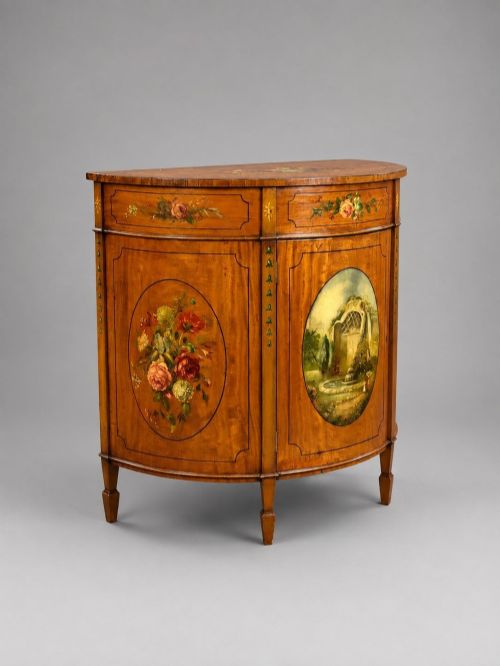
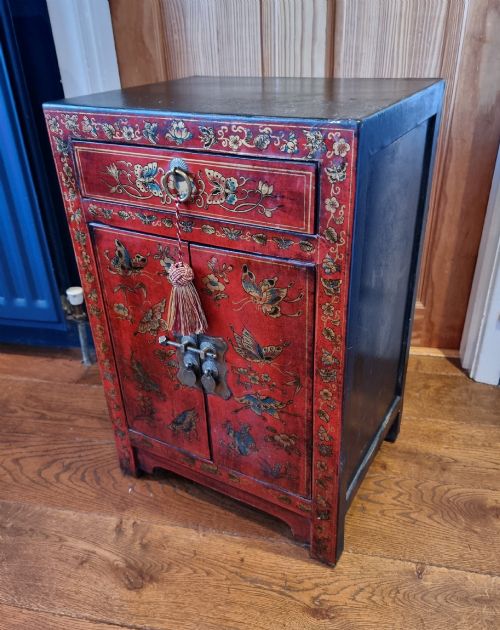
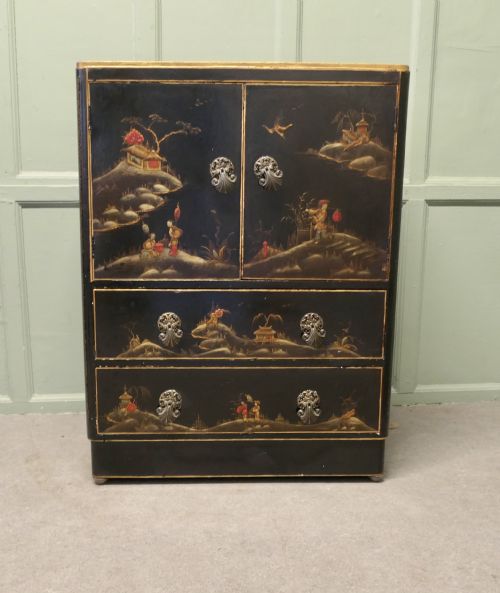
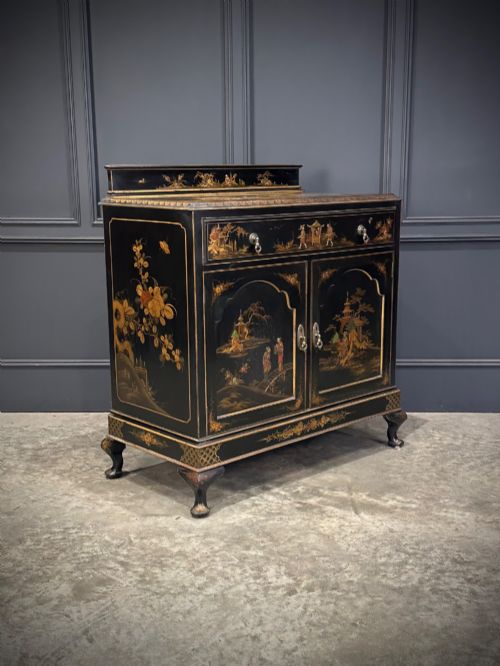
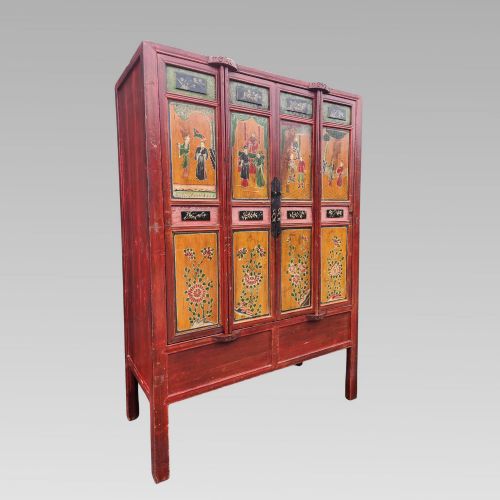
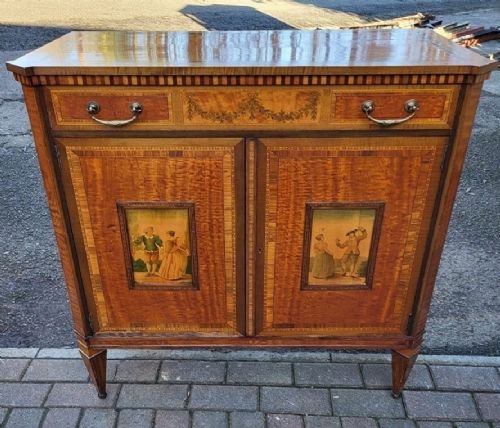
When you search for a hand painted sideboard, you encounter decorated storage pieces spanning the Victorian, Edwardian, and early twentieth-century periods. These items range from Chinese red and black lacquered cabinets to Sheraton Revival satinwood commodes and British country kitchen dresser bases.
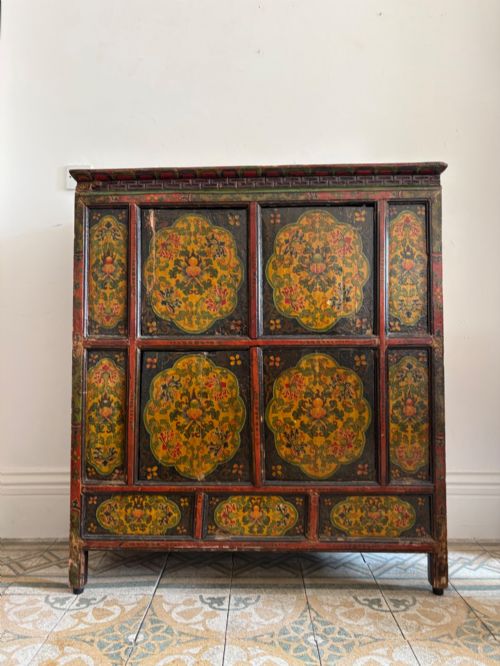
The selection on this page relies heavily on side cabinets, cupboards, and serving tables adorned with floral decoration, Chinoiserie scenes, or figural motifs. Pieces date from the eighteenth century through to the 1930s, incorporating regional styles such as Tibetan, Venetian, and Colonial forms alongside classical British revivals.
Materials and construction
Makers utilised timber bases such as satinwood, walnut, maple, pine, and mahogany, often applying layers of lacquer, paint, and gilt. Surface decoration frequently involved hand-painted or sign-written details, sometimes combined with brass hardware and inlay.
Construction techniques follow traditional cabinet-making standards of the nineteenth and early twentieth centuries, supporting applied finishes like Japanning, Chinoiserie motifs, and Pre-Raphaelite or floral artistry on wood.
Design influences include Chinoiserie, Sheraton Revival, Adam Revival, Tibetan, and Venetian styles.
Assessing quality and finish
Quality rests in the execution of the hand-painted surface and the integrity of the underlying timber carcass, whether satinwood, lacquered wood, or pine. Pieces demonstrating crisp brushwork, well-preserved gilding, and cohesive stylistic revivals sit at the upper end.
The relationship between the painted artistry and the structural form dictates value. Refined Sheraton Revival satinwood cabinets with delicate floral work differ significantly from robustly painted Victorian kitchen dresser bases or bold Chinese storage marriage cabinets.
Maple and Co·Melissa White
The Hand Painted Sideboard Glossary
- Chinoiserie
- European decorative style reflecting Chinese artistic influences, frequently seen on black or red lacquered cabinets with gilt motifs.
- Demi-Lune
- Half-moon shape characteristic of sideboards, commodes, and cabinets designed to fit flush against a wall.
- Satinwood
- Hardwood with a lustrous yellowish sheen utilised extensively for fine inlaid and painted cabinets during the Sheraton Revival.
- Japanning
- European imitation of East Asian lacquerwork, created by applying layers of varnish and heat-drying before adding painted details.
- Dresser Base
- Sturdy lower storage unit featuring cupboards or drawers, often used in kitchens and dining spaces.
Hand Painted Sideboard: Frequently Asked Questions
What periods do these painted sideboards come from?
The pieces span the eighteenth, nineteenth, and early twentieth centuries, covering Victorian, Edwardian, and later periods.
Designs reflect revivals like Sheraton and Adam, alongside traditional styles from China, Tibet, and Venice.
How do I care for a painted wooden surface?
Keep painted and lacquered cabinets out of direct sunlight and away from rapid temperature changes to protect the finish.
Dust gently with a dry, soft cloth and avoid chemical polishes that might damage the historical paint layers.
What is the difference between a cabinet and a sideboard?
Sideboards and dresser bases generally offer long, low storage suited to dining areas, incorporating cupboards and drawers.
Cabinets and side cabinets vary more in height and footprint, often featuring glazed doors or display space alongside enclosed storage.
Are Chinoiserie cabinets original or later decorations?
Many Chinoiserie and lacquered pieces date from the nineteenth and early twentieth centuries, utilising traditional techniques like Japanning.
Each listing specifies the period of manufacture, from eighteenth-century pine cupboards to 1930s hand-painted works.